【狂暴英语教案】之《新概念英语》第四册第1课:寻找化石人
- 2026-08-10 13:03:58
📚 狂暴英语教案之《新概念英语》
第四册第1课 Finding Fossil Man
寻找化石人
高级复合句 · 学术词汇 · 逻辑论证 · 考古学主题精讲
【题记】这是一份令人发狂、暴躁的英语教案。每一课尽量掰开、揉碎的分析(微观学习),接着进行了逻辑结构、底层框架的讲解(宏观学习),再把课文涉及到的语法知识点进一步拓宽体系化,还不忘记要对课本的练习内容进行提炼总结,……总之,看着令人麻的一份英语教案。——但是,如果你能静下心细细品读,最后一定有不错的收获。希望你喜欢!
🏷️ 热门标签: #新概念英语 #新概念四 #高级英语 #英语语法 #学术英语 #英语阅读 #英语写作 #定语从句 #考古学 #人类学 #化石人 #英语长难句 #英语学习 #外语学习 #英语教案
📜课文完整内容
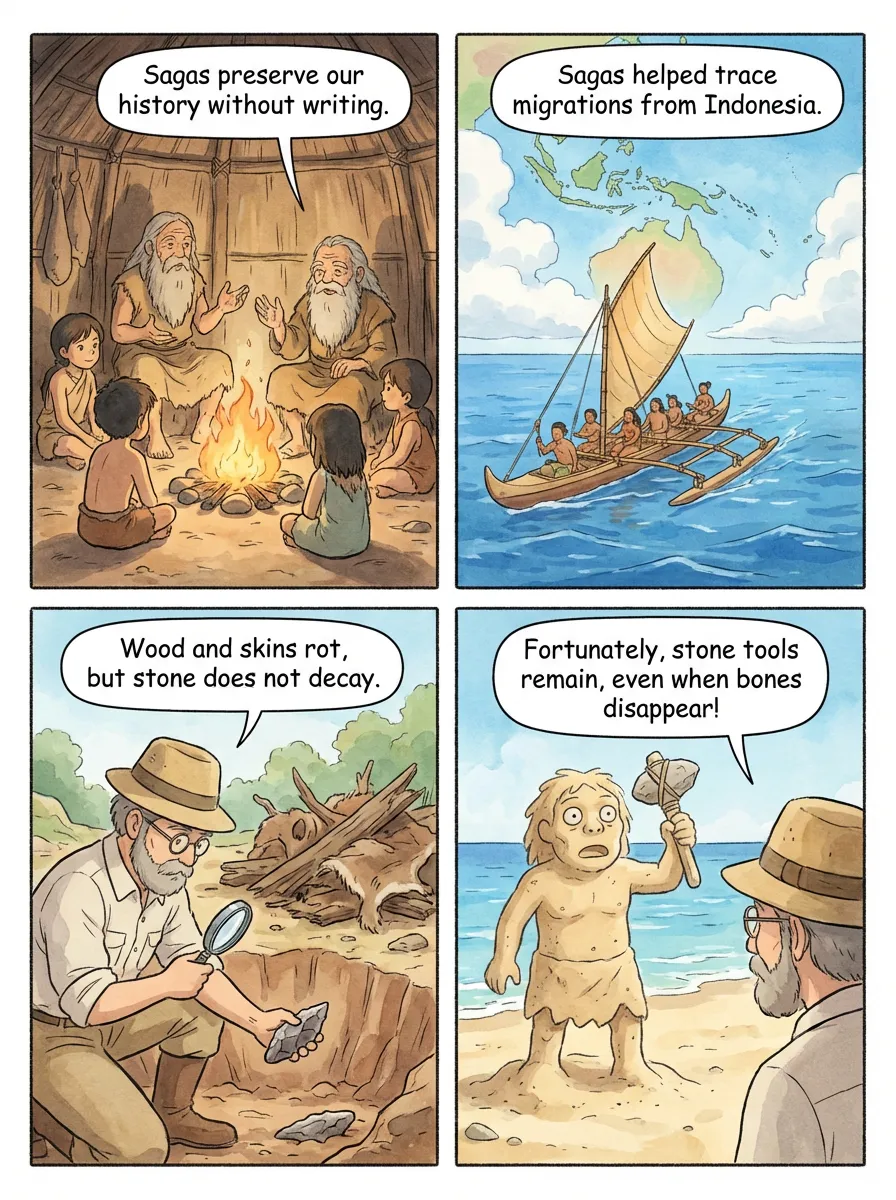
第一段 We can read of things that happened 5,000 years ago in the Near East, where people first learned to write. But there are some parts of the world where even now people cannot write. The only way that they can preserve their history is to recount it as sagas---legends handed down from one generation of storytellers to another. These legends are useful because they can tell us something about migrations of people who lived long ago, but none could write down what they did. Anthropologists wondered where the remote ancestors of the Polynesian peoples now living in the Pacific Islands came from. The sagas of these people explain that some of them came from Indonesia about 2,000 years ago.
第二段 But the first people who were like ourselves lived so long ago that even their sagas, if they had any, are forgotten. So archaeologists have neither history nor legends to help them to find out where the first 'modern men' came from.
第三段 Fortunately, however, ancient men made tools of stone, especially flint, because this is easier to shape than other kinds. They may also have used wood and skins, but these have rotted away. Stone does not decay, and so the tools of long ago have remained when even the bones of the men who made them have disappeared without trace.
1第一部分:逐句精讲
1句子 1. We can read of things that happened 5,000 years ago in the Near East, where people first learned to write.
翻译:我们可以读到近东地区5000年前所发生的事情,那里的人们最早学会了书写。
句子结构:这是一个复合句。主句:We can read of things;定语从句1:that happened 5,000 years ago in the Near East (修饰things,that在从句中作主语);定语从句2:where people first learned to write (修饰the Near East,where在从句中作地点状语)。
重点词汇:
read of /riːd ɒv/:读到,获悉。核心词义:相当于 read about,指通过阅读得知某信息。
例句:I have read of such happenings in the papers.
the Near East /ðə ˌnɪər ˈiːst/:近东。核心词义:一个历史地理区域,大致指地中海东部和南岸地区。
关键语法:定语从句:本句包含两个定语从句,一个由关系代词that引导(限制性定语从句),一个由关系副词where引导(非限制性定语从句),分别修饰"things"和"the Near East"。
短语用法:
• read of:读到(关于......的消息)。
• 5,000 years ago:五千年前。
• in the Near East:在近东。
2句子 2. But there are some parts of the world where even now people cannot write.
翻译:但是,世界上有些地区,即使到了现在,人们也不会书写。
句子结构:这是一个复合句,为"There be"句型。主句:There are some parts of the world;定语从句:where even now people cannot write (修饰parts of the world,where在从句中作地点状语)。
重点词汇:
part /pɑːt/ n. 部分,地区。核心词义:可数名词,指整体中的一个区域或一段。
例句:There is but one China and Taiwan is part of China.
关键语法:"There be + 名词 + 定语从句"结构:这是描述某地存在某物的常用句型。关系副词where引导定语从句:修饰表示地点的先行词"parts of the world",在从句中充当状语成分。
短语用法:
• parts of the world:世界上的某些地区。
• even now:即使现在,甚至到现在。
3句子 3. The only way that they can preserve their history is to recount it as sagas---legends handed down from one generation of storytellers to another.
翻译:他们保存历史的唯一方法是将历史当作传说讲述,由讲述人一代接一代地将史实描述为传奇故事口传下来。
句子结构:这是一个复合句。主语:The only way (后接定语从句);定语从句:that they can preserve their history (修饰the way,that在从句中作方式状语,可省略或用in which替换);系动词:is;表语:to recount it as sagas (动词不定式短语作表语);破折号后内容:legends handed down from one generation of storytellers to another (同位语,解释说明sagas);同位语中的修饰成分:handed down from one generation of storytellers to another (过去分词短语作后置定语,修饰legends)。
重点词汇:
preserve /prɪˈzɜːv/ vt. 保存,保护。核心词义:指使某物保持原样,免于损坏或毁灭。
例句:We should try our best to preserve the environment.
recount /rɪˈkaʊnt/ vt. 叙述,讲述。核心词义:正式用语,指详细叙述故事或事件。
例句:The witness recounted what he saw on the spot.
saga /ˈsɑːɡə/ n. 英雄传奇,长篇故事。核心词义:常指讲述英雄事迹的、世代相传的长篇故事。
关键语法:定语从句修饰"way":当先行词是"way"(方式、方法)时,定语从句可以用that/in which引导,或省略关系词。动词不定式作表语:说明主语"the only way"的具体内容是什么。同位语:使用破折号引出,对"sagas"进行解释,使概念更清晰。过去分词短语作后置定语:"handed down..."修饰"legends",表示被动和完成的意义。
短语用法:
• the only way:唯一方法。
• preserve history:保存历史。
• recount ... as ...:把......当作......来讲述。
• hand down from ... to ...:从......传给......(通常指代代相传)。
4句子 4. These legends are useful because they can tell us something about migrations of people who lived long ago, but none could write down what they did.
翻译:这些传说之所以有价值,是因为它们能告诉我们有关很久以前居住在此地的人们的一些迁徙情况,但他们当中却没有人能把自己所做的事情写下来。
句子结构:这是一个并列复合句,由连词but连接两个分句。分句1:These legends are useful because they can tell us something about migrations of people who lived long ago (包含一个原因状语从句和一个定语从句);原因状语从句:because they can tell us something about migrations of people;定语从句:who lived long ago (修饰people);分句2:but none could write down what they did (包含一个宾语从句);宾语从句:what they did (作write down的宾语)。
重点词汇:
migration /maɪˈɡreɪʃn/ n. 迁徙,移居。核心词义:指人或动物大规模地从一地迁移到另一地。
例句:The migration of birds is an interesting phenomenon.
write down /raɪt daʊn/ 写下,记下。核心词义:将想法、信息等写下来作为记录。
例句:Please write down the key points of the lecture.
关键语法:because引导原因状语从句:说明"传说有用"的具体原因。定语从句:关系代词who引导定语从句,修饰先行词people。宾语从句:连接代词what引导宾语从句,作动词短语write down的宾语。
短语用法:
• tell us something about:告诉我们关于......的一些事情。
• migrations of people:人们的迁徙。
• long ago:很久以前。
• write down:写下。
5句子 5. Anthropologists wondered where the remote ancestors of the Polynesian peoples now living in the Pacific Islands came from.
翻译:人类学家过去不清楚如今生活在太平洋诸岛上的波利尼西亚人的祖先来自何方。
句子结构:这是一个复合句。主句:Anthropologists wondered ...;宾语从句:where the remote ancestors of the Polynesian peoples now living in the Pacific Islands came from (作wondered的宾语);宾语从句中的主语部分:the remote ancestors of the Polynesian peoples (后面带有一个现在分词短语作定语);现在分词短语作定语:now living in the Pacific Islands (修饰Polynesian peoples,表示主动和正在进行的状态)。
重点词汇:
anthropologist /ˌænθrəˈpɒlədʒɪst/ n. 人类学家。核心词义:研究人类学(研究人类及其文化的学科)的专家。
remote /rɪˈməʊt/ adj. 遥远的,久远的。核心词义:指时间或空间上距离很远。
例句:The remote village is hardly accessible.
关键语法:宾语从句:由疑问词where引导,构成间接疑问句,充当动词wondered的宾语。现在分词短语作后置定语:"now living in the Pacific Islands"修饰前面的"Polynesian peoples",相当于一个非限制性定语从句"who are now living in the Pacific Islands"。
短语用法:
• wondered where ... came from:想知道......来自哪里。
• remote ancestors:遥远的祖先。
• Polynesian peoples:波利尼西亚民族(注意people用作民族时复数加-s)。
• now living in ...:现在居住在......的。
6句子 6. The sagas of these people explain that some of them came from Indonesia about 2,000 years ago.
翻译:这些人的传说解释了其中一部分是约于2000年前从印度尼西亚迁来的。
句子结构:这是一个复合句。主句:The sagas of these people explain ...;宾语从句:that some of them came from Indonesia about 2,000 years ago (作explain的宾语)。
重点词汇:
explain /ɪkˈspleɪn/ vt. 解释,说明。核心词义:对某事物进行阐述,使其易于理解。
例句:Could you explain the reason for your decision?
关键语法:宾语从句:由连接词that引导,陈述了一个事实。
短语用法:
• sagas of these people:这些民族/人民的传说。
• came from:来自。
• about 2,000 years ago:大约两千年前。
7句子 7. But the first people who were like ourselves lived so long ago that even their sagas, if they had any, are forgotten.
翻译:但是,和我们相似的原始人生活的年代太久远了,因此,即使他们有什么传说也早已失传了。
句子结构:这是一个多重复合句。主句:But the first people ... lived so long ago;定语从句:who were like ourselves (修饰the first people);结果状语从句:that even their sagas, if they had any, are forgotten;插入的条件状语从句:if they had any (为缩略形式,完整为if they had any sagas。此部分为插入语,用逗号隔开)。
重点词汇:
ourselves /ɑːˈselvz/ pron. 我们自己。核心词义:we的反身代词,用于强调。
例句:We enjoyed ourselves at the party.
关键语法:so ... that ... 结构:引导结果状语从句,表示"如此......以至于......"。定语从句:who引导的定语从句修饰people。插入语:"if they had any"作为插入的条件状语,对主要陈述进行补充和限定。虚拟语气(隐含):"if they had any"暗示他们可能没有sagas,是一种与过去事实可能不符的假设。
短语用法:
• who were like ourselves:像我们一样的人。
• so long ago that ...:如此久远以至于......。
• if they had any:如果他们有任何(传说)的话。
8句子 8. So archaeologists have neither history nor legends to help them to find out where the first 'modern men' came from.
翻译:于是,考古学家们既缺乏历史记载,又无口头传说来帮助他们弄清最早的"现代人"是哪里来的。
句子结构:这是一个复合句。主句:So archaeologists have neither history nor legends;不定式作目的状语:to help them to find out ...;宾语从句:where the first 'modern men' came from (作不定式to find out的宾语)。
重点词汇:
archaeologist /ˌɑːkiˈɒlədʒɪst/ n. 考古学家。核心词义:研究古代历史和文化的专家,通过发掘和分析遗址、文物进行研究。
find out /faɪnd aʊt/ 查明,发现。核心词义:通过调查、研究等手段弄清事实真相。
例句:We must find out the truth of the matter.
关键语法:"neither ... nor ..."结构:表示"既不......也不......",连接两个并列成分(此处是history和legends)。动词不定式短语作目的状语:"to help them ..."说明考古学家缺少史传的目的或结果。宾语从句:疑问副词where引导的从句作动词短语"find out"的宾语。
短语用法:
• neither ... nor ...:既不......也不......。
• have ... to help them:有......来帮助他们。
• find out where ... came from:弄清......来自哪里。
9句子 9. Fortunately, however, ancient men made tools of stone, especially flint, because this is easier to shape than other kinds.
翻译:幸运的是,远古人用石头制作了工具,特别是燧石,因为这种石头比其他石头更易于成型。
句子结构:这是一个复合句。主句:Fortunately, however, ancient men made tools of stone, especially flint;原因状语从句:because this is easier to shape than other kinds。
重点词汇:
fortunately /ˈfɔːtʃənətli/ adv. 幸运地。核心词义:表示一种幸运的或有利的情况。
例句:Fortunately, no one was injured in the accident.
ancient /ˈeɪnʃənt/ adj. 古代的,古老的。核心词义:形容很久以前存在的。
例句:We visited the ruins of an ancient city.
关键语法:because引导原因状语从句:解释了为什么古人特别喜欢用燧石制作工具。比较结构:"easier ... than other kinds"是比较级的基本用法。
短语用法:
• made tools of stone:用石头制作工具。
• especially flint:尤其是燧石。
• easier to shape:更容易塑形。
10句子 10. They may also have used wood and skins, but these have rotted away.
翻译:他们也可能用过木头和兽皮,但这类东西早已腐烂殆尽。
句子结构:这是一个并列句,由but连接两个分句。分句1:They may also have used wood and skins;分句2:but these have rotted away。
重点词汇:
may have used (情态动词+完成式)可能使用过。核心词义:表示对过去可能发生事件的推测。这是情态动词may的一个特殊用法。
例句:He may have known the truth.
rot away /rɒt əˈweɪ/ 腐烂,朽坏。核心词义:指有机物质因自然过程而完全分解消失。
例句:The old wooden fence has completely rotted away.
关键语法:情态动词 + have + 过去分词:表示对过去发生事情的可能性推测。现在完成时:"have rotted away"表示腐烂的动作发生在过去,但其结果(不存在)持续到现在。
短语用法:
• may also have used:可能也使用过。
• wood and skins:木头和兽皮。
• rotted away:腐烂殆尽。
11句子 11. Stone does not decay, and so the tools of long ago have remained when even the bones of the men who made them have disappeared without trace.
翻译:石头是不会腐烂的,因此,尽管制造这些工具的人的骨头早已荡然无存,但远古时代的石器却保存了下来。
句子结构:这是一个并列复合句,由and so连接。分句1:Stone does not decay (简单句);连接词:and so 因此;分句2:the tools of long ago have remained when even the bones of the men who made them have disappeared without trace (包含一个时间状语从句和一个定语从句);时间状语从句:when even the bones of the men ... have disappeared without trace;定语从句:who made them (修饰the men,them指代tools)。
重点词汇:
decay /dɪˈkeɪ/ vi. & n. 腐烂,腐朽。核心词义:指物质因自然化学或生物过程而逐渐分解、变坏。
例句:The process of decay is very slow.
remain /rɪˈmeɪn/ vi. 留下,剩余,保持不变。核心词义:指继续存在或保持某种状态。
例句:Only a few ruins remain of the ancient castle.
关键语法:"and so"表示结果:连接两个句子,前句是因,后句是果。时间状语从句:由when引导,表示"当......时候"。此处用现在完成时"have disappeared"强调消失这个动作的结果(即骨头不在了)对现在的影响(与石器的留存形成对比)。定语从句:who引导的定语从句修饰the men。
短语用法:
• does not decay:不会腐烂。
• and so:因此。
• the tools of long ago:很久以前的工具。
• have remained:留存了下来。
• have disappeared without trace:消失得无影无踪。
2第二部分:课文核心逻辑与写作技巧
📖 篇章结构与逻辑递进
1. 第一段:从已知到未知:文章开篇首先陈述了一个确定的事实:我们能够通过文字记录了解近东5000年前的历史(S1)。然后,话锋一转,指出世界上还存在没有文字的地区(S2)。由此,自然地引出了在没有文字的情况下,人们如何保存历史——通过口口相传的传说(sagas)(S3)。接着,文章评价了这些传说的作用和局限性:它们提供了关于古代人类迁徙的信息(S4),并具体举例说明了人类学家如何通过波利尼西亚人的传说追溯其起源(S5-S6)。这一段完成了逻辑上的铺垫:历史可以通过文字或传说来追溯。
2. 第二段:提出核心难题:基于第一段的铺垫,作者将探讨对象推向更远古的时期——第一批"像我们一样的人"(即现代智人)。他们的年代是如此久远(S7),以至于文字和传说这两条线索都断了。考古学家因而陷入既无历史记载、又无传说的困境(S8)。这一段提出了本文要解决的核心问题:面对双重证据缺失,我们如何探寻远古人类的起源?
3. 第三段:提出解决方案与证据:作者用一个"Fortunately"(幸运的是)转折,引出了解决问题的关键:人造器物,特别是石器。古人制作了石制工具(S9),虽然他们也可能使用过木头和兽皮,但这些有机材料早已腐烂(S10)。而石头因其不易腐烂的特性得以保存至今(S11)。因此,尽管制造者的遗骨早已消失,但这些工具成为了探寻远古人类历史的唯一实物证据。这一段清晰地论证了为什么石器成为考古学研究的核心材料,逻辑链完整:提出问题(无文字无传说) -> 转折提出线索(工具) -> 解释线索有效性(石头的物理特性)。
4. 整体逻辑:文章的论证逻辑遵循"普遍认知->特殊问题->解决方案"的经典模式,层层推进,环环相扣,展现了严密的科学论述风格。
✍️ 写作技巧与语言特色
1. 对比与转折的运用:全文多次使用对比和转折词(But, So, Fortunately, however)来连接思想和段落,使论述跌宕起伏,重点突出。例如,S1的"But"引出没有文字的地区;S8的"So"引出考古学家的困境;S9的"Fortunately, however"则引出困境中的希望——石器。
2. 复杂句式的驾驭:作为第四册开篇,课文展现了高级英语书面语的典型特征,大量使用定语从句(如S1、S3、S5、S11)、状语从句(如S4、S7、S9)和宾语从句(如S4、S5、S8),信息密度高,逻辑关系复杂。这要求学生具备较强的句子分析能力。
3. 学术词汇的准确使用:课文精准地使用了一系列学术和专业词汇,如anthropologists(人类学家)、archaeologists(考古学家)、migrations(迁徙)、preserve(保存)、recount(叙述)、decay(腐烂)等。这些词汇的积累对于学术英语阅读和写作至关重要。
4. 同位语与插入语的运用:S3使用破折号引出同位语"legends handed down...",对"sagas"进行具体解释。S7插入"if they had any",对条件进行限定,使表述更加严谨。这些手法丰富了句式,也使表达更精确。
5. 从本课延伸的写作启示:
• 如何组织说明文/论述文:学习"提出问题 -> 分析问题 -> 提出解决方案"的基本框架。
• 善用连接词:恰当地使用However, So, Because, Fortunately等连接词,可以使文章逻辑清晰,过渡自然。
• 定义与解释:当引入专业术语(如sagas)时,可以像S3那样使用同位语或定语从句进行简要解释,帮助读者理解。
• 选用精确词汇:在学术性或说明性写作中,应像课文一样,选择准确、具体的词汇(如用"recount"代替简单的"tell",用"preserve"代替"keep")。
3第三部分:本课语法精析总结
1. 定语从句 (Attributive Clauses)
• 本课核心语法现象:定语从句是贯穿本课的核心语法点,出现频率极高,形式多样。
• 关系代词that/which/who的运用:
– that/which 指物:S1: things that happened ...;S3: The only way that they can preserve... (修饰way,关系词作状语)。当先行词是"way"时,定语从句可以用that/in which引导或省略关系词。
– who 指人:S4: people who lived long ago;S7: the first people who were like ourselves;S11: the men who made them。
• 关系副词where的运用:
– S1: ... in the Near East, where people first learned to write. (非限制性定语从句,修饰地点)
– S2: ... parts of the world where even now people cannot write. (限制性定语从句,修饰地点)
– 当先行词是表示地点的名词,且定语从句中缺少地点状语时,使用where引导。
• "介词+关系代词"结构的变体(过去分词短语):S3中"legends handed down..."虽然没用"which are handed down"这个完整的定语从句,但过去分词短语"handed down"相当于一个简化的被动语态定语从句,是高级写作中常见的简化手法。
• 限制性与非限制性定语从句:S1中的where从句是非限制性定语从句(用逗号隔开,提供附加信息);其他多为限制性定语从句(对先行词起限定作用,无逗号)。
2. 名词性从句 (Noun Clauses)
宾语从句:本课宾语从句主要由疑问词(where, what)或that引导。
• 疑问词引导:S5: ... wondered where the remote ancestors ... came from. (作wondered的宾语)
S8: ... to find out where the first 'modern men' came from. (作find out的宾语)
S4: ... write down what they did. (作write down的宾语)
• that引导:S6: ... explain that some of them came from Indonesia.... (作explain的宾语)
间接疑问句:当疑问句(如Where did they come from?)充当动词的宾语时,需要转换成陈述语序,即"主语+谓语"的顺序,如S5和S8中的where从句。
3. 状语从句 (Adverbial Clauses)
原因状语从句:由because引导,说明原因。
• S4: ... are useful because they can tell us something ...
• S9: ... because this is easier to shape than other kinds.
结果状语从句:由so ... that ... 引导,表示程度导致的结果。
• S7: ... lived so long ago that even their sagas ... are forgotten.
时间状语从句:由when引导。
• S11: ... have remained when even the bones ... have disappeared ...
条件状语从句(作为插入语):S7: ... even their sagas, if they had any, are forgotten. 这是一个简化的条件状语从句作插入语。
4. 非谓语动词 (Non-finite Verbs)
动词不定式 (to do):
• 作表语:S3: The only way ... is to recount it as sagas. (说明主语内容)
• 作目的状语:S8: ... to help them to find out ...
现在分词 (-ing):
• 作后置定语:S5: Polynesian peoples now living in the Pacific Islands (= who are now living ...),表示主动和正在进行的动作。
过去分词 (-ed):
• 作后置定语:S3: legends handed down from one generation ... to another (= which are handed down ...),表示被动和完成的动作。这是分词作定语的典型用法。
5. 情态动词+完成式 (Modal Verb + Have + Past Participle)
S10: They may also have used wood and skins. "may have +过去分词"表示对过去可能发生事情的推测。这是情态动词的一个重要用法,表示对过去事件的不确定性判断。
6. 现在完成时 (Present Perfect Tense)
表示过去发生的动作对现在造成的影响或结果。本课多用于描述状态或结果的持续。
• S10: ... these have rotted away. (腐烂的结果是现在这些东西已不存在)
• S11: ... the bones ... have disappeared without trace. (消失的结果是现在找不到)
• S11: ... the tools ... have remained. (留存的状态持续到现在)
7. "neither ... nor ..."结构
S8: ... have neither history nor legends ... 这个结构连接两个并列的否定成分。需要注意主谓一致问题:当连接两个主语时,谓语动词与nor后面的主语保持一致。
8. 同位语 (Apposition) 与插入语 (Parenthesis)
同位语:S3: ... as sagas---legends handed down ... 破折号后的"legends"及其修饰语是"sagas"的同位语,对其进行具体化解释。
插入语:S7: ... even their sagas, if they had any, are forgotten. "if they had any"作为插入的条件状语,置于两个逗号之间,增加了信息的精确性,使句子结构富有变化,表达更严谨。
4第四部分:课文习题重点讲解
1. 阅读理解与细节题
典型问题:
• How can people without writing preserve their history? (没有文字的人们如何保存历史?)
• Why are stone tools important to archaeologists? (为什么石器对考古学家很重要?)
• What happened to materials like wood and skin used by ancient men? (古人用过的木头和兽皮这类材料怎么样了?)
答题思路:
• 这类问题答案通常直接来自课文细节。需要准确定位原文句子。例如,第一题对应S3;第二题对应S9和S11;第三题对应S10。
• 答题时最好用完整句子,并尽量使用课文中的关键词,如S3的"recount it as sagas",S11的"Stone does not decay"等。
• 避免过度概括或添加个人猜测,紧扣课文信息。
2. 词汇与词义辨析题
本课涉及的重点词汇辨析:
• part, part of:part表示"部分"时为可数名词;part of是"......的一部分",part of后面接单数名词或集合名词,当part of作主语时,谓语动词的单复数取决于of后面的名词。
• preserve, conserve:preserve强调保护使之维持原状(如历史、食物);conserve强调节约使用,避免浪费(如资源、能量)。
• recount, narrate, tell:recount和narrate更为正式,多指详细讲述或叙述一系列事件;tell是通用词。
• decay, rot:decay可指任何物质从良好状态自然变坏的过程,使用范围更广(如牙齿、石头风化);rot通常指有机物质(如木头、食物)的腐烂。
• find out, discover:find out指通过努力查询、研究后"查明"一个已知或未知的事实;discover指首次"发现"一个未知的事物或地方。
答题思路:
• 首先理解每个词的核心含义和在课文中的具体用法。
• 根据上下文语境和搭配习惯选择最合适的词。例如,在"保存历史"这个语境下,"preserve"是最佳选择。
3. 句子结构与语法转换题
典型问题:
• Combine the two sentences using a relative clause: "Ancient men made tools. The tools were made of stone." (用定语从句合并句子。)
• Rewrite the sentence using 'so...that': "The first people lived a very long time ago. Their sagas are forgotten." (用so...that结构改写句子。)
• Change the following into indirect speech: "Anthropologists asked: 'Where did the remote ancestors come from?'" (将句子变为间接引语。)
答题思路:
• 定语从句合并:确定先行词(tools),选择关系代词(that/which),将第二句变为从句。答案:Ancient men made tools that/which were made of stone. 或更简洁:Ancient men made tools of stone.
• so...that改写:识别原句中表示程度的部分(a very long time ago),将其与so搭配(so long ago),然后用that引出结果。答案:The first people lived so long ago that their sagas are forgotten.
• 间接引语转换:遵循"陈述句 -> say that.../wonder that...";疑问句 -> ask/wonder + 疑问词 + 陈述句语序"的规则。同时注意时态可能需要后退(如果主句动词是过去时)。答案:Anthropologists wondered where the remote ancestors had come from. (课文S5即为范例)
4. 关键句型与特殊难点
"the only way that ... is to do ..."结构 (S3):这是表达"做某事的唯一方法是......"的经典句型。可以模仿造句,如:The only way to succeed is to work hard.
"neither ... nor ..."结构 (S8):掌握其连接两个对等成分的用法,并注意主谓一致问题。练习:They spoke neither English nor French.
情态动词表推测 (S10):"may/might/could + have +过去分词"表示对过去的推测。练习:He looks tired. He may have stayed up late last night.
分词短语作定语:这是本课语法重点,也是写作中使句子简洁有力的方法。练习将定语从句简化为分词短语。例如:"the people who live there" -> "the people living there";"the books which were written by him" -> "the books written by him"。
5. 完形填空与综合运用
此类题型会综合考查本课的词汇、语法和上下文逻辑。答题时需:
① 通读全文,把握大意和逻辑关系(如对比、因果)。
② 对于词汇题,考虑词义、搭配和词性。
③ 对于语法题,考虑时态、语态、从句引导词、非谓语动词等。
④ 最后将所有选项代入,检查是否通顺、合逻辑。
5第五部分:拓展学习
本课(第四册第1课)相关的扩展学习资料包括:
1. 《新概念英语第四册名师精讲笔记》:以"本课重点难点-词汇-课文详解-语法精析"四大板块,对本课进行了深度拓展讲解。其中"语法精析"部分系统归纳了定语从句、名词性从句、非谓语动词等核心语法,并结合了高级英语考试考点进行解析,极具参考价值。
2. 《新概念英语第四册答案》:提供了所有课后练习的详细答案和解析,特别是对阅读理解、词汇辨析、句子结构转换等难点有逐一说明,是自查和巩固的必备资料。
3. 《应时新概念英语4》:从句子成分分析的角度对课文进行了解析,帮助学习者更直观地理解复杂长句的主干和修饰成分,有助于深化对高级句子结构的理解。
4. 《新概念英语写作全攻略》:将第四册课文作为高级写作素材。针对本课,可以学习如何定义和解释概念、如何构建逻辑链、学术词汇的运用以及复杂句子结构的模仿,提升学术写作能力。
5. 《NCE知识点笔记》:这是一个结构化知识数据库。针对本课,收录了如preserve, recount, migration, decay等词汇短语的详细解析,以及定语从句、情态动词+完成式等核心语法条目,方便快速复习和查询。
📘 教案使用建议: 本教案已整合知识库核心内容,授课时可依次讲解第一部分(逐句精讲),然后引导学生总结第二、三部分(逻辑与语法),再结合教材原题练习第四部分(习题),最后可根据学生水平和课时,推荐第五部分的相关资料供其课后延伸学习。
🔥 推荐搜索: #新概念英语 #新概念四 #高级英语 #英语语法 #学术英语 #英语阅读 #英语写作 #定语从句 #考古学 #人类学 #化石人 #英语长难句 #英语学习 #外语学习 #英语教案 #FindingFossilMan

贝琪酱英语无痛逆袭站
微信扫描二维码,关注我的账号