【狂暴英语教案】之《新概念英语》第四册第3课:马特霍恩山区人
- 2026-08-14 01:18:09
📚 狂暴英语教案之《新概念英语》
第四册第3课 Matterhorn man马特霍恩山区人
高级语法 · 对比论证 · 细节描写 · 复杂句式精讲
🏷️ 热门标签: #新概念英语第四册 #狂暴英语 #高级英语语法 #英语阅读 #英语写作 #对比论证 #定语从句 #分词结构 #英语精讲 #外语学习 #英语教案 #Matterhorn #阿尔卑斯登山
📖课文完整内容
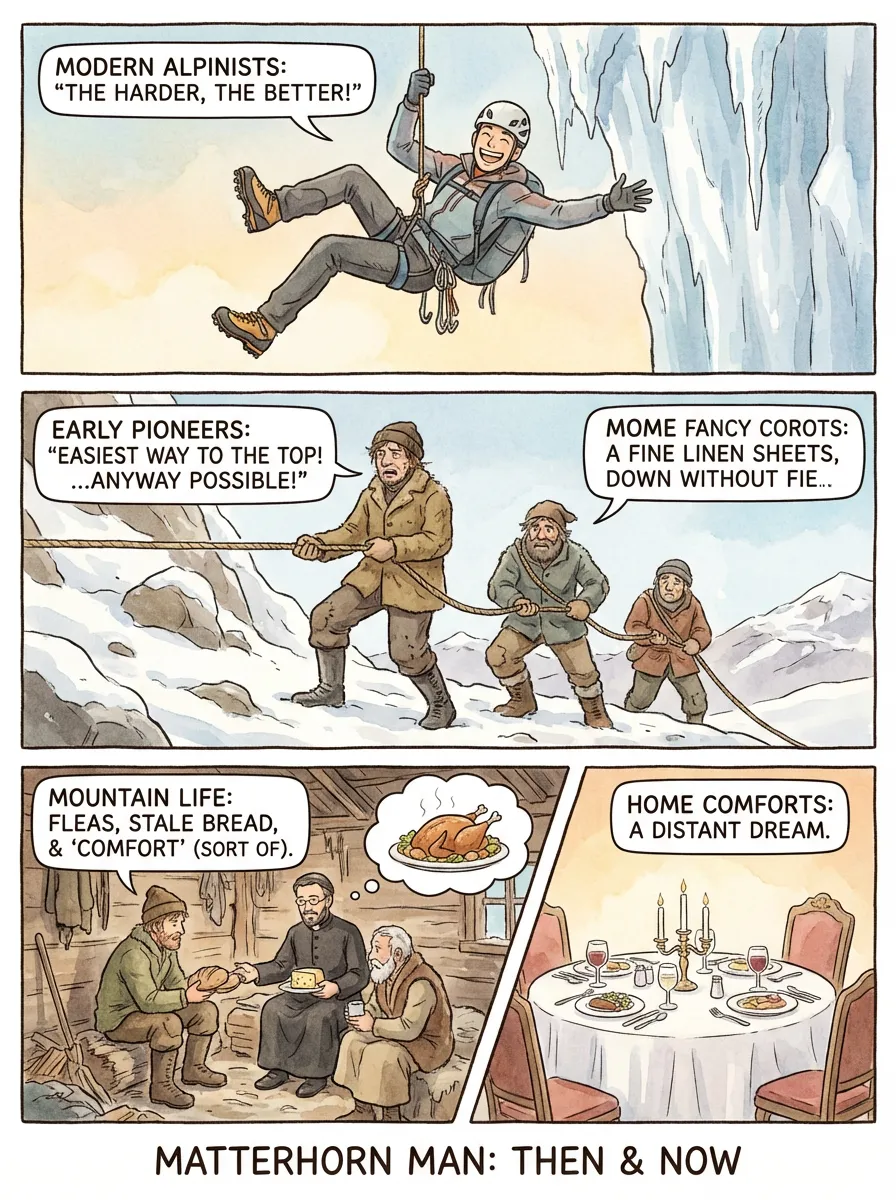
Modern alpinists try to climb mountains by a route which will give them good sport, and the more difficult it is, the more highly it is regarded. In the pioneering days, however, this was not the case at all. The early climbers were looking for the easiest way to the top, because the summit was the prize they sought, especially if it had never been attained before. It is true that during their explorations they often faced difficulties and dangers of the most perilous nature, equipped in a manner which would make a modern climber shudder at the thought, but they did not go out of their way to court such excitement. They had a single aim, a solitary goal—the top!
It is hard for us to realize nowadays how difficult it was for the pioneers. Except for one or two places such as Zermatt and Chamonix which had rapidly become popular, Alpine villages tended to be impoverished settlements cut off from civilization by the high mountains. Such inns as there were were generally dirty and flea-ridden; the food simply local cheese accompanied by bread often twelve months old, all washed down with coarse wine. Often a valley boasted no inn at all, and climbers found shelter wherever they could sometimes with the local priest (who was usually as poor as his parishioners), sometimes with shepherds or cheese-makers. Invariably the background was the same: dirt and poverty, and very uncomfortable. For men accustomed to eating seven-course dinners and sleeping between fine linen sheets of home, settling down to mountain life was something like a military operation.
1第一部分:逐句精讲
1句子 1:Modern alpinists try to climb mountains by a route which will give them good sport, and the more difficult it is, the more highly it is regarded.
翻译:现代登山运动员总想找一条能给他们带来运动乐趣的路线来登山,路线越艰险,他们越觉得够味。
句子结构:
① 这是一个并列复合句,由连词"and"连接两个分句。
② 第一个分句(主从复合句):Modern alpinists try to climb mountains by a route which will give them good sport。(主句:主谓宾结构;从句:which引导的定语从句修饰route)。
③ 第二个分句:"the more difficult it is, the more highly it is regarded。"这是典型的"the + 比较级..., the + 比较级..."结构,表示"越......, 越......"。
重点词汇:
alpinists /ˈælpɪnɪsts/ n. (alpinist的复数) 登山运动员,登山家。尤指阿尔卑斯山的登山者。
例句:The seasoned alpinist knows that preparation is everything. 经验丰富的登山家知道准备就是一切。
regarded /rɪˈɡɑːdɪd/ v. regard的过去分词。认为,看作。
例句:Holding the trophy, he was highly regarded by his peers. 手捧奖杯,他被同行们高度评价。
关键语法:
① 定语从句:"which will give them good sport",关系代词which引导的定语从句,修饰先行词"a route"。which在从句中作主语。
② "The more..., the more..."比较结构:表示程度随另一条件的增强而增强。本结构中,前半部分是状语从句,后半部分是主句。
短语用法:
• try to do sth.:努力/试图做某事。区别于"try doing sth."(尝试做某事)。
• by a route:通过/沿着一条路线。
• give sb. good sport:给某人带来乐趣/运动享受。
2句子 2:In the pioneering days, however, this was not the case at all.
翻译:然而,在登山运动的初创时期,情况却全然不同。
句子结构:
① 这是一个简单句,主系表结构。
② 状语:In the pioneering days(介词短语作时间状语),however(连接副词,表示转折)。
③ 主语:this(指示代词,指代现代登山运动员的动机)。
④ 系动词:was
⑤ 表语:not the case at all(at all用于否定句加强语气)。
重点词汇:
pioneering /ˌpaɪəˈnɪərɪŋ/ adj. 开拓性的,开创的。
例句:They have done pioneering work in the field of genetic engineering. 他们在基因工程领域做了开创性的工作。
关键语法:
① 短语"not the case":意为"情况并非如此",是固定表达。
短语用法:
• In the pioneering days:在初创时期,在开拓时期。
• this is (not) the case:情况(不)是这样。
• not... at all:根本不,一点也不。
3句子 3:The early climbers were looking for the easiest way to the top, because the summit was the prize they sought, especially if it had never been attained before.
翻译:早期的登山者所寻找的是通往山顶的最方便的途径,因为顶峰——特别是前人未曾涉足的顶峰——才是他们寻求的目标。
句子结构:
① 这是一个复杂的复合句,主句包含原因状语从句和条件状语从句。
② 主句:The early climbers were looking for the easiest way to the top(主谓宾结构)。
③ 原因状语从句:because the summit was the prize they sought(because引导,主系表结构;其中"they sought"是省略了关系代词that/which的定语从句,修饰prize)。
④ 条件状语从句:especially if it had never been attained before(if引导,是原因状语从句内部的补充说明;使用了过去完成时)。
重点词汇:
attained /əˈteɪnd/ v. attain的过去分词。达到,获得。
例句:He finally attained his goal of running a marathon. 他最终达到了跑一场马拉松的目标。
关键语法:
① 过去进行时:"were looking for"。描述过去一段时期内持续进行的动作或状态。
② 带有条件状语的原因从句嵌套:because从句内部又包含一个由if引导的条件状语从句"if it had never been attained before",对原因进行特别强调。
③ 过去完成时:"had never been attained"。表示"过去(登山前)的过去"从未完成的动作,强调首次登顶的意义。
短语用法:
• look for:寻找。
• the way to the top:通往山顶的道路。
• especially if...:特别是如果......。(用来补充和强调特定条件)
4句子 4:It is true that during their explorations they often faced difficulties and dangers of the most perilous nature, equipped in a manner which would make a modern climber shudder at the thought, but they did not go out of their way to court such excitement.
翻译:确实,在探险的过程中他们经常遇到惊心动魄的困难和危险,其装备方式足以让现代登山者一想起来就胆战心惊,但是他们也并非刻意地去追求这种刺激。
句子结构:
① 这是一个由It is true that...引导的主语从句,并由转折连词but连接两个并列从句的复合长句。
② 主句框架:It is true that...(clause 1), but they did not...(clause 2)。
③ that从句(clause 1):During their explorations they often faced difficulties and dangers..., equipped in a manner which...(主谓宾结构;过去分词短语"equipped in a manner..."作伴随状语;其中包含which引导的定语从句修饰manner)。
④ but 后的分句(clause 2):they did not go out of their way to court such excitement(主谓结构)。
重点词汇:
court /kɔːt/ v. 招致,追求(常指不好的事情)。
例句:He was accused of courting publicity. 他被指责刻意追求曝光。
shudder /ˈʃʌdə(r)/ v. (因恐惧或寒冷)战栗,发抖。
关键语法:
① 形式主语it与主语从句:"It is true that..."。It作形式主语,真正的主语是that引导的从句。这种结构常用于平衡句子,避免头重脚轻。
② 过去分词短语作状语:"equipped in a manner..."是过去分词短语,表示被动(他们是被这样装备的),在句中作伴随状语,说明他们面对危险时的状态。
③ 定语从句:"which would make a modern climber shudder at the thought"。关系代词which引导的定语从句修饰manner,which在从句中作主语。
短语用法:
• It is true that...:确实......(承认一个事实)。
• face difficulties and dangers:面对困难和危险。
• of the most perilous nature:具有极度危险性质的。
• equipped in a manner which...:以......的方式装备着。
• make sb. shudder at the thought:使某人一想到......就发抖。
• go out of one's way to do sth.:特地/不辞辛劳地做某事;此处意为"刻意追求"。
• court such excitement:追求这种刺激。
5句子 5:They had a single aim, a solitary goal—the top!
翻译:他们只有一个目的,唯一的目标——顶峰!
句子结构:
① 这是一个简单句,带有同位语。
② 主语:They
③ 谓语:had
④ 宾语:a single aim
⑤ 同位语:a solitary goal the top!("a solitary goal"是"a single aim"的同位语;"the top"又是"goal"的同位语)。
重点词汇:
solitary /ˈsɒlətri/ adj. 唯一的,孤独的。
关键语法:
① 同位语:"a solitary goal"是"a single aim"的同位语,起解释说明作用。"the top"是"goal"的同位语,具体指明目标是什么。
短语用法:
• a single aim:唯一的目标。
• a solitary goal:唯一/孤独的目标(solitary增强了目标的唯一性和专注性)。
6句子 6:It is hard for us to realize nowadays how difficult it was for the pioneers.
翻译:如今,我们很难体会到昔日登山先驱们的艰辛。
句子结构:
① 这是一个复合句,包含一个宾语从句。
② 主句:It is hard for us to realize nowadays(It作形式主语,真正的主语是动词不定式短语"to realize...")。
③ 宾语从句:how difficult it was for the pioneers(how引导,作realize的宾语;从句中it作形式主语,真正的主语是动词不定式短语的省略)。
重点词汇:
realize /ˈriːəlaɪz/ v. 认识到,体会。
关键语法:
① 双重it形式主语句:主句"It is hard for us to realize..."和宾语从句"how difficult it was for the pioneers"都使用了It作形式主语的结构,使句子重心后移,更合英文表达习惯。
② 宾语从句:"how difficult it was for the pioneers"是由疑问词how引导的宾语从句,语序为陈述语序。
短语用法:
• It is hard for sb. to do sth.:对某人来说做某事是很难的。
• realize how difficult it was:意识到那是多么困难。
7句子 7:Except for one or two places such as Zermatt and Chamonix which had rapidly become popular, Alpine villages tended to be impoverished settlements cut off from civilization by the high mountains.
翻译:除了一两个像泽玛特和夏蒙尼那样很快出了名的地方,阿尔卑斯山山区的小村大都与高山峻岭阻绝,仿佛是文明之外的贫瘠飞地。
句子结构:
① 这是一个复合句。
② 状语:Except for one or two places such as Zermatt and Chamonix which had rapidly become popular(介词短语作状语;其中包含which引导的非限制性定语从句修饰Zermatt and Chamonix)。
③ 主句:Alpine villages tended to be impoverished settlements cut off from civilization by the high mountains(主系表结构;过去分词短语"cut off from civilization by the high mountains"作后置定语,修饰settlements)。
重点词汇:
impoverished /ɪmˈpɒvərɪʃt/ adj. 贫穷的,赤贫的。
关键语法:
① except for的用法:表示"除了......之外",用于引出一个与前面叙述相反的原因或细节,从而修正主要意思。其前后没有对称的同类项。
② 非限制性定语从句:"which had rapidly become popular"。which引导非限制性定语从句,补充说明Zermatt and Chamonix这两个地方的特点。非限制性定语从句与主句关系不紧密,去掉后不影响主句意思。
③ 过去分词短语作后置定语:"cut off from civilization by the high mountains"。过去分词短语修饰settlements,表示被动(定居点被高山阻隔)。这相当于一个定语从句"which were cut off from civilization by the high mountains"。
短语用法:
• Except for...:除了......(表示整体中的例外)。
• such as:例如,像......这样的。
• tend to be:往往是,倾向于。
• be cut off from:与......隔绝,被......切断。
8句子 8:Such inns as there were were generally dirty and flea-ridden; the food simply local cheese accompanied by bread often twelve months old, all washed down with coarse wine.
翻译:那里即使有客栈,也通常都是肮脏不堪,虫蛀横行;食物也不过是当地产的干酪和通常存放了一年之久的面包,所有东西都要用劣质葡萄酒冲咽下去。
句子结构:
① 这是一个并列句,由分号连接两个分句,第二个分句是省略句。
② 第一个分句:Such inns as there were were generally dirty and flea-ridden(主系表结构;"Such... as there were"是固定结构,作主语)。
③ 第二个分句:(the food was) simply local cheese accompanied by bread often twelve months old, all washed down with coarse wine(省略了谓语动词was,句子主干是主系表结构;"accompanied by bread..."和"all washed down..."分别是过去分词短语作后置定语和伴随状语)。
重点词汇:
flea-ridden /ˈfliː rɪdn/ adj. 满是跳蚤的,跳蚤横行的。
coarse /kɔːs/ adj. 粗糙的,劣质的。
关键语法:
① "Such... as there be" 结构:"Such inns as there were"意为"那里所有的客栈(如果有的话)"。as引导的从句限定了inns的范围。这是一个特殊的名词短语结构。
② 省略句:分号后的分句"the food simply local cheese..."省略了系动词was,这是一种常见的描述性文体中的省略,使行文更简洁有力。
③ 过去分词短语的多重修饰:"accompanied by bread..."修饰cheese;"(which was) often twelve months old"是省略了关系代词和系动词的定语从句修饰bread;"all washed down with..."是独立分词结构,对前面整个情况进行补充说明。
短语用法:
• Such... as there were/was:那些所有存在的......(强调数量极少或状况不济)。
• be accompanied by:伴有,配有。
• wash sth. down (with sth.):用(饮料)吞送/冲下(食物)。
9句子 9:Often a valley boasted no inn at all, and climbers found shelter wherever they could sometimes with the local priest (who was usually as poor as his parishioners), sometimes with shepherds or cheese-makers.
翻译:山谷里常常连个客栈都没有,登山者只好随遇而安,有时同当地牧师(他通常和他的教民一样穷)住在一起,有时同牧羊人或制酪工住在一起。
句子结构:
① 这是一个并列复合句,由"and"连接。
② 第一个分句:Often a valley boasted no inn at all(主谓宾结构)。
③ 第二个分句:climbers found shelter wherever they could...(主谓宾结构;其中wherever引导地点状语从句;括号内是who引导的非限制性定语从句,修饰priest)。
重点词汇:
boasted /bəʊstɪd/ v. boast的过去式。拥有(值得自豪的东西),以有......而自豪。
例句:The city boasts two excellent museums. 这座城市拥有两个出色的博物馆。
关键语法:
① wherever引导的地点状语从句:"wherever they could"表示"在任何他们能够(找到)的地方",强调了寻找住所的随意性和困难。
② 非限制性定语从句:"(who was usually as poor as his parishioners)"。who引导的非限制性定语从句,补充说明牧师的经济状况。
短语用法:
• boast no inn at all:根本没有客栈。
• find shelter:找到住处/栖身之所。
• wherever they could:在任何他们能够找到的地方。
• sometimes with..., sometimes with...:有时和......一起,有时和......一起。
• as poor as his parishioners:和他的教民一样穷。(as...as...同级比较结构)
10句子 10:Invariably the background was the same: dirt and poverty, and very uncomfortable.
翻译:无论找谁借宿,背景总是一样的:肮脏、贫穷,极不舒适。
句子结构:
① 这是一个简单句,带有同位语。
② 主语:the background
③ 系动词:was
④ 表语:the same
⑤ 同位语:dirt and poverty, and very uncomfortable(解释说明"the same"的具体内容)。
重点词汇:
Invariably /ɪnˈveəriəbli/ adv. 总是,无一例外地。
关键语法:
① 同位语:冒号后的"dirt and poverty, and very uncomfortable"是"the same"的同位语,具体描绘了相同的背景是什么样子。
短语用法:
• the background was the same:背景/环境是一样的。
11句子 11:For men accustomed to eating seven-course dinners and sleeping between fine linen sheets of home, settling down to mountain life was something like a military operation.
翻译:对于习惯了享用七道菜晚餐、睡精致亚麻床单的(城市)人来说,适应山地生活简直就像一场军事行动。
句子结构:
① 这是一个复合句。
② 状语:For men accustomed to eating seven-course dinners and sleeping between fine linen sheets of home(介词短语作状语;其中"accustomed to..."是过去分词短语作后置定语修饰men,"to"是介词,后面跟动名词eating和sleeping)。
③ 主句:settling down to mountain life was something like a military operation(动名词短语"settling down to mountain life"作主语,系表结构)。
重点词汇:
accustomed to /əˈkʌstəmd tu/ adj. 习惯于......的。
例句:She was accustomed to getting up early for work. 她已习惯了早起上班。
关键语法:
① 过去分词短语作后置定语:"accustomed to eating... and sleeping..."。修饰men,表示这些人的特点或状态。
② 动名词短语作主语:"settling down to mountain life"是动名词短语,在句中充当主语。这是动名词的典型用法之一。
短语用法:
• be accustomed to (doing) sth.:习惯于(做)某事。
• settle down to sth.:适应/安顿下来做某事。
• something like:有点像,大约。
2第二部分:课文核心逻辑与写作技巧
📖 论证结构与对比手法
1. 鲜明的古今对比架构:全文的核心逻辑是围绕着"现代登山者"与"早期登山先驱"的对比展开的。开篇即定义"现代登山者"(Modern alpinists)的追求(寻求运动乐趣,难度越高评价越高),第二句"In the pioneering days, however, this was not the case at all."使用"however"进行强烈转折,引出"早期登山者"(The early climbers)截然不同的目标。
2. 对比的多层次展开:对比不仅限于登山动机。课文深入对比了登山行为背后的整体环境和条件:
- 动机对比
:现代人追求"sport"和难度带来的成就感;早期登山者追求"prize"即首次登顶的荣耀。 - 装备与态度对比
:早期登山者装备简陋(equipped in a manner which would make a modern climber shudder),但他们并非刻意寻求刺激(did not go out of their way to court such excitement),突显其目标的纯粹性和环境的客观艰苦。 - 生活环境对比
:课文后半部分花费大量笔墨描绘早期登山者所面临的恶劣生活环境:贫穷的村庄(impoverished settlements)、肮脏的客栈(dirty and flea-ridden inns)、匮乏的食物(local cheese and stale bread)、以及随遇而安的借宿条件。这与结尾句中他们所习惯的"七道菜晚餐"和"精致亚麻床单"的文明生活形成尖锐对比,从而论证了"settling down to mountain life was something like a military operation"的核心观点,即先驱们的适应过程本身就是一场艰苦卓绝的"战役"。
3. 论证的递进与深化:课文并非简单罗列对比。其逻辑链条是:提出现代登山观 → 转折引出早期登山观 → 承认早期登山的危险与困难,但强调其目标单一 → 进而解释为何难以体会其艰辛 → 通过详细描述其极端艰苦的外部物质条件来证明这种"难以体会" → 最终得出结论:对他们而言,适应山地生活如同军事行动。论证层层递进,从内在动机分析到外部环境描写,有力地塑造了早期登山先驱坚忍不拔、目标纯粹的英雄形象。
✍️ 写作手法与修辞运用
1. 具体而生动的细节描写:为了证明早期条件的艰苦,作者选取了极具代表性的细节,避免了空洞的形容。
- 对客栈的描写
:"dirty and flea-ridden"(肮脏且跳蚤横行)、"the food simply local cheese accompanied by bread often twelve months old, all washed down with coarse wine"。其中"twelve months old"这一具体时间量化了面包的不新鲜,"washed down with coarse wine"生动形象地描绘了用餐的窘迫。 - 对借宿对象的描写
:不是简单地写"借宿",而是具体写出"with the local priest (who was usually as poor as his parishioners), sometimes with shepherds or cheese-makers",并补充括号内的定语从句,点明牧师同样贫穷,增强了"无处不贫"的真实感。
这些细节使叙述栩栩如生,让读者能直观感受到先驱们面临的挑战,远比抽象地说"生活条件很差"更有说服力。
2. 多样的句子结构与节奏控制:作为第四册课文,其句子复杂度显著提高,但作者高超地控制了行文节奏。
- 长短句结合
:如句子4是一个包含主语从句、分词短语、定语从句、转折分句的极长句,信息密集,论述严谨。而句子5"They had a single aim, a solitary goal—the top!"则短促有力,用感叹号收尾,极具冲击力,强调了核心精神。句子10"Invariably the background was the same: dirt and poverty, and very uncomfortable."用冒号引出同位语,简洁明了。 - 并列与排比
:"dirt and poverty, and very uncomfortable"是简单的名词/形容词并列。"sometimes with..., sometimes with..."是结构上的排比。这些手法增强了语势和描述的全面性。 - 比喻修辞
:结尾的明喻(simile)"was something like a military operation"是画龙点睛之笔,将适应山地生活的艰巨性、组织性和挑战性概括得形象而深刻,升华了主题。
3. 客观而略带敬意的叙述口吻:全文采用客观描述,但字里行间流露出对先驱的敬佩。如使用"pioneers"、"early climbers"等中性偏褒义的词,描述其困难时用"of the most perilous nature",但立刻用"but"转折强调他们并非寻求刺激,而是有"a single aim, a solitary goal"。这种克制的赞扬比直接抒情更有力量。
3第三部分:本课语法精析总结
1. "The more..., the more..."比较结构
结构与形式:The + 形容词/副词比较级 + (主语+谓语), the + 形容词/副词比较级 + (主语+谓语)。前半部分为状语从句,后半部分为主句。此结构表示后者随着前者的变化而变化,即"越......, 越......"。
本课应用:句子1 "... and the more difficult it is, the more highly it is regarded."(路线越艰险,越受推崇。)
用法详解:
此结构中的谓语动词常可省略,尤其是be动词。如:The sooner, the better.(越快越好。) 比较级前可加修饰词,如:The much more you practice, the much better you will be.(练习得越多,你就会越好。) 并非总是"the more",也可以是"the less",表示"越......, 越不......"。如:The less she worried, the better she worked.(她越不担心,就工作得越好。)
2. 复杂定语从句
限制性定语从句:由关系代词which, that, who等引导,对被修饰词进行限定和说明,是句子不可或缺的部分。本课句子1:which will give them good sport(修饰route)。
非限制性定语从句:由which, who等引导,用逗号与主句隔开,对先行词进行补充说明,去掉后不影响主句基本意思。本课句子7:which had rapidly become popular(修饰Zermatt and Chamonix)。句子9:(who was usually as poor as his parishioners)(修饰priest)。
关系代词省略:在限制性定语从句中,当关系代词在从句中作宾语时可以省略。本课句子3:"... the prize (that/which) they sought..."中的关系代词被省略了。
3. 形式主语it与主语从句/动词不定式
结构:It + be + 形容词/名词 + (for sb.) + to do sth. / that clause。It作形式主语,将较长的主语(不定式或从句)后置,使句子结构平衡,避免头重脚轻。
本课应用:
主语从句:句子4 "It is true that during their explorations..."(It作形式主语,that引导的从句是真正主语。) 动词不定式:句子6 "It is hard for us to realize..." 及从句内部的 "how difficult it was for the pioneers (to...)" 。这种"双重形式主语"的结构,旨在维持句子平衡。
4. 分词短语作状语、定语及独立结构
过去分词短语作状语:表示被动或完成的动作,逻辑主语通常是句子的主语。本课句子4:"... equipped in a manner which..." (他们被以某种方式装备着)。
过去分词短语作后置定语:相当于一个被动的定语从句。本课例句:
句子7:"... settlements cut off from civilization..." (= which were cut off...) 句子11:"... men accustomed to eating..." (= who were accustomed...)
独立主格结构(或独立分词结构):分词短语带有自己独立的主语(名词或代词),与主句主语不一致。本课句子8结尾:"..., all washed down with coarse wine." 这里的"all"指代前面的food (cheese and bread),是"washed down"的逻辑主语,构成独立结构,对前面情况进行补充说明。
5. 动名词(短语)的用法
动名词作主语:本课句子11:"settling down to mountain life was something like..." 动名词短语"settling down to mountain life"在句中作主语。这比用不定式作主语更强调行为的经常性或概念性。
动名词作介词宾语:本课句子11:"accustomed to eating... and sleeping..."。"to"在此处是介词,后接动名词eating和sleeping作宾语。
6. 倒装与强调结构
"Such... as there be"结构:这是一种部分倒装或特殊语序的名词短语结构,用于强调存在的数量稀少或状况不佳。本课句子8:"Such inns as there were..." 。
相关知识点:在第三册中详细讲解的否定词(如Never, Hardly, Not only)置于句首引起的倒装,与本课的此类特殊结构体现了高级英语中语序的灵活性。
7. 介词与连词的精准使用
Except for:表示"除......之外",用于引出一个与整体情况相反或修正整体情况的例外细节。本课句子7开头的"Except for one or two places..."用法典型。
as:本课出现多种as的用法:
关系代词:句子8 "Such inns as there were..." 。(as引导的定语从句,用于such, the same后面。) 比较连词:句子9 "as poor as his parishioners"。
Accustomed to:其中的"to"是介词,后接名词或动名词。这是易错点,需特别注意。
8. 时态的综合运用
一般现在时与现在时态:用于陈述普遍事实和现代观点(句子1)。
一般过去时与过去进行时:用于描述过去的普遍情况和当时正在进行的动作(句子3 "were looking for")。
过去完成时:用于表示"过去的过去"。本课句子3:"if it had never been attained before",在早期登山者"寻求(sought)"这个过去动作之前,"顶峰从未被到达过"。
4第四部分:课文习题重点讲解
1. 阅读理解题(Comprehension Questions)
可能的问题形式与答案要点(基于课文内容逻辑):
① What is the main difference between modern alpinists and the early climbers?
要点:Modern alpinists seek a route that offers good sport and value difficulty itself ("the more difficult, the more highly regarded"). Early climbers sought the easiest way to reach the summit, which was their sole prize, especially if it was unattained.
② Why didn't the early climbers 'go out of their way to court excitement'?
要点:Because they had a single, solitary goal: to reach the top. The dangers they faced were a necessary part of their exploration, not something they actively pursued for thrill.
③ What does the author mean by saying "settling down to mountain life was something like a military operation"?
要点:He means that for men used to the luxuries and comforts of civilized life (seven-course dinners, fine linen), adapting to the harsh, impoverished, and uncomfortable conditions in the Alpine villages required immense effort, discipline, and a radical change in lifestyle, akin to preparing for and enduring a military campaign.
答题思路:
所有答案必须紧扣课文原文信息,并进行适当的概括和转述。 对于"为什么"类问题,不仅要找出直接原因(如他们有单一目标),还要联系上下文给出的背景信息(如他们面临的艰苦条件)进行完整回答。
2. 句子结构与句型转换练习(Sentence Structure & Transformation)
"The more..., the more..."句型练习:可能要求用此句型合并两个句子或根据中文完成句子。
示例:Combine: Climbing is dangerous. It becomes more exciting. → The more dangerous climbing is, the more exciting it becomes.
中文:你练习得越多,你的英语就会越好。→ The more you practice, the better your English will be.
形式主语"It"结构练习:可能要求将主语从句或不定式主语改写为"It"开头的形式,或反之。
示例:Realizing how difficult it was for the pioneers is hard for us nowadays. → It is hard for us nowadays to realize how difficult it was for the pioneers. (模仿句子6)
分词短语替换定语从句:可能要求将定语从句改写为分词短语作定语或状语。
示例:The villages which were cut off from civilization were impoverished. → The villages cut off from civilization were impoverished. (模仿句子7)
The men who were accustomed to luxuries found mountain life hard. → The men accustomed to luxuries found mountain life hard. (模仿句子11)
"such... as there be"结构练习:可能要求用此结构造句,描述资源匮乏的情况。
示例:小镇上几乎没有什么娱乐设施。→ Such entertainment facilities as there were in the small town were very limited.
3. 词汇与短语练习(Vocabulary & Special Difficulties)
词义辨析:可能考查本课出现的近义词。示例:可能考查"pioneering" vs. "early","solitary" vs. "single","perilous" vs. "dangerous"等在语境中的细微差别。
短语动词与固定搭配:
① go out of one's way to do sth.:刻意/不辞辛劳做某事。练习:He really ______ to make us feel welcome. (went out of his way)
② be accustomed to (doing):习惯于。练习:I'm not ______ the cold weather here yet. (accustomed to)
③ wash down (with):用......冲咽。练习:He ate a sandwich, ______ it ______ with a cup of coffee. (washed... down)
④ cut off from:与......隔绝。练习:The heavy snow ______ the village ______ from the outside world. (cut... off)
介词填空:重点练习except for, such as, as (关系代词), to (在accustomed to中作介词)等本课关键介词/连词。
4. 关键句型练习(Key Structures)——基于《nce4.pdf》和《练习详解》模式
冠词(A, The, Some)复习:可能考查在描述泛指(如modern alpinists, mountains)、特指(the top, the pioneers, the same background)以及不可数名词或复数泛指(dirt and poverty, difficulties)时的冠词选择。
抽象名词与具体名词:本课涉及大量抽象名词(sport, excitement, poverty, civilization)和具体名词(route, inn, cheese, sheets),可能通过填空练习区分其用法及冠词搭配。
5. 摘要写作(Summary)与作文延伸
摘要写作要点:需要概括对比的核心点:早期登山者的目标(summit as prize, easy route) vs. 现代目标(sport, difficult route);他们面临的客观困难(perilous dangers, poor equipment);他们生活的艰苦环境(poor villages, bad inns, simple food, random shelter);最终结论(适应这种生活如军事行动)。
作文练习启示:本课是"对比论证"和"细节支撑观点"的绝佳范文。可以布置如下题目:
• "Compare the lifestyle of university students today with that of students fifty years ago." 模仿本课,从学习目的、生活条件、娱乐方式等方面进行对比,并使用具体细节(如学习工具、住宿条件、饮食)来支撑观点。
• "Describe a challenging adaptation you or someone you know had to make." 模仿课文结尾,使用一个有力的比喻(如"like learning a new language from scratch")来总结这种适应的感受。
5第五部分:拓展学习
1. 语法体系纵向链接:从第二、三册到第四册的深化
- 定语从句的演进
第二册系统讲解了定语从句的构成、关系代词选择、限制性与非限制性区别。第四册本课的定语从句(如which, who引导的非限制性从句)是这些基础知识的复杂应用。 - 分词用法的全面掌握
第二册初步介绍了分词作定语、状语的用法。第三册对分词(尤其是现在分词和过去分词的区别、独立主格结构)进行了更系统的讲解。本课中分词作状语(equipped)、作后置定语(cut off, accustomed to)以及独立结构(all washed down)的应用,是前两册知识的综合与升华。 - 倒装句式的拓展
第三册详细讲解了部分倒装和全部倒装,特别是"否定词/Only+状语置于句首"和"So+形容词/副词"引起的倒装。本课虽未出现这类标准倒装,但"Such... as there were"这一特殊结构可以视为一种为强调而进行的语序调整,与倒装句追求的"强调"功能一脉相承。
2. 写作技巧的横向借鉴
- 宏观视角
本课堪称"对比型论述文"的典范。可以借鉴其分析方法,主动梳理本课的论证框架(提出观点A→转折提出观点B→用论据1、2、3证明B→得出结论),并积累如"It is true that..., but..."、"Such... as..."、"Invariably..."、"For men accustomed to..., doing... was something like..."等高级句型,用于自己的议论文写作。 - 从描述到论述的过渡
第二册课文多以叙事为主,第三册开始夹叙夹议,第四册则完全进入论述、说明文体(如本课)。本课没有故事情节,而是通过逻辑对比和细节罗列来论证一个观点。这标志着学习者应从"讲故事"向"讲道理"的写作模式转变,重点学习如何组织逻辑链条、如何选用支持性证据(evidence)。
3. 词汇网络的构建与词根词缀学习
- 同根词拓展
本课词汇可作为词根词缀学习的起点。例如:pioneer (n./v.) → pioneering (adj.);civilization (n.) → civilize (v.) → civil (adj.);impoverish (v.) → impoverishment (n.) → poverty (n.);accompany (v.) → accompaniment (n.) → accompanying (adj.)。 - 词汇辨析
学习时应养成习惯,对于重要形容词(如perilous, solitary, coarse, impoverished)主动查阅词典,了解其与dangerous, lonely/only, rough, poor等常见词在语义侧重、感情色彩和正式程度上的区别,这是提升用词精准度的关键。
4. 习题资源的综合利用
- 《新概念英语答案第四册.pdf》(练习详解)的核心价值
该资料提供了官方练习的详细答案和解题思路,如本课可能涉及的冠词练习、词汇选择、句型转换等。它是检验学习成果、纠正理解偏差的最权威辅助。应结合学生用书(nce4.pdf)的练习部分同步使用。 - 跨册习题的复习价值
在攻克本课复杂语法点时,如果感觉某基础概念模糊(如过去完成时的使用场景),可以回顾第三册相应课次的习题进行巩固。语言学习是螺旋式上升,第四册的难点往往建立在二、三册的基础之上。
5. 文化背景与主题延伸
- 阿尔卑斯登山运动史
课文中提到的Zermatt(采尔马特)、Chamonix(夏蒙尼)是阿尔卑斯登山运动的圣地,马特洪峰(Matterhorn)本身就是阿尔卑斯山的象征。对本课主题感兴趣的学习者,可以延伸了解19世纪中期阿尔卑斯登山黄金时代的历史、著名登山家的事迹,这不仅能加深对课文内容的理解,也能将语言学习与人文知识相结合。 - "先驱精神"的普遍意义
课文通过对早期登山者的描写,歌颂了一种目标纯粹、不畏艰险、适应力强的"先驱精神"(pioneering spirit)。这种精神可以迁移到科学探索、艺术创新、商业创业等各个领域。学习本课后,可以尝试用英语讨论或写作其他领域的"pioneers",运用课文中学习的对比、细节描写等手法,实现语言与思想的同步输出。
📘 教案使用建议: 本教案授课时可依次讲解第一部分(逐句精讲),然后引导学生总结第二、三部分(逻辑与语法),再结合教材原题练习第四部分(习题),最后可根据学生水平和课时,推荐第五部分的相关资料供其课后延伸学习。
🔥 推荐搜索: #新概念英语第四册 #狂暴英语 #高级英语语法 #英语阅读 #英语写作 #对比论证 #定语从句 #分词结构 #英语精讲 #外语学习 #英语教案 #Matterhorn #阿尔卑斯登山 #先驱精神 #英语高级表达

贝琪酱英语无痛逆袭站
微信扫描二维码,关注我的账号