【FIFA官方教案】罗杰·施密特(Roger Schmidt)-果断向前进攻-Part4
- 2026-09-23 19:33:00
罗杰·施密特(Roger Schmidt)-果断向前进攻-Part4
【训练主题】果断向前进攻-Part4
【适合水平】精英提高,八人制
【训练人数】16人
【场区大小】40×80米以内区域
【练习强度】高
战术视频演练:
【图示】:
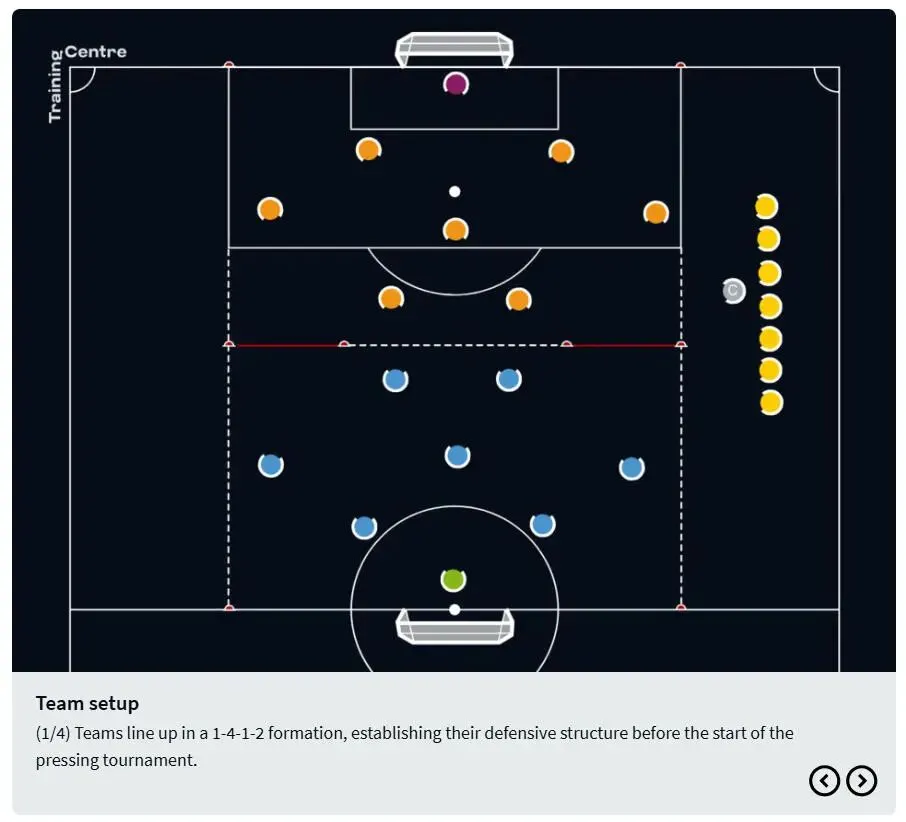
球队站位布置
两支球队采用1-4-1-2 阵型站位,在高位逼抢对抗训练开始前,先落位搭建好本方的防守体系。
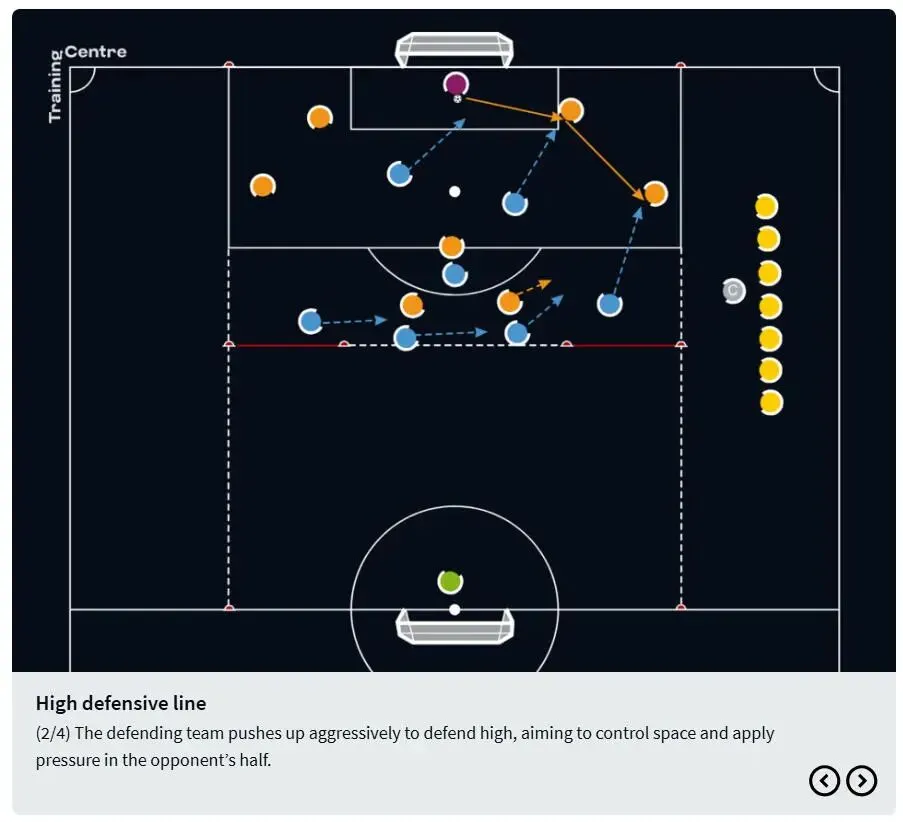
高位防守线
防守方整体主动前压实施高位防守,目的是在对方半场控制防守区域、对持球方展开逼抢压迫。
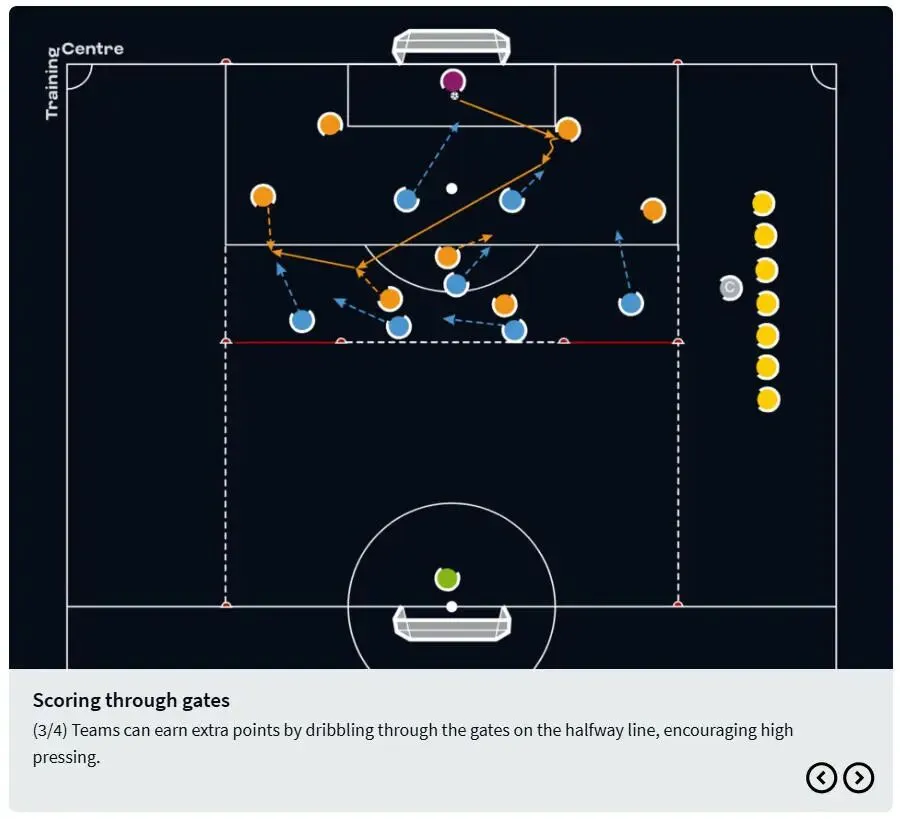
穿越得分门得分
球队如果带球从中场线的得分门区域突破,就可以获得额外积分,以此鼓励球员实施高位逼抢战术。
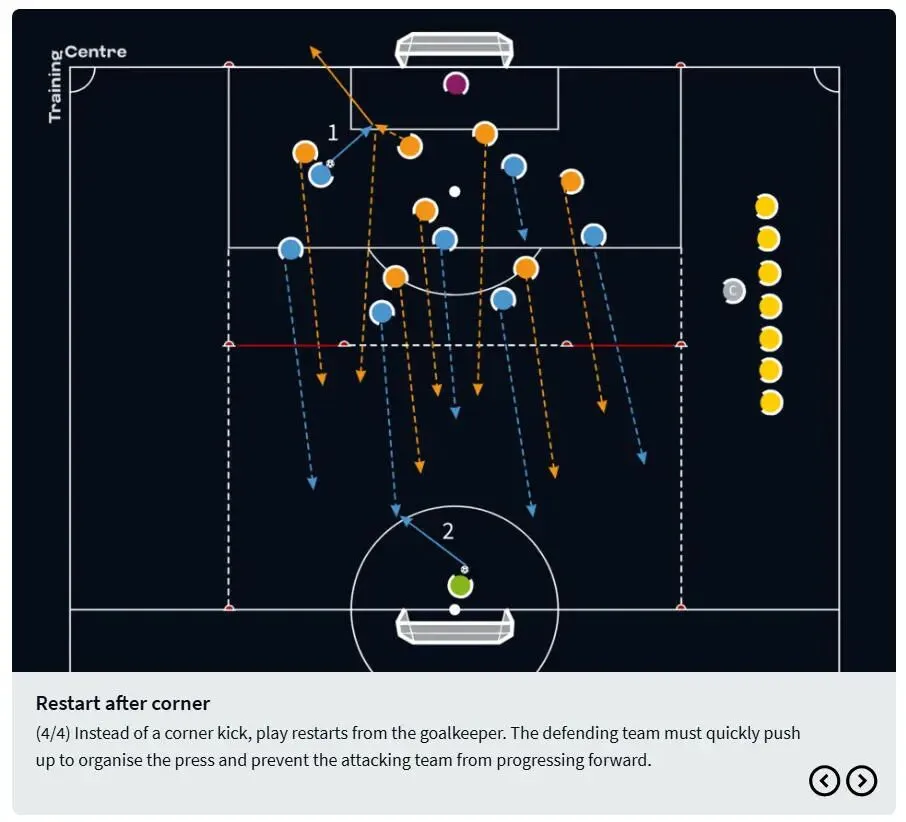
角球后的比赛重新开始
本训练不设置角球发球环节,由守门员发球重新开启比赛。防守方需要迅速整体前压组织逼抢,阻止进攻方向前推进。
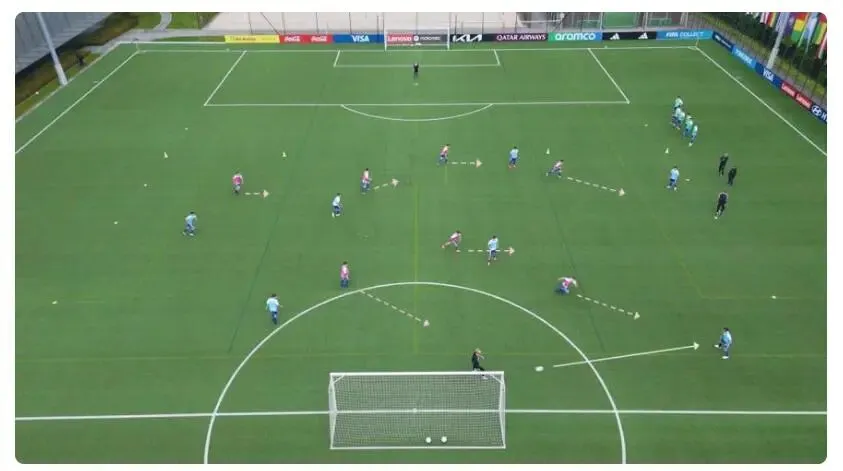
1.球的方向
防守队员将球作为他们的主要参考点,而不是对手。
球队集体转向球:
压缩其周围的空间
创造数量优势
保持紧凑性和相互支持
这一原则支撑着球队施压方法:球决定了球队的形状和运动。
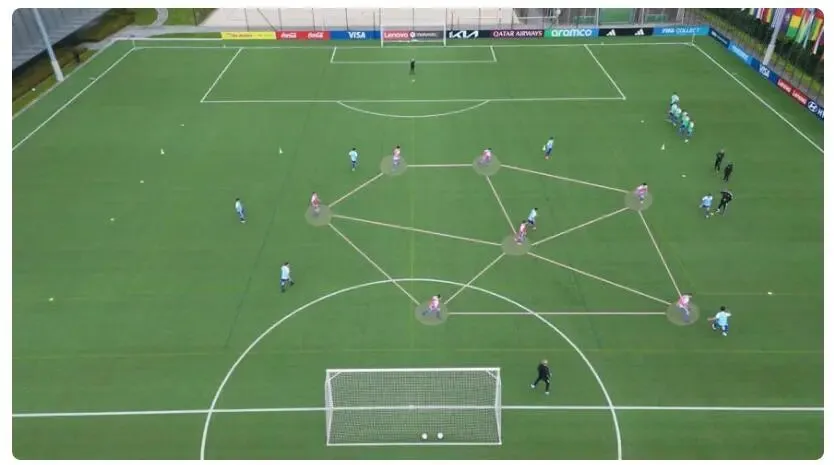
2.整体行为
团队作为一个同步的单位移动,保持垂直和水平的紧凑性。当一个球员施压时,其他球员也会跟着施压,形成一个压力网,并能够一波接一波地施压。如果第一条防线被打破,下一个球员已经处于继续施压的位置。
主要目标包括:
保持紧凑
在第一条防线被撕裂后保持压力
制造一个压力网,压制对手的集结
这一原则使球队能够在不失去结构的情况下,一波又一波地推进。
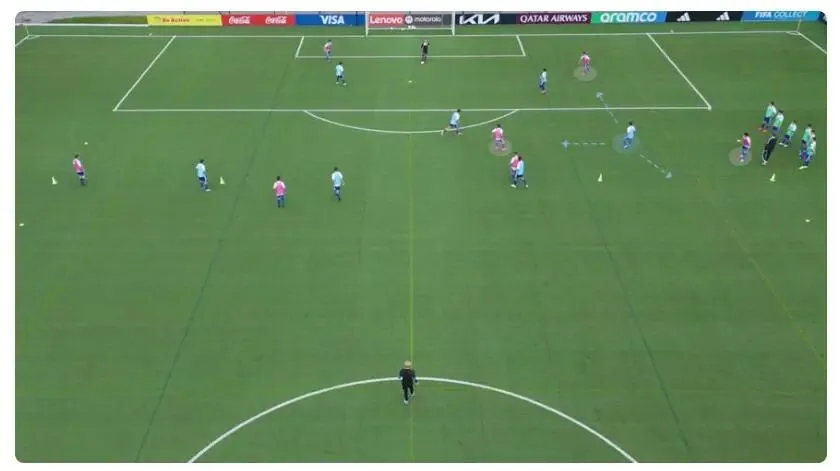
3.在对手之间移动
一名球员将自己置于多个对手之间。
这使他们能够:
封锁多条传球线路
在不同方向上灵活反应
保持移动和不可预测
这种行为在变化、高强度压制系统中特别有效。
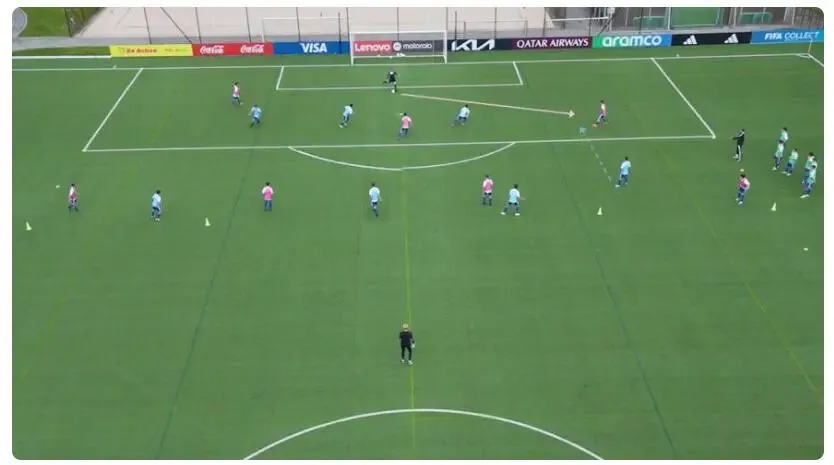
4.冲刺施压
球员们全速直线推进,旨在挑战并赢得球权。
此施压动作定义如下:
全速跑动施压
毫不犹豫
意图抢到球或强迫对手犯错
信任队友掩护
这一原则反映了球队极端紧迫的心态。施压球员的目标是尽早触球,最好是拦截球。他不负责控制周围的空间;这一责任在于他的队友,他们必须保持联系并掩护,以保持紧凑。
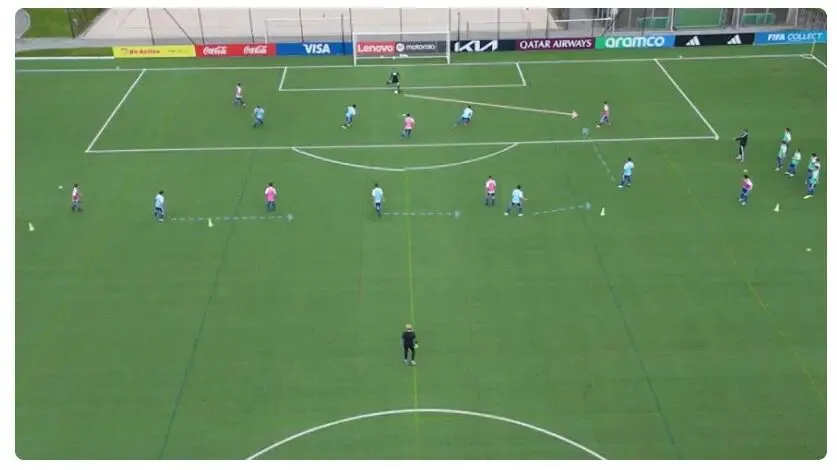
5.从后面覆盖
当一名后卫出去施压时,其余的后防线队员要水平移动或对角线向上移动,
达到:
盖住后面的空间
防止垂直通过
保持平衡和紧凑
在球队的积极施压系统中,确保团队即使在个人做出决定时也保持稳定。这一原则在11v11的比赛场景中尤其重要,例如,当一名边后卫压迫对方边后卫时,对手的边锋暂时没有盯防。
英文原版:
The setup
Three teams of seven players compete in a round-robin format. Matches are played on half a pitch with reduced width, creating a compact and high-pressure environment.
Rules
Free play with the offside rule applying from the halfway line.
Two gates are placed on the halfway line. Teams earn extra points by dribbling through them.
Throw-ins are played, but corner kicks are replaced by restarts from the goalkeeper.
Goals are rewarded — if a team scores, they keep possession.
Rotation
Each game lasts 2 minutes, followed by a short active recovery break.
Teams rotate after each round.
Points are tracked, and the team with the most points wins the tournament.
Deliberate practice design
This exercise is designed carefully to challenge players physically, tactically and mentally. Everything, from the setup and rules to coaching interventions, is intended to foster maximum intensity, tactical clarity and a bold pressing mentality.
Tournament format: The competitive format increases pressure, driving intensity and focus while replicating real match situations.
Work–rest ratio: Short two-minute games with active recovery periods sustain high intensity and keep players sharp and engaged.
Rule constraints: Gates on the halfway line force defenders to press high and defend forward, rather than dropping deep to protect the goal.
Quick restarts: Rapid transitions after goals or out-of-play situations maintain tempo and reward urgency.
Coaching interventions: Schmidt uses player circles and live on-field demonstrations to clarify and instil tactical behaviours.
Mentality and exaggeration: Players are encouraged to push limits, exaggerate pressing behaviours and embrace the intensity needed to develop an extreme style.
This format brings Schmidt’s pressing ideas to life in a highly immersive and demanding environment. Hear him reflect on the rationale behind these design choices in the interview below.
Five Key Principles of Schmidt’s Pressing Philosophy
Roger Schmidt’s pressing philosophy is grounded in a clear tactical vocabulary. Below, we break down five central German terms that structure his team’s behaviour and explain how they come to life on the training pitch.
1. Ball orientation
Ballorientierung – Defenders use the ball as their primary reference point, not the opponent. The team shifts collectively towards the ball to:
Compress space around it
Create numerical superiority
Maintain compactness and mutual support
This principle underpins Schmidt’s approach to pressing: the ball dictates the team’s shape and movement.
2. Swarm behaviour
Schwarmverhalten – The team moves as a synchronised unit, maintaining vertical and horizontal compactness. When one player presses, others follow, creating a net of pressure and enabling pressing in waves. If the first line is broken, the next player is already in position to continue the press. Key objectives include:
Stay compact
Maintain pressure after the first line is broken
Create a web of pressure that suffocates the opponent’s build-up
This principle enables Schmidt’s teams to press in waves without losing structure.
3. Floating between opponents
Schwimmen – A player positions themselves between multiple opponents, covering several options without committing to one. This allows them to:
Block multiple passing lanes
React flexibly in different directions
Stay mobile and unpredictable
This behaviour is especially effective in fluid, high-intensity pressing systems.
4. Sprint pressing
Im Sprint anlaufen – Players press in straight lines at full speed, aiming to challenge and win the ball, not just delay. This pressing action is defined by:
Full-speed commitment
No hesitation
Intent to tackle or force an error
Trust in team-mates to cover behind
This principle reflects Schmidt’s extreme pressing mentality. The pressing player’s objective is to reach the ball early, ideally intercepting it. He is not responsible for controlling the surrounding space; that responsibility lies with his team-mates, who must stay connected and cover behind to maintain compactness.
5. Covering from behind
Durchsichern – When a full-back steps out to press, the rest of the backline shifts horizontally or steps up diagonally to:
Cover the space behind
Prevent vertical passes
Maintain balance and compactness
In Schmidt’s aggressive pressing systems, durchsichern ensures the team remains stable even when individuals commit forward. This principle is especially relevant in an 11v11 match scenario — for example, when a full-back presses the opposing full-back, leaving the opponent’s winger temporarily unmarked.
Conclusion
This session demonstrates how Schmidt’s pressing philosophy is brought to life on the training ground. Through competitive structure, tactical rules and intense coaching, players are immersed in the behaviours that define his teams. The result is a training environment that builds not only tactical understanding, but the mentality and intensity required to play Schmidt’s high-octane style.

