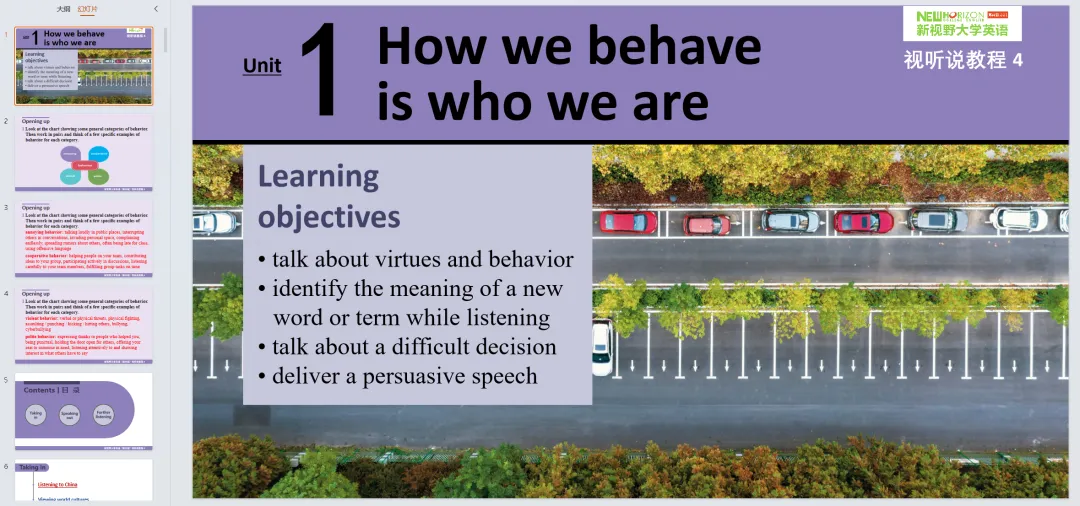
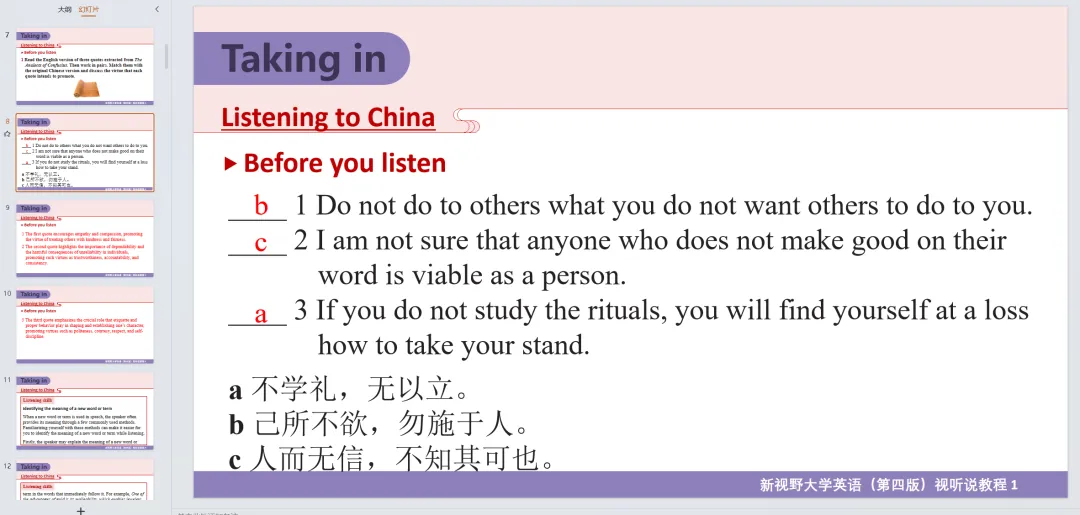
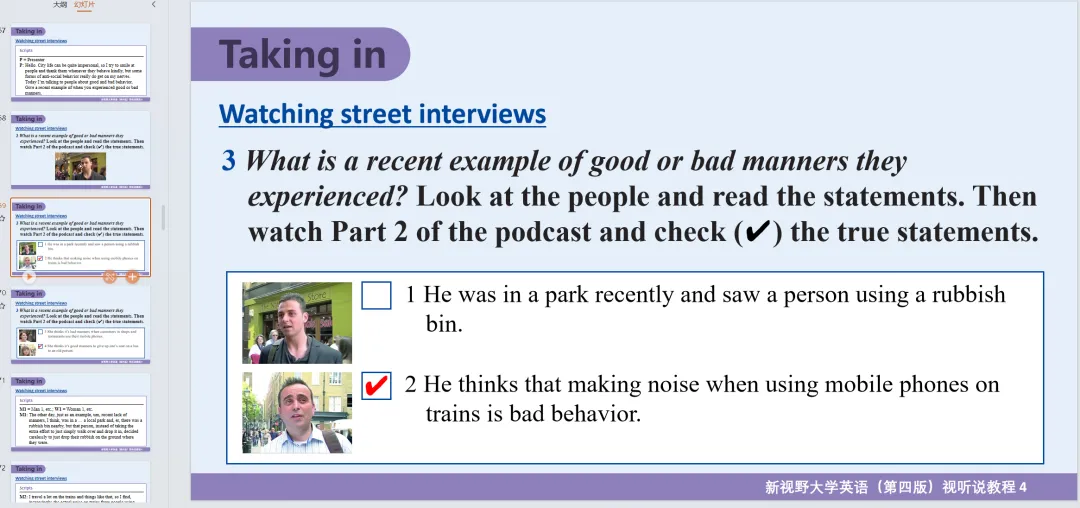
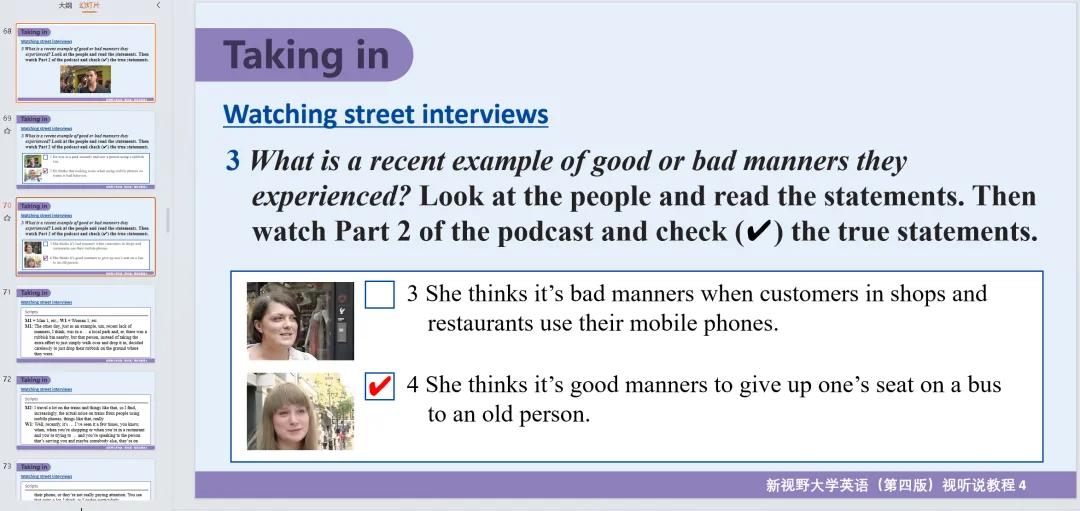
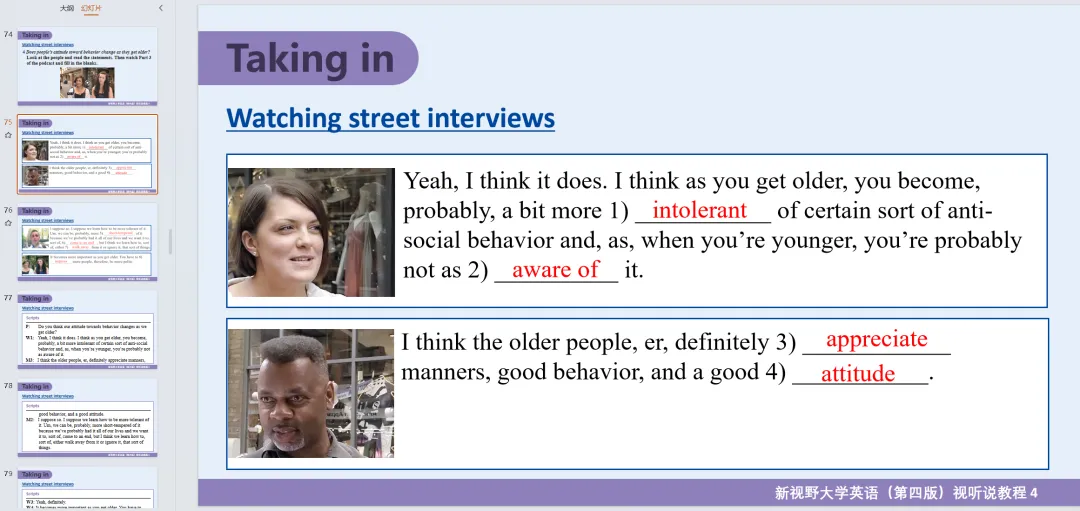
新视野大学英语视听说教程 第4册 参考答案+课件PPT+听力音频(第四版/思政智慧版)。课本答案和听力原文都在ppt里面!!!通过夸克网盘分享的文件:「听说教程4答案及听力原文」链接:https://pan.quark.cn/s/a65a0026473c
复制以上链接打开「夸克」APP,即可下载
Unit1_Taking in_Listening to China_听力原文
The Chongyang Festival, also referred to as the Double Ninth Festival, falls on the ninth day of the ninth month in the Chinese lunar calendar. The number nine is regarded as yang in Chinese culture, which represents positive forces, life, and brightness, hence the festival is given the name “Chongyang”. In addition, the word “nine” shares the same pronunciation as the word for “long” or “forever” in Chinese, so “double ninth” implies good health and a long life.
The festival has a long history of over 2,000 years. According to some research, its origin can be traced back to the Warring States Period, when it was mainly celebrated among royal families. It became widely celebrated after the Wei and Jin dynasties, and was officially declared to be a festival during the Tang Dynasty.
The most important tradition of the Chongyang Festival is respecting the elderly. Seniors are assets of families and society, representing valuable sources of wisdom, creation, and inheritance. Respecting and caring for the elderly is one of the most fundamental moral principles in Chinese culture.
One key tradition of the Chongyang Festival involves honoring older people through specific gestures of respect and appreciation. Actions, such as adult children returning home to visit their elderly parents, presenting them with gifts, or arranging special meals or outings, all have a special significance on this day. These actions embody the underlying value of the Chinese culture that respects and appreciates the wisdom, experiences, and contributions of the older generation.
Another custom is ascending heights or climbing mountains. The festival is a perfect time for outdoor activities. With the clear autumn sky and bracing air, many people climb mountains to enjoy the beauty of nature.
Other traditions include eating Chongyang cake, appreciating chrysanthemum flowers, and drinking chrysanthemum wine, among others. Because the ninth lunar month is the time of a fruitful harvest, these activities bring family members together in a joyous festive atmosphere to remember their ancestors, strengthen their ties, and wish each other health, happiness, and prosperity.
In modern times, the Chongyang Festival has taken on new meanings. In 1989, the Chinese government set it as Senior’s Day to promote respect for the elderly. In 2006, it was listed as an item of China’s national intangible cultural heritage. Its abundant cultural meanings are important components of Chinese culture.
总结:重阳节(Chongyang Festival) 的历史、文化意义和传统习俗。