叙事文本 The Big Break
以下文本以高一年级学生为授课对象,课时长40分钟。
Steven had had his first starring role in kindergarten, playing a talking stone in a class play. From the moment he heard the applause and to ok his bows, he knew he wanted to be an actor. He “drew” his name as it would look at a theater. In his mind, he “practiced" his acceptance speech to the Academy Awards. “I want to thank my agent ...” he imagined himself saying to the crowd.
By the sixth grade, he was used to starring in school productions. He played Romeo in this year's Junior Shakespeare Festival. His brother said he was probably the first Romeo in the history of theater to have braces Steven liked everything about acting- except for his brother’s comments about it. Brad was not interested in acting.
Steven dreamed of going to California or New York when he got older. Meanwhile, he read the “trades” at the library- the newspapers and magazines of the acting business, He couldn't believe it when he saw that there was going to be an open casting call in his own Midwestern city. He begged his parents to take him, but they worked on Saturdays and they couldn't take the day off. He was forced to ask his older brother, the critic.
The part called for a boy who looked about 14. Steven figured he could pass. Unlike Brad, Steven looked older than his age. Brad, on the other hand, at 16, looked more like 14. The boys arrived early at the theater where the tryouts were taking place. There were already over 200 kids there. Steven picked up his application. Brad picked up one, too -“Just for fun,” he said. Each of them then studied the short script they'd been handed. Like all the other kids, they mouthed the words over and over. Some kids found quiet spaces to read their lines aloud, with all the right emotion.
Steven asked Brad to listen to his reading. “OK, but you have to listen to mine, too.”
“Deal,” Steven answered. Then he read, and, as usual, he was good. Next it was Brad's turn. Steven couldn't believe what he was seeing and hearing Why hadn't Brad ever tried out for a play? Where had he gotten all this talent all of a sudden? He asked his brother, “Why haven't you tried before?”
“I was waiting for something big,” Brad replied.
本节课的教学文本是一篇题为 I was waiting for something big 的文章。该文章的情节发展具有高潮和冲突,并表达了如下观点:每个人的努力方式会因个体的性格特征不同而不同,无关是非对错,重要的是自己的投入和努力过程。文本材料词汇量不算大,但要深度读懂文章并理解文章的主题则难度较大。高一年级学生现有水平与材料要求的水平尚有一点的差距。
学生是来自优秀示范班,综合素质优秀,阅读能力较强。虽然部分生词会加大难度的理解,但是如果借助给定的参考词汇并运用语境猜读等技巧,学生完全有能力完成阅读任务并最终理解教学文本,此次施教的学生对英语兴趣浓厚,师生关系融洽,学生表现出较高的学习热情。
教学目标以高中英语学科核心素养为纲,关注学生语言的输出和输出质量的阅读活动设计,阅读过程融合语言、情节、思维三大内容。主要的教学目标有:
(1)学生能以时间为线索,借助文本中的动词,梳理出Steven和Brad两位主人公的理想以及为理想付出的显性的努力;
(2)学生能够基于文本内容和语言描述,分析两位主人公在演员公开选拔赛前的表现,了解两人的个性,推测出Brad的真实态度和隐性的努力;
(3)学生能够在充分理解故事人物的基础上,讨论作者的写作手法;
(4)学生能够联系个人生活实际开展对话,谈论自己的理想以及自己的努力方式。
教学设计思路:
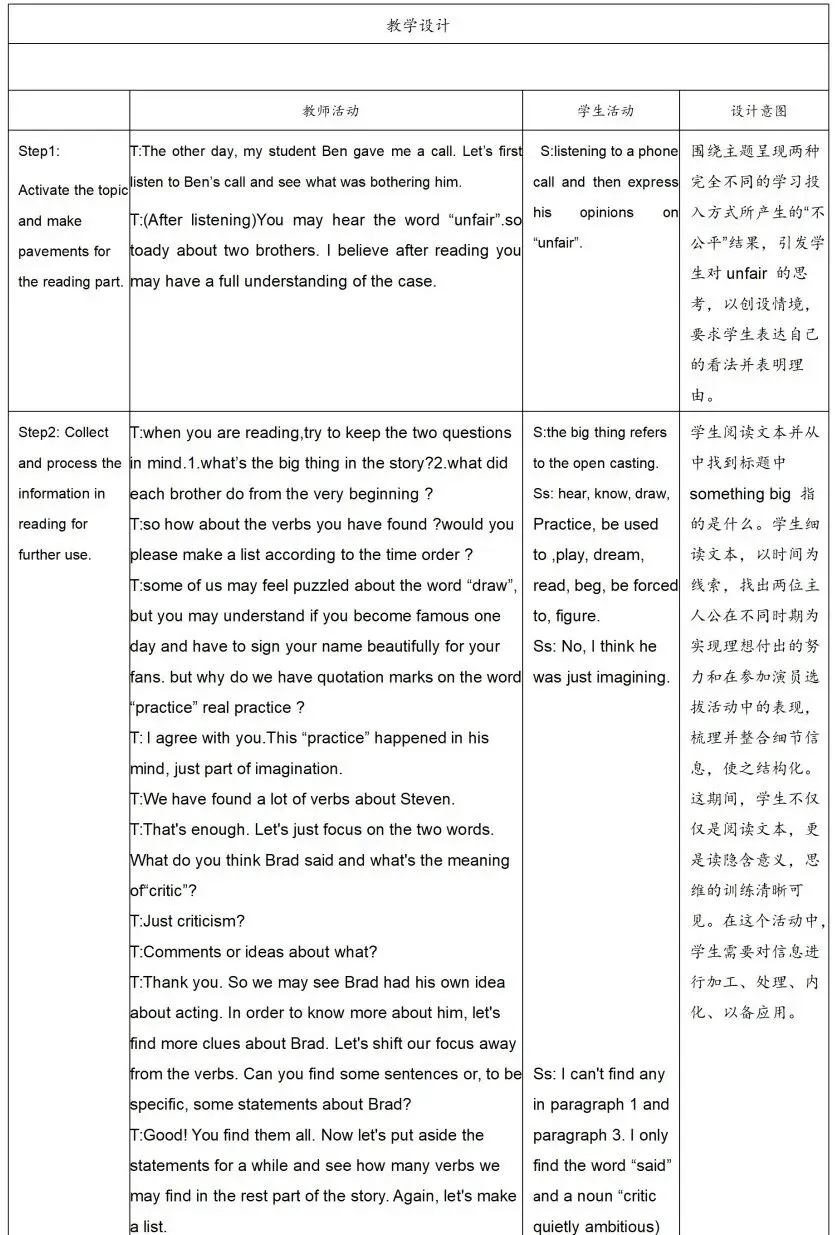
教学设计围绕核心短语something big 展开,沿着文章脉络before the casting call,at the casting call,the ending 探寻人物性格特征,文章主题,作者的写作手法和意图,开展一系列阅读活动。
Activity 1 激活话题,完成阅读铺垫
At the beginning of the class, students listen to an audio device of a real case about a student Ben being bothered by the comparison with his classmate in the ways they work and the results they achieve. Students give their own ideas of this case and prepared for the story in the reading material.
【设计意图】教师通过播放一段来自学生的电话录音,讲述两种看上去完全不同的学习投入方式所产生的“不公平”结果,引发学生对 Unfair?的思考并表达自己的看法,由此顺利过渡到文章的故事内容。此部分为目标4作好了铺垫。
Activity 2:快速阅读,明确态度和主题
1) Students read the passage with the given title “I Was Waiting for Something Big" and find out the “big thing" in the story.
2) Students focus on paragraphs 1-4 and circle out all the verbs relating to the two brothers in the passage and underline three statements in the process.
3) Students point out the attitude of each role towards acting according to the verbs they have found.
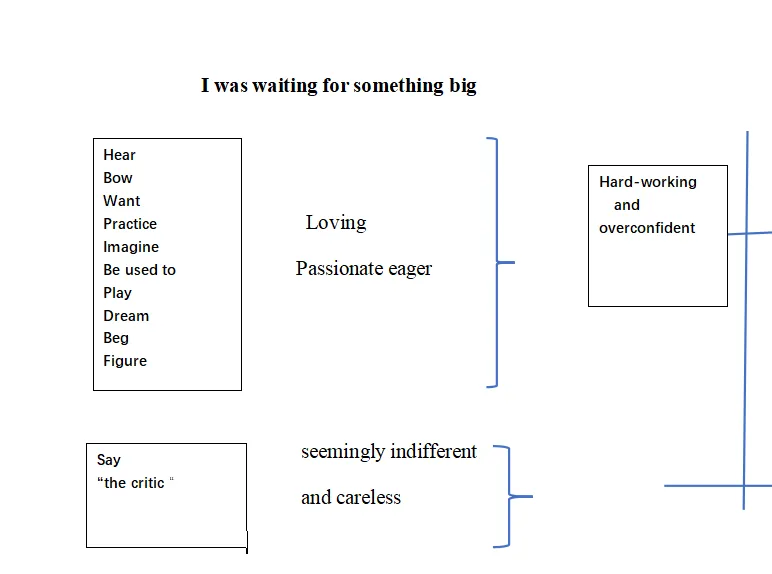
【设计意图】学生通过阅读文章查找出the“big thing”,即两兄弟所面对的目标。这是文章的中心词,依据中心词设计文章的主线问题。同时锁定文章casting call前的内容,查找出两兄弟的动作(动词),从中归纳出两个人对待做演员这件事情看似完全不同的态度。此步骤完成目标 1,并为目标2作好铺垫。
Activity 3:精细阅读,找出矛盾,挖掘真实态度和性格
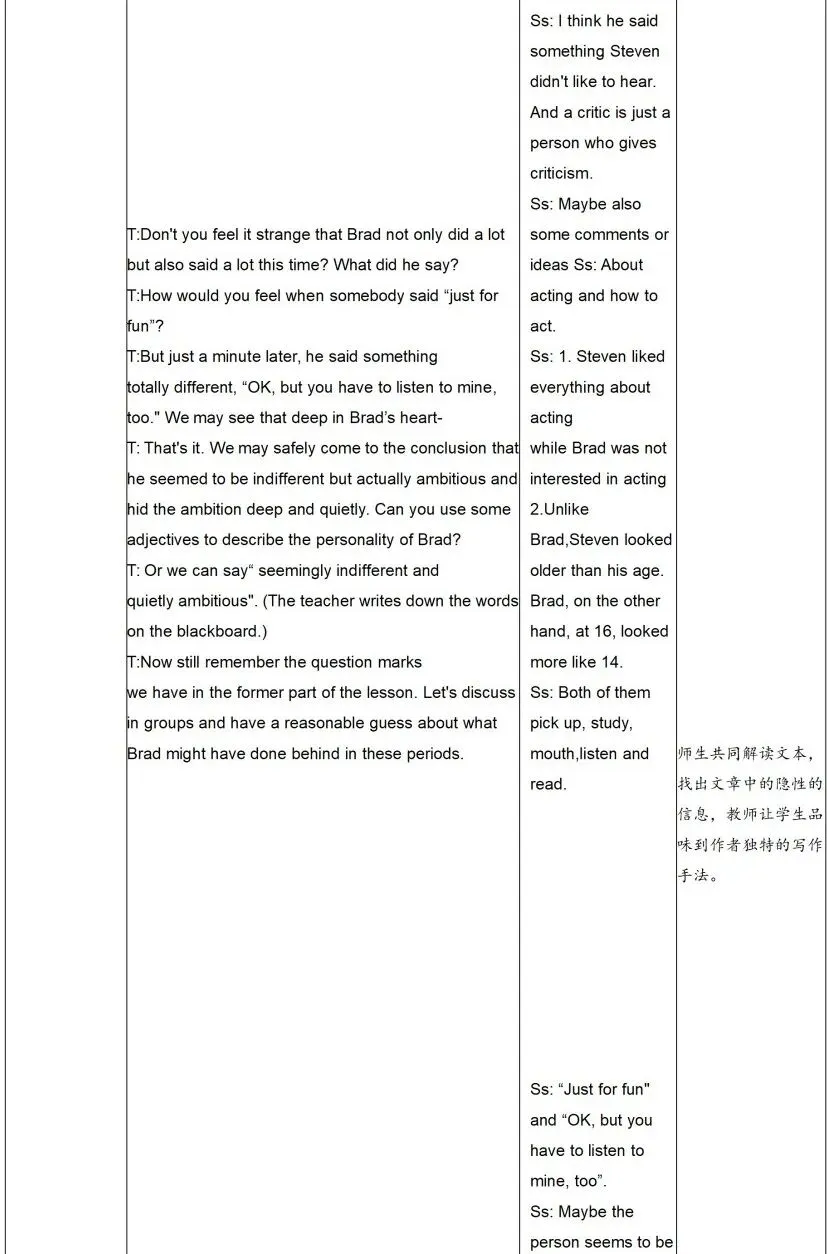
Students analyze paragraphs 4-7 and again find out the deeds of the two main characters. But this time they focus more on the behavior of Brad especially the paradox in his words. Students finally understand the real attitude of Brad.
【设计意图】学生通过细读故事后半部分,关注Brad 的动作特别是其前后矛盾的话语和表现,获知 Brad 的真实态度。此步骤完成目标2.并为目标4作好铺垫。
Students try to help Steven figure out his puzzles by understanding Brad's reply, the title of the story (“T was waiting for something big") especially the word “waiting”. Students work in groups and guess what Brad might have done in each period from childhood and finally understand that “waiting” equals “preparing”.
【设计意图】学生通过小组讨论,猜测 Brad在文章中未被提及的部分到底做了哪些Steven没有看到和关注到的事,从而充分理解文章标题,即 Brad 最后的回答中 waiting 的真正含义(不是“等待”而是“准备”是为了这重要时刻的默默准备),至此获知人物性格特点(hard-working and quietly ambitious)。此步骤完成目标2,并为目标4作好铺垫。
Activity 4:归纳信息,作出评价与推断
The three statements from the passage are shown in detail and students judge whether these statements are facts or just Steven's opinions. Then they figure out Steven's personalities finally.
【设计意图】教师再次详细呈现之前的三种表述,引导学生判定这些是客观事实还是Steven 的个人片面想法,至此完整归纳出 Steven 的人物性格特征(hard-working and self-conceited)。此步骤完成目标2、并为目标4作好铺垫。
Activity 5:深入挖掘,锻炼评判性思维
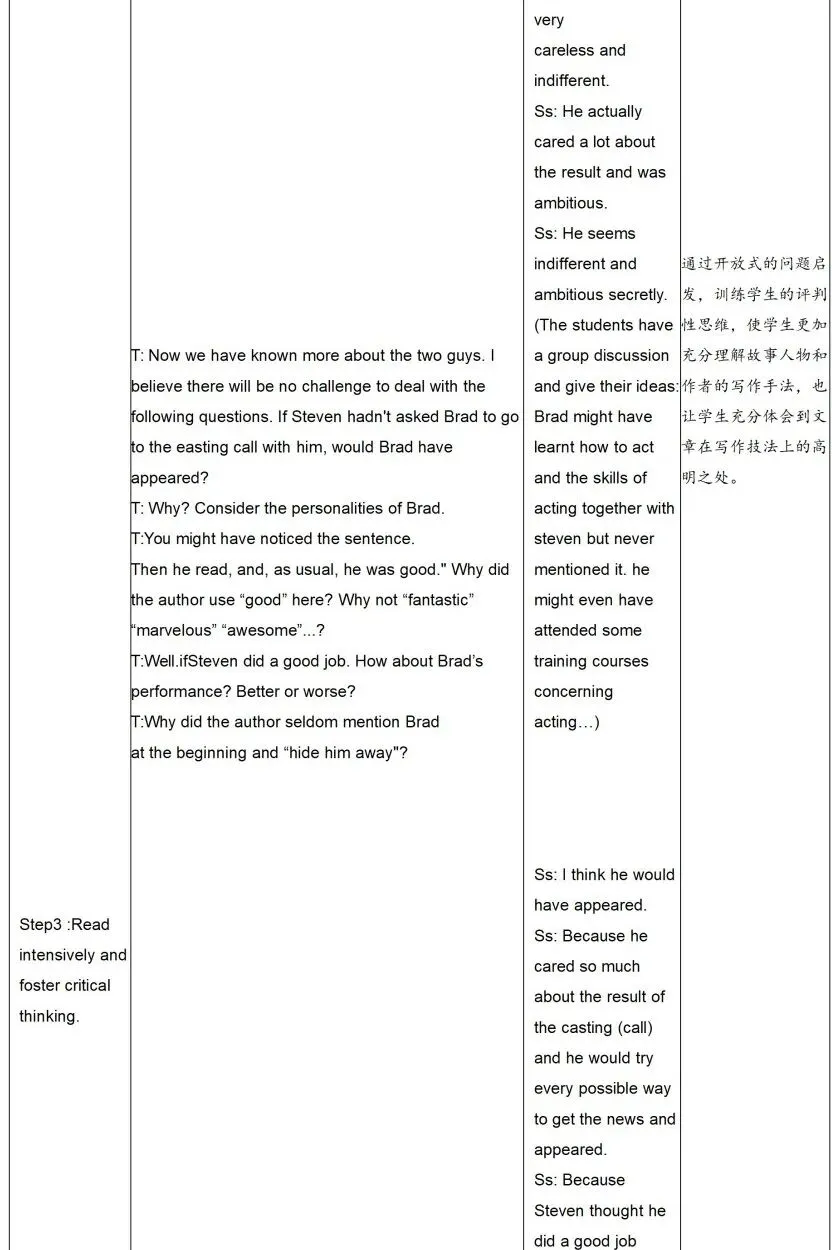
Students think hard about the following open-ended questions and understand the way the author made the climax astonishing.
1) If Steven hadn't asked Brad to go to the casting call with him, would Brad have appeared?
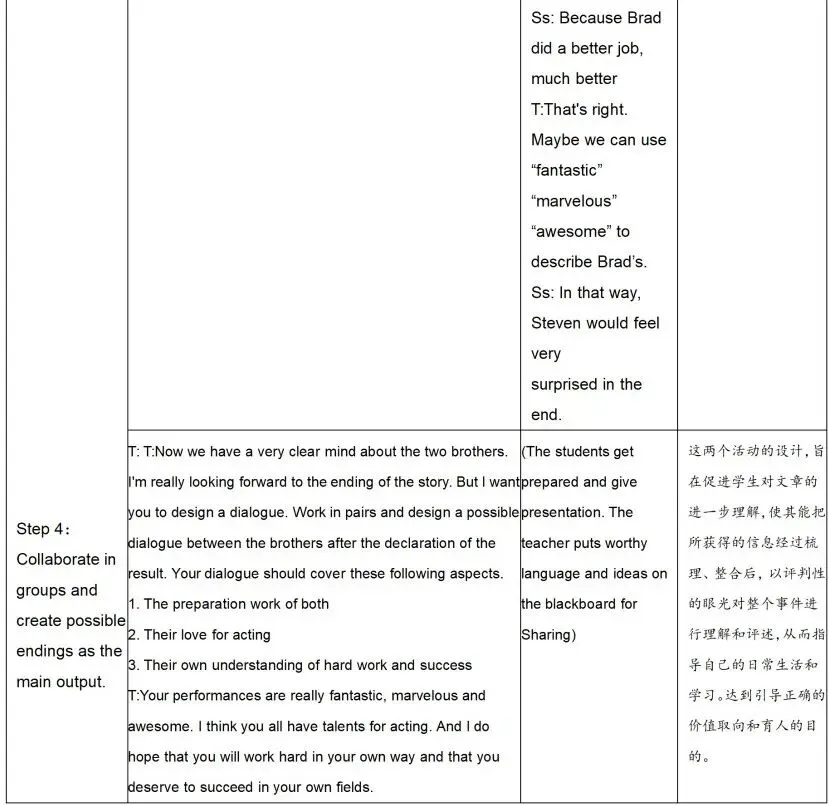
2)“Then he read, and, as usual, he was good." Why did the author use “good" here? Why not “fantastic” “marvelous” “awesome” ...?
3) Why did the author seldom mention Brad at the beginning but “hide him away" instead?
【设计意图】学生通过开放式的问题,充分理解故事人物、作者的写作手法,得到思维训练,锻炼评判性思维能力。此步骤完成目标3,并为目标4作好铺垫。
Activity 6:小组协作,读后输出
Students work in pairs and design a possible dialogue between the brothers after the declaration of the possible result. Each dialogue covers the following aspects.
1) The preparation work of both
2) Their love for acting
3) Their own understanding of hard work and success
【设计意图】在基于文章阅读完成语言铺垫、情节铺垫和思维铺垫的基础上,学生通过设计短对话,应用本节课上的语言表达(部分圈画的动词和黑板上的形容词),把握人物特征,设计合理对话内容,呈现对两种不同努力方式的理解。此步骤完成目标4。
Activity 7:文本后续创写(布置作业)
1) Write a possible ending according to the reading material and students’ dialogues.
2) Share the drafts with fellow classmates.
至此,本节课结束。
板书设计




 10个月宝宝每天需要喝多少奶粉?

