【狂暴英语教案】新概念英语第二册第41课:你把那个叫帽子吗?
- 2026-07-10 13:18:36
读外刊,接触原汁原味的英文表达,
欢迎关注以下公众号+设为星标+推荐给朋友。▼
📚 狂暴英语教案 · 新概念英语第二册
第41课 Do you call that a hat?
你把那个叫帽子吗?
📘 本课信息
教材:新概念英语第二册 · 第41课
核心功能:购物场景·委婉表达·英式幽默
语法焦点:情态动词must/need·needn't have done·cannot...too...句型
🏷️ 热门标签
🎯 本课学习目标
本课通过一对夫妇在帽子店购物的幽默对话,生动展现了日常交际中的委婉表达、讽刺与幽默。学习目标如下:
1. 词汇:
掌握与购物、评价、情感表达相关的核心词汇,如 rude, mirror, remark, remind 等,并理解其用法和搭配。重点学习 remind 的两种核心句型。
2. 语法:
深入理解并掌握 情态动词 must 表示“必须”与“推测”的用法区别,以及 need 作为情态动词和实义动词的不同用法。这是本课的语法核心。
3. 技能(段落写作):
学习如何通过对话推进叙事,并运用间接引语转述对话内容,掌握描述购物经历和表达个人观点的基本框架。
4. 文化:
了解英语国家中关于购物、给予意见(尤其是对衣着打扮)的社交礼仪,体会英式幽默中含蓄、反讽的表达方式。
📖 第一部分:课文完整内容
课文原文
📜 课文原文
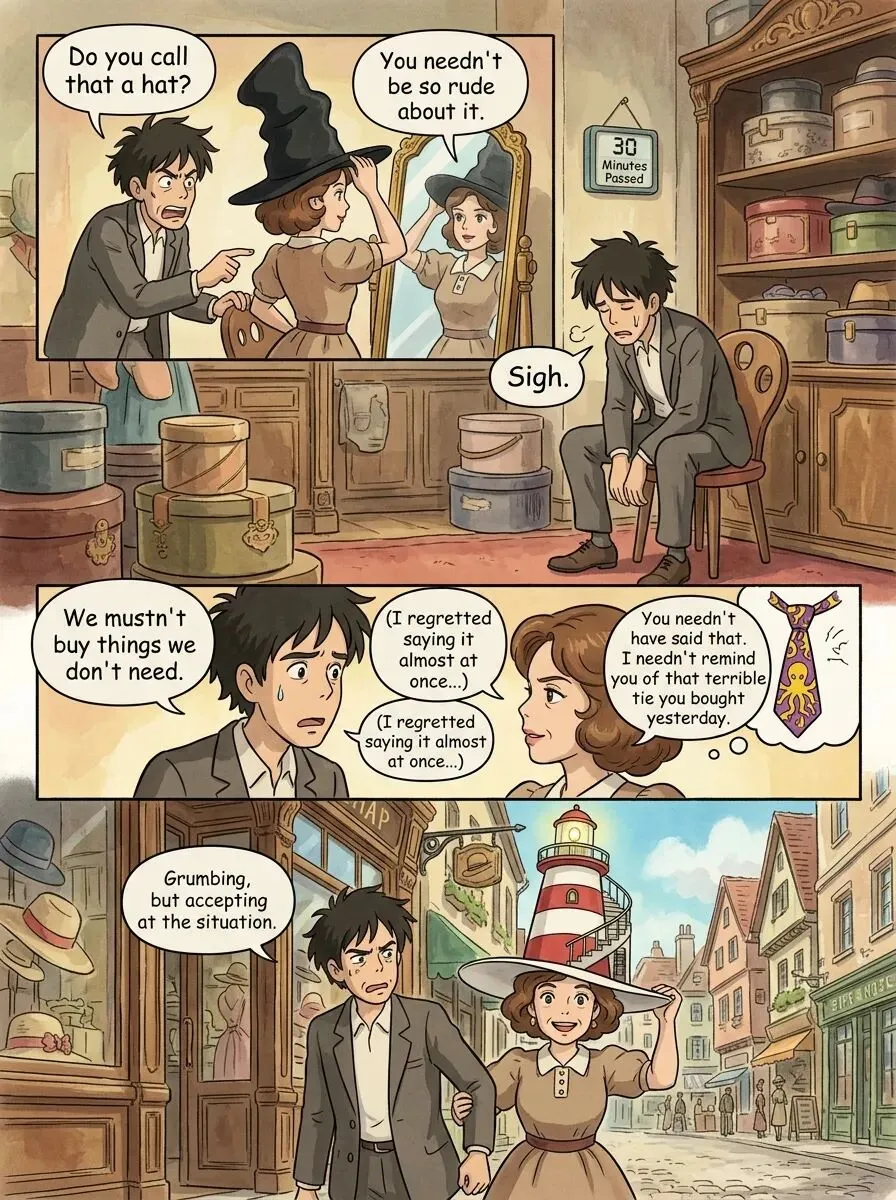
'Do you call that a hat?' I said to my wife.
'You needn't be so rude about it,' my wife answered as she looked at herself in the mirror.
I sat down on one of those modern chairs with holes in it and waited. We had been in the hat shop for half an hour and my wife was still in front of the mirror.
'We mustn't buy things we don't need,' I remarked suddenly. I regretted saying it almost at once.
'You needn't have said that,' my wife answered. 'I need not remind you of that terrible tie you bought yesterday.'
'I find it beautiful,' I said. 'A man can never have too many ties.'
'And a woman can't have too many hats,' she answered.
Ten minutes later we walked out of the shop together. My wife was wearing a hat that looked like a lighthouse!
背景简介:本课课文选自《新概念英语》第二册,是一篇典型的幽默叙事短文。作者L. G. 亚历山大擅长通过日常生活中的小场景,展现人物性格与英式幽默。本篇通过丈夫与妻子在帽子店里的对话,巧妙地运用了情态动词 need 和 must,以及反讽的语言,描绘了一幅生动有趣的夫妻购物图景,反映了消费观念、夫妻相处之道中的幽默与智慧。
参考译文:
“你把那个叫帽子吗?”我对妻子说。
“你没必要这么无礼,”妻子边回答边照着镜子。
我坐在一把带窟窿的现代椅子上等待着。我们在帽子店已经呆了半个小时,而我妻子仍然在镜子前面。
“我们不应该买我们不需要的东西,”我突然评论道。话一出口我就后悔了。
“你没必要这么说,”我妻子回答,“我也没必要提醒你昨天买的那条糟糕的领带。”
“我觉得它很好看,”我说,“男人有多少领带也不嫌多。”
“女人有多少帽子也不嫌多,”她回答。
十分钟后,我们一起走出了商店。我妻子戴着一顶看起来像灯塔的帽子!
🔍 第二部分:逐句精讲与词块总结
句子1
原文: 'Do you call that a hat?' I said to my wife.
翻译: “你把那个叫帽子吗?”我对妻子说。
句子结构: 这是一个包含直接引语的简单句。主句是 I said to my wife,引导的从句是直接引语 Do you call that a hat?,这是一个一般疑问句。
重点词汇:
call 蓝思值 450L
英音[kɑːl] 美音[kɔːl] 词性:vt.
释义:把...称为;打电话;呼唤
常用语块:call sb. sth. 称某人为...;call it a day 收工,结束
短语搭配:call for 需要,要求;call on 拜访;号召;call up 打电话;使想起
例句一:What do you call this in English? 这个用英语叫什么?
例句二:Let's call it a day and go home. 我们今天就到此为止,回家吧。
拓展:call 在此是“称呼,叫作”的意思,call + 宾语 + 宾语补足语 是一个重要结构。同义词有 name, term。
语法点睛: 本句展示了直接引语的使用。在叙事中,直接引语能原汁原味地呈现人物对话,增强现场感和生动性。引导内的句子保持独立的句子结构和标点(此处是问号)。[NCE知识点笔记]
句子2
原文: 'You needn't be so rude about it,' my wife answered as she looked at herself in the mirror.
翻译: “你没必要这么无礼,”妻子边回答边照着镜子。
句子结构: 这是一个复合句。主句是 my wife answered,引导内是直接引语 You needn't be so rude about it。as she looked at herself in the mirror 是时间状语从句,由 as 引导,表示“当...的时候”。
重点词汇:
needn't 蓝思值 500L
英音[ˈniːdnt] 美音[ˈniːdnt] 词性:情态动词(否定式)
释义:不必,不需要
常用语块:needn't do sth. 不必做某事
短语搭配:needn't have done 本不必做(但做了)
例句一:You needn't worry about the exam; you've prepared well. 你不必担心考试,你准备得很好。
例句二:She needn't have bought so much food. 她本不必买这么多食物。(实际上买了)
拓展:need 可作为情态动词(多用于否定和疑问句)或实义动词。作为情态动词时,无人称和时态变化,后接动词原形。其否定式 needn't 表示“没有必要”。[名师精讲]
rude 蓝思值 600L
英音[ruːd] 美音[ruːd] 词性:adj.
释义:粗鲁的,无礼的
常用语块:be rude to sb. 对某人无礼
短语搭配:a rude remark 无礼的言论;rude behavior 粗鲁的行为
例句一:It's rude to interrupt people when they are speaking. 打断别人说话是不礼貌的。
例句二:He was very rude about my cooking. 他对我的厨艺评价非常刻薄。
拓展:反义词是 polite (有礼貌的)。rude 强调缺乏礼貌和尊重。
mirror 蓝思值 400L
英音[ˈmɪrə(r)] 美音[ˈmɪrər] 词性:n.
释义:镜子
常用语块:look at oneself in the mirror 照镜子
短语搭配:a rear-view mirror (汽车)后视镜;mirror image 镜像
例句一:She glanced at herself in the mirror before leaving. 出门前她照了下镜子。
例句二:The lake was as calm as a mirror. 湖面平静如镜。
拓展:可作动词,意为“反映,反射”,如 The novel mirrors the society of the time. (这部小说反映了当时的社会。)
语法点睛: 本句出现了本课第一个核心语法点:情态动词 need 的否定式 needn't,表示“不必”,后面接动词原形 be。同时,as 引导的时间状语从句表示主句动作 answered 发生的同时,另一个动作 looked 也在进行,体现了动作的伴随性。[语法新思维]
句子3
原文: I sat down on one of those modern chairs with holes in it and waited.
翻译: 我坐在一把带窟窿的现代椅子上等待着。
句子结构: 这是一个简单句,主语 I 后接两个并列的谓语动词 sat down 和 waited,由 and 连接。on one of those modern chairs 是地点状语。with holes in it 是介词短语作后置定语,修饰 chairs。
重点词汇:
modern 蓝思值 550L
英音[ˈmɒdn] 美音[ˈmɑːdərn] 词性:adj.
释义:现代的,时髦的
常用语块:modern art 现代艺术;modern technology 现代科技
短语搭配:in modern times 在现代;modern history 近代史
例句一:The house is full of modern furniture. 这房子里全是现代家具。
例句二:He has very modern ideas about education. 他的教育观念很新潮。
拓展:反义词是 ancient (古代的) 或 old-fashioned (老式的)。名词形式是 modernity (现代性)。
hole 蓝思值 350L
英音[həʊl] 美音[hoʊl] 词性:n.
释义:洞,孔,坑
常用语块:a hole in the wall 墙上的洞;破旧的小店
短语搭配:make a hole 挖洞;be in a hole 处于困境
例句一:There's a hole in my sock. 我的袜子上有个洞。
例句二:The dog dug a hole in the garden. 狗在花园里刨了个坑。
拓展:with holes in it 是“带有...特征”的常用表达,it 指代 chair。
语法点睛: 句子中的 with holes in it 是一个“with + 名词 + 介词短语”的复合结构,在句中作定语,描述椅子的状态。这种结构非常简洁地道。例如:a room with a view of the sea (一个能看到海景的房间)。[NCE知识点笔记]
句子4
原文: We had been in the hat shop for half an hour and my wife was still in front of the mirror.
翻译: 我们在帽子店已经呆了半个小时,而我妻子仍然在镜子前面。
句子结构: 这是一个并列句,由 and 连接两个分句。第一个分句 We had been in the hat shop for half an hour 使用了过去完成时。第二个分句 my wife was still in front of the mirror 是一般过去时。
重点词汇:
still 蓝思值 400L
英音[stɪl] 美音[stɪl] 词性:adv.
释义:仍然,还
常用语块:still + 动词 表示动作或状态的持续
短语搭配:stand still 站着不动;still water 静水
例句一:I've been thinking about it all day, and I still don't know the answer. 我想了一整天,仍然不知道答案。
例句二:It was midnight, but he was still working. 已是午夜,但他仍在工作。
拓展:still 强调动作或状态在某一时间点仍在持续,常与进行时态连用。注意与 already (已经),yet (还,已经) 的区别。
语法点睛: 本句的第一个分句使用了 过去完成时 (had been)。过去完成时表示“过去的过去”,即在一个过去时间点之前已经发生或持续的动作。这里,“在帽子店呆了半小时”这个状态,发生在丈夫“坐下等待”这个过去动作之前,并且持续到那个时间点。for half an hour 是表示一段时间的状语,常与完成时态连用。[名师精讲]
句子5
原文: 'We mustn't buy things we don't need,' I remarked suddenly.
翻译: “我们不应该买我们不需要的东西,”我突然评论道。
句子结构: 主句是 I remarked suddenly,引导内是直接引语。直接引语本身是一个复合句:主句 We mustn't buy things,后面跟了一个省略了关系代词 that 的定语从句 (that) we don't need,修饰 things。
重点词汇:
mustn't 蓝思值 450L
英音[ˈmʌsnt] 美音[ˈmʌsnt] 词性:情态动词(否定式)
释义:禁止,不准,不应该
常用语块:mustn't do sth. 禁止/不应做某事
短语搭配:无特殊搭配,但语气强烈。
例句一:You mustn't tell anyone about this secret. 你绝不能把这个秘密告诉任何人。
例句二:Children mustn't play with fire. 小孩不准玩火。
拓展:mustn't 表示强烈的禁止或劝诫,语气比 shouldn't 更强。注意与 don't have to (不必) 的区别。[语法新思维]
remark 蓝思值 700L
英音[rɪˈmɑːk] 美音[rɪˈmɑːrk] 词性:v./n.
释义:v. 评论,说起;n. 言论,评论
常用语块:remark on/upon 评论...
短语搭配:make a remark 发表评论;a casual remark 随口说的话
例句一:Several people remarked on her excellent performance. 好几个人评论了她出色的表现。
例句二:His rude remark hurt her feelings. 他粗鲁的言论伤害了她的感情。
拓展:作动词时,比 say 更正式,常指对观察到的事物发表看法。同义词有 comment, observe。
语法点睛: 本句出现了本课第二个核心语法点:情态动词 must 的否定式 mustn't,表示“禁止”或“强烈劝诫不要做某事”。此外,定语从句 we don't need 修饰 things,关系代词 that 在从句中作宾语,被省略了。这是定语从句中常见的省略现象。[NCE知识点笔记]
句子6
原文: I regretted saying it almost at once.
翻译: 话一出口我就后悔了。
句子结构: 这是一个简单句。主语 I,谓语 regretted,宾语是动名词短语 saying it。almost at once 是时间状语。
重点词汇:
regret 蓝思值 650L
英音[rɪˈɡret] 美音[rɪˈɡret] 词性:v./n.
释义:v. 后悔,遗憾;n. 遗憾,懊悔
常用语块:regret doing sth. 后悔做了某事
短语搭配:regret to say/inform 遗憾地说/通知;express regret 表示遗憾
例句一:I regret leaving school so early. 我后悔那么早辍学。
例句二:We regret to inform you that your application has been rejected. 我们遗憾地通知您,您的申请已被拒绝。
拓展:regret 后接动名词 (doing) 表示对已发生的事后悔;后接不定式 (to do) 常表示“遗憾地要做某事”,多用于正式通知中。名词常用复数 regrets 表示歉意。
at once 蓝思值 450L
英音[ət ˈwʌns] 美音[ət ˈwʌns] 词性:短语
释义:立刻,马上;同时
常用语块:do sth. at once 立刻做某事
短语搭配:all at once 突然
例句一:Please come to my office at once. 请立刻来我办公室。
例句二:He is at once clever and diligent. 他既聪明又勤奋。
拓展:immediately, right away, instantly 是其同义短语。
语法点睛: 动词 regret 后面接动名词 (saying) 作宾语,表示对已经发生或完成的动作感到后悔。这是动名词作宾语的典型用法。类似的动词还有 enjoy, finish, avoid, mind, practise 等。[名师精讲]
句子7
原文: 'You needn't have said that,' my wife answered.
翻译: “你没必要这么说,”我妻子回答。
句子结构: 简单句,主句 my wife answered,引导内是直接引语 You needn't have said that。
重点词汇:(词汇 needn't 已讲解,此处重点在结构。)
语法点睛: 本句出现了情态动词 need 的一个关键结构:needn't have done。这个结构表示“本不必做某事”,即说话人认为某个过去动作是不必要的,但这个动作实际上已经发生了。丈夫已经说了那句话,妻子认为他“本不必说”。这与 didn't need to do 有时有细微差别,后者可能表示“不必做,且实际上也没做”。例如:I didn't need to buy milk. (我不必买牛奶。可能没买。) I needn't have bought milk. (我本不必买牛奶。已经买了。)[语法新思维]
句子8
原文: 'I need not remind you of that terrible tie you bought yesterday.'
翻译: “我也没必要提醒你昨天买的那条糟糕的领带。”
句子结构: 这是一个复合句。主句是 I need not remind you of that terrible tie,后面 you bought yesterday 是省略了 that 的定语从句,修饰 tie。
重点词汇:
remind 蓝思值 600L
英音[rɪˈmaɪnd] 美音[rɪˈmaɪnd] 词性:vt.
释义:提醒,使想起
常用语块:remind sb. of sth. 提醒某人某事;使某人想起某事
短语搭配:remind sb. to do sth. 提醒某人做某事
例句一:This song reminds me of my childhood. 这首歌让我想起了我的童年。
例句二:Please remind me to call my mother at 7 o'clock. 请提醒我7点给妈妈打电话。
拓展:remind 有两种核心句型:1. remind sb. of sth./sb. 2. remind sb. to do sth./that-clause。名词是 reminder (提醒物)。
terrible 蓝思值 500L
英音[ˈterəbl] 美音[ˈterəbl] 词性:adj.
释义:可怕的;很糟的,极差的
常用语块:a terrible accident 可怕的事故;terrible weather 糟糕的天气
短语搭配:feel terrible 感觉难受;terrible pain 剧痛
例句一:I had a terrible headache yesterday. 我昨天头痛得厉害。
例句二:The food at that restaurant is terrible. 那家餐馆的食物糟透了。
拓展:在非正式口语中常表示“很糟的”,语气较强。同义词有 awful, horrible。
语法点睛: 本句再次使用了情态动词 need 的否定式 need not (与 needn't 同义),后接动词原形 remind。同时,remind sb. of sth. 是一个非常重要的动词短语。定语从句 you bought yesterday 简洁地限定了是哪条领带。[NCE知识点笔记]
句子9
原文: 'I find it beautiful,' I said.
翻译: “我觉得它很好看,”我说。
句子结构: 简单句。主句 I said,引导内是直接引语 I find it beautiful。这是一个“主语+谓语+宾语+宾语补足语”的句型。
重点词汇:
find 蓝思值 400L
英音[faɪnd] 美音[faɪnd] 词性:vt.
释义:找到;发现;认为
常用语块:find + 宾语 + 宾语补足语 (adj./n./分词等)
短语搭配:find out 查明,找出;find one's way 找到路
例句一:I find this book very interesting. 我发现这本书很有趣。
例句二:He found the door locked. 他发现门锁着。
拓展:find 在此表示“认为,觉得”,是感官动词的一种用法,后接复合宾语。同义词有 consider, think。
语法点睛: 句型 find + it + adjective 表示“认为某物...”。it 是形式宾语,指代上文提到的领带,beautiful 是形容词作宾语补足语。这种结构常用于表达个人的看法或感受。类似的动词还有 think, consider, believe 等。[名师精讲]
句子10
原文: 'A man can never have too many ties.'
翻译: “男人有多少领带也不嫌多。”
句子结构: 这是一个简单句。
重点词汇:
can never ... too ... 蓝思值 550L
词性:固定句型
释义:再...也不为过;越...越好
常用语块:can never be too careful 再小心也不为过
短语搭配:无
例句一:You can never be too prepared for an interview. 对于面试,准备得再充分也不为过。
例句二:One can never have too much knowledge. 知识越多越好。
拓展:这是一个表示“绝对肯定”的强调句型。cannot ... too ... 或 can never ... too ... 都表示同样的意思。类似表达有 not ... enough。
语法点睛: 本句包含一个重要的英语惯用句型:cannot/ can never ... too ...。字面意思是“不可能太...”,实际表达的是“再...也不为过”,“越...越好”。这是一个用否定形式表达肯定含义的典型例子,体现了英语的语言逻辑。例如:You cannot praise him too highly. (你怎么表扬他都不过分。)[语法新思维]
句子11
原文: 'And a woman can't have too many hats,' she answered.
翻译: “女人有多少帽子也不嫌多,”她回答。
句子结构: 简单句。是妻子对丈夫观点的幽默回应,结构完全对称。
语法点睛: 妻子巧妙地运用了丈夫刚刚使用的 cannot ... too ... 句型进行反驳,形成了幽默的对比效果。这种对话中的“以子之矛,攻子之盾”是常见的喜剧手法,也展示了语言在实际交际中的灵活运用。
句子12
原文: Ten minutes later we walked out of the shop together.
翻译: 十分钟后,我们一起走出了商店。
句子结构: 简单句。Ten minutes later 是时间状语,out of the shop 和 together 是方式状语。
重点词汇:
later 蓝思值 350L
英音[ˈleɪtə(r)] 美音[ˈleɪtər] 词性:adv.
释义:后来,稍后
常用语块:时间段 + later ...之后
短语搭配:see you later 回头见;sooner or later 迟早
例句一:Two days later, he received a reply. 两天后,他收到了回复。
例句二:I'll finish the work later. 我稍后会完成这项工作。
拓展:later 是 late 的比较级,常用于“一段时间+later”结构,表示“在那段时间之后”。注意与 after 介词用法的区别。
语法点睛: 时间段 + later 是描述过去事件时间顺序的常用方式,放在句首作状语。它清晰地表明了从上一个场景(对话)到当前动作(走出商店)的时间推移。[NCE知识点笔记]
句子13
原文: My wife was wearing a hat that looked like a lighthouse!
翻译: 我妻子戴着一顶看起来像灯塔的帽子!
句子结构: 这是一个复合句。主句是 My wife was wearing a hat,后面 that looked like a lighthouse 是由 that 引导的定语从句,修饰 hat。
重点词汇:
wear 蓝思值 400L
英音[weə(r)] 美音[wer] 词性:vt.
释义:穿着,戴着;磨损
常用语块:wear a hat/glasses 戴帽子/眼镜
短语搭配:wear out 穿破,耗尽;wear a smile 面带微笑
例句一:She always wears elegant clothes. 她总是穿着优雅的衣服。
例句二:He was wearing a blue tie that day. 那天他戴着一条蓝色领带。
拓展:wear 强调“穿着”的状态,而 put on 强调“穿上”的动作。进行时态 was wearing 描述过去某一时刻正穿戴着什么。
lighthouse 蓝思值 750L
英音[ˈlaɪthaʊs] 美音[ˈlaɪthaʊs] 词性:n.
释义:灯塔
常用语块:look like a lighthouse 看起来像座灯塔
短语搭配:无
例句一:The lighthouse guides ships safely to the harbor. 灯塔引导船只安全进港。
例句二:The tower on the hill looks like a lighthouse at night. 晚上,山上的塔看起来像座灯塔。
拓展:复合词,由 light (光) 和 house (房子) 组成。此处用作比喻,形象地描述了帽子的奇特外形,充满幽默感。
语法点睛: 本句使用了过去进行时 was wearing,描述在“走出商店”那个时间点正在持续的状态。定语从句 that looked like a lighthouse 生动地描绘了帽子的夸张模样,并以感叹号结尾,强烈地传达了丈夫无奈、讽刺又幽默的感受,是全文的画龙点睛之笔。[名师精讲]
📌 核心词块总结
1. needn't be so rude about it: 不必对...如此无礼。用于劝告他人态度不必过分苛刻。You needn't be so rude about his mistake; everyone makes errors.
2. look at oneself in the mirror: 照镜子。描述整理仪容的动作。She spent ages looking at herself in the mirror before the party.
3. mustn't buy things we don't need: 不该买我们不需要的东西。表达节俭或理性的消费观念。We mustn't buy things we don't need just because they are on sale.
4. regret saying it: 后悔说了某话。表示对已出口言论的懊悔。I immediately regretted saying it because it hurt her feelings.
5. needn't have said that: 本不必说那话。表示对他人已做的不必要行为的评论。You needn't have brought a gift; your presence is enough.
6. remind you of that terrible tie: 提醒你那条糟糕的领带。remind sb. of sth. 结构,表示提醒或使想起。This place reminds me of the village where I grew up.
7. can never have too many ties/hats: 有多少领带/帽子也不嫌多。cannot ... too ... 句型,表示“再...也不为过”。A student can never read too many books.
8. look like a lighthouse: 看起来像座灯塔。用于比喻某物外形高大、奇特或醒目。The new sculpture in the park looks like a giant lighthouse.
✍️ 第三部分:语篇分析与段落写作技巧
1. 语篇分析
① 识别宏观结构 (Identify the macrostructure): 本文是一篇第一人称叙事的幽默小品文。结构清晰:开端(第1-2句):冲突引发——丈夫对帽子的无礼评价。发展(第3-4句):场景描述——丈夫等待,妻子久照镜子。高潮(第5-11句):对话交锋——丈夫试图理性劝阻,妻子机智反驳,双方各执己见。结局(第12-13句):结果呈现——妻子最终买下帽子,并以夸张比喻收尾。
② 列举衔接手段 (List cohesive devices):
* 时间衔接: and waited, for half an hour, still, suddenly, almost at once, Ten minutes later 清晰地勾勒了事件的时间线。
* 指代衔接: it (指帽子或丈夫说的话), that (指丈夫的言论或那条领带),使行文简洁连贯。
* 逻辑衔接: and (并列), as (伴随),连接动作和分句。
* 词汇复现: hat, mirror, need, tie 等关键词的重复出现,紧扣主题。
③ 分析作者态度 (Analyze the author's attitude): 作者(丈夫)的态度是幽默、无奈且略带讽刺的。通过“带窟窿的椅子”、“像灯塔的帽子”等细节描写,以及“本不必说”、“有多少也不嫌多”等机智对话,作者并未直接批评,而是通过生动的叙述让读者自行体会夫妻间的趣味互动和消费观念的差异,体现了典型的英式含蓄幽默。
2. 写作技巧
① 提炼写作逻辑: 本文采用了“场景设定 → 矛盾引发 → 对话推进 → 意外结局”的经典叙事逻辑。通过一个日常小场景,聚焦于人物对话,用对话展现性格冲突和幽默感,最后以一个生动形象的比喻收尾,令人印象深刻。
② 提供段落写作范例(主题:一次失败的劝告)
> Last weekend, I went shopping with my friend Lucy for a new pair of shoes. After an hour, she was still trying on the tenth pair in front of the mirror. 'We mustn't spend money on things we'll rarely wear,' I suggested cautiously, thinking of her full closet. She gave me a look. 'You needn't be so practical,' she replied. 'Besides, I need not remind you of the expensive guitar you bought last month and never play.' I had to admit she had a point. 'A musician can never have too many guitars,' I said weakly. 'And a girl can't have too many shoes,' she smiled. Finally, she walked out of the store wearing a pair of sparkling high heels that looked like crystal skyscrapers!
结构特点: 模仿了课文的叙事框架:设定场景、长时间等待、提出劝告、遭到反驳(用“以彼之道还施彼身”的手法)、幽默妥协、夸张比喻结局。
语言点映射: 直接使用了 mustn't spend, needn't be, need not remind you of, can never have too many 等本课核心句型。
③ 布置小练笔并提供例文
小练笔: 请模仿本课文,写一段约120字的英文记叙文,描述一次你与家人或朋友在购物(或做决定)时发生的、充满幽默感的意见分歧。要求使用至少3个本课学到的核心词块或句型。
例文:
> My brother Tom wanted to buy a bright orange sweater online. 'Do you call that a color?' I exclaimed when I saw the picture. 'You needn't be so rude about my taste,' he said, scrolling through more photos. 'We mustn't buy clothes that are too flashy,' I remarked, remembering his last unusual purchase. 'You needn't have said that,' he laughed. 'I need not remind you of the polka-dot socks you wore yesterday.' 'I find them cheerful,' I defended. 'A person can never have too many fun socks.' 'And a guy can't have too many standout sweaters,' he concluded. A week later, the package arrived. Tom put on the sweater, which looked like a giant pumpkin in our living room!
分析: 遵循了“评价引发争议-互相反驳-达成幽默共识-结果描述”的结构。映射了 Do you call that...?, needn't be so rude, mustn't buy things..., needn't have said, need not remind you of, find + it + adj., can never have too many 等多个本课语言点。
📐 第四部分:本课语法精析(加强版)
本课的核心语法聚焦于情态动词 must 和 need 的用法,尤其是它们的否定形式及其含义的区别。以下将结合知识库资料进行深入解析。
1. 情态动词 must 的两种含义及否定式 [名师精讲] [语法新思维]
must 是情态动词,无人称和时态变化,后接动词原形。它主要有两层含义:
-表示“必须” (Necessity or Obligation): 强调主观或客观的必要性。
- We must finish the project by Friday. (我们必须周五前完成项目。)
- You must see a doctor if you feel unwell. (如果你不舒服,必须去看医生。)
-否定式 must not / mustn't: 表示“禁止”、“不准”、“千万不要”,语气非常强烈。
- You mustn't tell lies. (你绝不能说谎。)
- Visitors must not feed the animals. (游客禁止喂食动物。) ------ 本课例句:We mustn't buy things we don't need.
-表示“肯定推测” (Logical Certainty): 用于肯定句,表示非常有把握的推测,意为“一定,肯定”。
- You've been working all day; you must be tired. (你工作了一整天,一定累了。)
- The lights are on; they must be at home. (灯亮着,他们一定在家。)
-否定推测不能用 mustn't。对当前情况的否定推测用 can't,对过去情况的否定推测用 can't have done。
- He can't be in London; I saw him here an hour ago. (他不可能在伦敦;我一小时前还在这儿见过他。)
- She can't have finished the book so quickly. (她不可能这么快就看完了那本书。)
对比分析:第一册中已初步接触 must 表示“必须”。本册进一步区分了其“必须”与“推测”的用法,并明确了其否定形式 mustn't 只对应“禁止”,不用于“推测否定”,这是学习的深化和难点。
2. 情态动词 need 的用法 [NCE知识点笔记] [语法新思维]
need 既可用作情态动词,也可用作实义动词,两者含义相近但用法不同。
-作情态动词 (Modal Verb):
- 主要用于否定句和疑问句。无人称和时态变化,后接动词原形。
-否定式 need not / needn't: 表示“不必”,没有“必须”那么强的强制性。
- You needn't come if you are busy. (如果你忙,就不必来了。) ------ 本课例句:You needn't be so rude.
-疑问句: Need I finish it today? (我需要今天完成吗?)
-特殊结构 needn't have done: 表示“本不必做某事”(但实际已经做了)。这是本课重点。
- I needn't have cooked so much food; nobody was hungry. (我本不必做这么多食物;没人饿。) ------ 本课例句:You needn't have said that.
-对比 didn't need to do: 可以表示“不必做,且实际上也没做”,但有时也笼统表示“不必”,需根据上下文判断。
- I didn't need to buy milk because we had plenty. (我不必买牛奶,因为我们有很多。)(可能没买)
-作实义动词 (Main Verb):
- 有人称、时态和数的变化,后接带 to 的不定式 (need to do) 或名词/动名词 (need doing 表被动)。
-肯定句、否定句、疑问句都适用。
- He needs to see a doctor. (他需要看医生。)
- Does he need to leave now? (他现在需要离开吗?)
- The room needs cleaning. (= needs to be cleaned) (房间需要打扫了。)
-否定式 don't/doesn't/didn't need to do: 也表示“不必”。
- You don't need to worry. (你不必担心。)
对比分析:第一册对 need 的涉及较少。本课系统引入了 need 的双重词性,重点区分了情态动词 needn't 和实义动词 don't need to 在否定句中的使用,并特别强调了 needn't have done 这个完成式结构的特殊含义。
3. 语法点练习题(附解析)
1. You ______ touch that wire; it's dangerous.
A. mustn't B. needn't C. don't need to
解析:A。句意“你绝不能碰那根电线;它很危险。”表示强烈的禁止,用 mustn't。
2. She looks very happy. She ______ have passed the exam.
A. must B. mustn't C. can't
解析:A。句意“她看起来很高兴。她一定通过考试了。”表示有把握的肯定推测,用 must。
3. The meeting is cancelled, so I ______ go there tomorrow.
A. mustn't B. needn't C. didn't need to
解析:B。句意“会议取消了,所以我明天不必去那里了。”表示“不必”,且是对将来情况的否定,用 needn't 或 don't need to。B符合情态动词用法。
4. I ______ (buy) so much milk; it will go bad. (用所给动词的正确形式填空,需包含 need)
解析:needn't have bought。句意“我本不必买这么多牛奶;它会坏的。”表示对过去不必要行为的后悔,用 needn't have done。
5. --- Must I hand in the report today?
--- No, you ______. You can do it tomorrow.
A. mustn't B. needn't C. can't
解析:B。对 Must I...? (我必须...吗?) 的否定回答,用 No, you needn't. (不,你不必。)
6. Your hair is too long. It ______ (cut). (用 need 的适当形式填空)
解析:needs cutting 或 needs to be cut。句意“你的头发太长了。需要理了。”need doing 主动形式表被动含义。
7. He ______ be at the library; I just saw him in the cafeteria.
A. must B. mustn't C. can't
解析:C。句意“他不可能在图书馆;我刚刚在食堂看见他了。”表示对当前情况的否定推测,用 can't。
8. We ______ (take) a taxi; the station is within walking distance. (用 need 的适当形式填空,提示:实际上我们没打车)
解析:didn't need to take。句意“我们不必打车;车站步行就能到。”根据提示“实际上没打”,强调“不必且未做”,用 didn't need to do。
9. You ______ (shout)! I can hear you perfectly. (用 must 或 need 的适当形式填空,表示禁止)
解析:mustn't shout。句意“你别喊!我能听清你说话。”表示禁止,用 mustn't。
10. This is a secret. You ______ promise not to tell anyone.
A. must B. need C. mustn't
解析:A。句意“这是个秘密。你必须保证不告诉任何人。”表示强烈的必要性,用 must。
11. --- Need I make a reservation?
--- Yes, you ______. It's a popular restaurant.
A. need B. must C. mustn't
解析:B。对 Need I...? 的肯定回答,通常用 Yes, you must. 语气更强。Yes, you need. 不常用。
12. I ______ (wake up) so early; it's Sunday! (用所给动词的正确形式填空,需包含 need,提示:但我已经醒了)
解析:needn't have woken up。句意“我本不必这么早醒;今天是周日!”提示“已经醒了”,表示对过去不必要行为的后悔,用 needn't have done。
🎧 第五部分:听力与阅读策略训练
1. 听力技巧
本课课文录音语速适中,语调生动,能很好地体现人物的情绪。训练步骤如下:
① 预测关键词 (Predict Key Words): 听前,根据标题“Do you call that a hat?”预测话题可能与“帽子”、“评价”、“购物”相关。预测可能出现的词汇:hat, shop, mirror, buy, need, tie, rude 等。
② 抓主旨大意 (Grasp the Main Idea): 第一遍听,尝试回答:Where are the people? (In a hat shop.) What is the relationship between them? (Husband and wife.) What is the main conflict? (The husband doesn't like the hat, but the wife buys it anyway.)
③ 笔记方法 (Note-taking Method): 第二遍听,尝试用关键词记录事件发展顺序:
* Husband: rude comment about hat → sits/wait → says “mustn't buy” → regrets → defends his tie.
* Wife: “needn't be rude” → at mirror long time → “needn't have said” → reminds him of tie → “women can't have too many hats”.
* Result: Wife buys hat → looks like lighthouse.
2. 阅读理解策略
① 扫读 (Scanning): 快速阅读课文,找出以下具体信息:
* How long had they been in the shop? (For half an hour.)
* What did the husband compare the hat to? (A lighthouse.)
* What did the wife remind the husband of? (The terrible tie he bought yesterday.)
② 略读 (Skimming): 快速浏览全文,总结段落大意:
* Para 1-2: The husband makes a rude remark about the hat.
* Para 3-4: He waits impatiently and makes another comment which he regrets.
* Para 5-9: A witty exchange between the couple about needs and wants.
* Para 10-11: The wife buys the hat, which has a ridiculous appearance.
③ 推断词义 (Inferring Meaning): 根据上下文推断划线词的含义:
* “I regretted saying it almost at once.” 从 almost at once 和后续妻子的反应,可推断 regretted 意为“感到后悔”。
* “A man can never have too many ties.” 结合妻子的回应和语境,可推断此句型不是字面否定,而是表示“越多越好”。
📝 第六部分:习题讲解
(以下讲解基于《官方教材之新概念英语练习详解 第2册.pdf》及学生用书中的练习)
关键句型 (Key Structures) 练习
练习重点:must, need, have to 的用法。
- A. 部分:要求用 must, need 或 have to 填空。核心是区分“必须” (must/have to)和“不必” (needn't/don't have to)。must 侧重主观必须,have to 侧重客观需要。needn't 和 don't have to 常可互换。
- 例句:I must leave now. (我主观上觉得必须走了。) I have to wear a uniform at work. (公司规定,我客观不得不穿。)
- B. 部分:改写句子。可能涉及将 must 改为 have to (因为时态变化,must 无过去式),或将 needn't have done 与 didn't need to do 进行对比改写。
难点 (Special Difficulties) 练习
练习重点:remark, observe, notice 等近义词辨析;“with + 复合结构”;“look + 介词”短语。
- A. 部分:词汇辨析。
- remark 和 observe 都可表示“说,评论”,但 observe 更正式,常指基于观察的评论。notice 是“注意到”。
- 例句:He remarked that it was a lovely day. (他随口说天气真好。) The scientist observed the behavior of the animals. (科学家观察了动物的行为。) Did you notice the strange man outside? (你注意到外面那个奇怪的男人了吗?)
- B. 部分:“with + 名词 + 介词短语/分词”结构。这是描述人或物附带状态的简洁方法。
- 例句:a woman with a bag in her hand (一个手里拿着包的女人);a room with its window broken (一扇窗户破了的房间)。
- C. 部分:look 短语:look at, look for, look after, look out 等。需根据语境选择。
- look at (看),look for (寻找),look after (照顾),look out (小心)。
多项选择题 (Multiple Choice Questions)
解题时需结合课文细节、语法点和词汇辨析。
- 例如,可能考查 needn't have said 的含义,或 mustn't 与 needn't 的区别。
- 也可能考查对课文幽默结尾的理解,如妻子最终戴的帽子是什么样的 (looked like a lighthouse)。
作文 (Composition) 与书信写作 (Letter Writing)
- 本课作文可能要求根据关键词写一段类似的购物经历短文。需运用时间顺序连接词 (First..., Then..., After that..., Finally...) 和本课学习的句型。
- 书信写作可能涉及写一封短信,委婉地表达对朋友某件新购物品的看法,会用到 I find it..., Perhaps you needn't have... 等表达。
🤔 第七部分:英文深度思考与拓展(强化版)
A. 层次化英文问题与答案
Level 1 (Factual):
1. Where does the conversation in the story take place?
- Answer: The conversation takes place in a hat shop.
2. How long had the couple been in the shop before the husband made his second remark?
- Answer: They had been in the hat shop for half an hour.
3. What did the wife remind the husband of?
- Answer: She reminded him of the terrible tie he had bought the day before.
4. What was the final outcome of their shopping trip?
- Answer: The wife bought the hat and walked out of the shop wearing it.
Level 2 (Inferential):
5. Why did the husband regret saying “We mustn't buy things we don't need” almost at once?
* Answer: He probably regretted it because he realized it was a critical and unnecessary comment that would likely provoke his wife or make the situation awkward, which it did.
6. What does the wife's response “And a woman can't have too many hats” tell us about her argument strategy?
* Answer: It shows that she is using the husband's own logic and sentence structure against him. She is cleverly turning his justification for owning many ties into a justification for her wanting many hats, making his argument ineffective.
7. How would you describe the relationship between the husband and wife based on their dialogue?
* Answer: Their relationship seems to be one with playful banter and mutual teasing. They know how to push each other's buttons but in a humorous way that suggests familiarity and affection, rather than serious conflict.
8. What is the intended effect of comparing the hat to a “lighthouse” at the end?
* Answer: The comparison creates a humorous and exaggerated image. It emphasizes how ridiculous or overly conspicuous the husband finds the hat, reinforcing his initial dislike in a funny way and providing a punchline for the story.
Level 3 (Evaluative):
9. Do you think the husband's initial comment “Do you call that a hat?” was justified? Why or why not?
* Answer: (Opinion-based) No, I don't think it was justified. It was a rude and subjective comment about his wife's taste. A more constructive approach would have been to ask for her opinion or express his own preference differently. However, in the context of the story's humor, it serves to start the conflict.
10. Who do you think “wins” the argument in the story, and what does this suggest about the nature of their disagreements?
* Answer: The wife effectively “wins” because she not only counters his arguments logically but also ends up purchasing the hat. This suggests that their disagreements are often resolved not by one person conceding completely, but through witty exchanges where the wife often gets her way, perhaps indicating a balance of power in their relationship.
11. How does this story reflect a common difference in attitudes towards shopping or possessions between people?
* Answer: It reflects the classic tension between practicality (“mustn't buy things we don't need”) and desire/self-expression (“a woman can't have too many hats”). The husband represents a more utilitarian view, while the wife represents the view that personal items like clothes and accessories are also about joy, identity, and are not solely judged by strict necessity.
12. Could this story be seen as a mild critique of consumerism or fashion? Explain your view.
* Answer: It could be interpreted as a gentle, humorous critique. The husband's line about not buying unneeded things hints at anti-consumerism, and the final image of the hat as a ridiculous “lighthouse” might mock extreme fashion choices. However, the story doesn't judge harshly; it simply presents the amusing clash of perspectives within an ordinary situation.
B. 多类型拓展阅读
1. 时事新闻拓展 (Current Affairs Extension)
The Rise of “Retail Therapy” and Mindful Consumption
In recent years, the term “retail therapy” — shopping to improve one's mood — has become common. However, alongside this, movements like “minimalism” and “mindful consumption” have gained popularity. These encourage people to think critically like the husband in our story: “Do I need this?” Advocates suggest waiting 24 hours before making a non-essential purchase to avoid impulse buys. The debate between the immediate joy of a new hat and the long-term satisfaction of financial responsibility and less clutter is more relevant than ever. Online shopping, with its one-click ease, has made this internal (and sometimes marital) debate even more frequent.
引导性问题: What are the pros and cons of “retail therapy”? How can one practice “mindful consumption” in daily life?
2. 文化背景解析 (Cultural Background)
The British “Stiff Upper Lip” and Understated Humor
The story is a classic example of British understatement and humor. The husband doesn't shout or argue vehemently. His criticism is delivered in a dry, seemingly observational tone: “Do you call that a hat?” The wife's retort is equally sharp but wrapped in polite phrasing: “You needn't be so rude.” The entire conflict is conducted with verbal wit rather than emotion. This reflects the cultural value often called the “stiff upper lip” — maintaining composure and using irony or understatement to express feelings. The outrageous final image of the “lighthouse” hat is the punchline, highlighting the absurdity through exaggeration, another staple of British comedy.
语言点映射: Notice the use of modal verbs (needn't, mustn't) to soften or frame strong opinions politely, a key aspect of indirect communication in some cultures.
3. 今昔对比分析 (Then-and-Now Analysis)
Shopping Habits: From Local Shops to Global E-commerce
The story is set in a physical hat shop, a common scene in the mid-20th century. The husband had to wait patiently on a “modern chair with holes.” Today, the scene might be very different. The wife could be browsing hundreds of hats on her phone or computer. The husband's comment might be a text message: “U call that a hat? 😜”. The argument could unfold over social media comments or private chats. The “try-on” would happen at home with an online order, and the return policy would be a new factor. While the core dynamic of differing tastes remains, the setting, speed, and mechanics of the shopping dispute have been transformed by technology.
引导性问题: How has online shopping changed the way couples or families make purchasing decisions together? What new points of conflict might it create?
4. 新潮英语改写 (Modern English Rewrite)
Scene: A Dressing Room, Present Day
Liam:(Texting from the waiting area)Seriously, babe? That hat?👒➡️🚫
Emma:(Voice message from inside the room)OMG, you needn't be so harsh! It's trendy![She posts a selfie with the hat on Instagram Stories.]
Liam:We said we'd save for the trip! #NoUnnecessarySpending
Emma:You needn't have said that! I need not remind you of your sneaker collection that you NEVER wear! #Hypocrite
Liam:I find them... an investment! A guy can't have too many kicks.
Emma:And a girl can't have too many 'gram-worthy accessories. Case closed.
[Ten minutes later, at the checkout, Emma scans a QR code for a loyalty discount. Liam sighs and taps his phone to pay. The hat, in its recycled paper bag, looks perfectly normal.]
语言点映射: This version maps directly onto the original structure and key phrases (needn't be, needn't have said, need not remind, find them..., can't have too many), but uses modern slang (babe, OMG, harsh, kicks), digital communication (texts, voice notes, social media), and contemporary concerns (#saving, #investment).
5. 难度略高的拓展阅读 (Slightly Higher Difficulty)
A Psychological Perspective on Marital Spats Over Trivialities
Psychologists often note that arguments about seemingly small things, like a hat or a tie, are rarely about the object itself. They are frequently “proxy wars” for deeper, unspoken issues about respect, autonomy, financial control, or appreciation. The husband's comment might stem from feeling his opinion is undervalued, or anxiety about budgets. The wife's defiance might be asserting her right to personal choice. The humorous, rapid-fire exchange allows them to engage with these underlying tensions in a safe, ritualized way without escalating into serious conflict. The shared understanding of the “game” — ending with a laugh at the “lighthouse” — actually reinforces their bond by successfully navigating a minor disagreement.
引导性问题: Why do people often argue about small things in relationships? What can be the hidden meanings behind such arguments?
🌍 第八部分:日常应用与文化拓展
1. 文化背景知识
- 英式幽默 (British Humour): 本课是英式幽默的典范,其特点在于含蓄 (understatement)、反讽 (irony)、自嘲 (self-deprecation) 和以日常生活为题材。它不依赖于夸张的动作或表情,而是通过精妙的语言、逻辑和出人意料的比喻(如“灯塔”)来制造笑料。理解这种幽默需要体会字面之下的话外之音。
- 购物礼仪 (Shopping Etiquette): 在英语文化中,直接批评他人的着装或购买选择通常被视为粗鲁 (rude)。更得体的方式是委婉表达,如“That's an interesting choice.” 或 “It's not really my style, but if you like it...” 本课中丈夫的直接评论正是引发了冲突。此外,“window shopping”(只看不买)和“retail therapy”(购物疗法)都是常见的相关概念。
- 情态动词的礼貌性 (Politeness of Modals): 使用 could, would, might 比 can, will, must 更委婉。needn't 也比 mustn't 或 don't 听起来柔和一些,常用于建议而非命令。
2. 推荐拓展学习资源
- 书籍:
- 《新概念英语美文欣赏 第2册.pdf》:收录更多幽默短文,可拓展阅读,培养语感。
- 《新概念英语口语宝典 第2册.pdf》:提供更多情景对话和实用句型,帮助将本课所学应用于实际口语。
- 《新概念英语写作全攻略》:详细讲解如何构思和写作类似本课的记叙文,提供大量范例。
- 影视/音频:
- 英剧《是的,大臣》(Yes Minister) 或《米兰达》(Miranda),感受不同风格的英式幽默。
- 《新概念英语》原声录音:反复听读第41课,模仿语音语调,特别是对话中的情绪变化。
- 学习方法:
- 参考《如何学习新概念.pdf》中的建议,对本文进行“理解性背诵”和“模仿改写”,巩固句型。
- 利用《新概念英语全单词表》和《会说话的新概念英语单词》深化对本课词汇的理解和记忆。
💡 第九部分:引导性思考
1. 除了“灯塔”,还有哪些夸张或幽默的比喻可以用来描述一件你觉得很奇怪的衣物?除了“a lighthouse”, what other exaggerated or humorous metaphors could be used to describe a piece of clothing you find odd?
2. 在现实生活中,如果朋友买了一件你认为很不合适的东西,你会如何委婉地表达你的看法?反之,如果你的选择遭到朋友的直接否定,你会如何回应?In real life, if a friend bought something you think is very unsuitable, how would you tactfully express your opinion? Conversely, if your choice was directly criticized by a friend, how would you respond?
3. 课文中的夫妻通过幽默化解了分歧。你认为幽默在人际关系中扮演着怎样的角色?是避免冲突的润滑剂,还是有时会掩盖真正的问题?The couple in the text resolved their disagreement with humor. What role do you think humor plays in interpersonal relationships? Is it a lubricant that avoids conflict, or can it sometimes掩盖掩盖 real problems?
🗂️ 第十部分:本课知识图谱(结构化逻辑图)
核心事件: 夫妻在帽子店购物引发幽默争执,最终妻子买下丈夫不喜欢的帽子。
- 主要支撑点一:冲突引发 (场景与初始动作)
- 关键细节 1.1: 地点设定——帽子店。
- 关键细节 1.2: 丈夫的挑衅性评价——Do you call that a hat?
- 关键细节 1.3: 妻子的防御性回应——You needn't be so rude. + 照镜子动作。
- 主要支撑点二:冲突发展 (等待与升级)
- 关键细节 2.1: 丈夫的不耐等待——坐“带洞的椅子”,已等半小时。
- 关键细节 2.2: 丈夫的理性劝诫——We mustn't buy things we don't need.
- 关键细节 2.3: 丈夫的即时后悔——regretted saying it almost at once.
- 主要支撑点三:冲突高潮 (语言交锋与逻辑博弈)
- 关键细节 3.1: 妻子反驳丈夫言论——You needn't have said that.
- 关键细节 3.2: 妻子攻击丈夫先例——I need not remind you of that terrible tie...
- 关键细节 3.3: 丈夫为自己辩护——I find it beautiful.
- 关键细节 3.4: 丈夫提出普遍理由——A man can never have too many ties. (使用 cannot...too...句型)
- 关键细节 3.5: 妻子以牙还牙——And a woman can't have too many hats. (完美套用丈夫句型)
- 主要支撑点四:冲突结局 (结果与幽默收尾)
- 关键细节 4.1: 行动结果——十分钟后,一起走出商店。
- 关键细节 4.2: 形象化结局——妻子戴着那顶帽子。
- 关键细节 4.3: 夸张比喻点睛——帽子 looked like a lighthouse,强化幽默效果。
🔖 相关热门标签
#新概念英语第二册#DoYouCallThatAHat#情态动词#need/must#cannot...too...#英式幽默
© 本文为狂暴英语教案 · 新概念英语第二册第41课
仅供学习交流使用
贝琪酱英语无痛逆袭站
微信扫描二维码,关注我的账号