读外刊,接触原汁原味的英文表达,
欢迎关注以下公众号+设为星标+推荐给朋友。▼
📚 狂暴英语教案 · 新概念英语第二册
第50课 Taken for a ride
乘车兜风
📘 本课信息教材:新概念英语第二册 · 第50课核心功能:叙述旅行轶事 · 计划与意外 · 沟通不畅语法焦点:现在进行时表将来 · 现在完成时对比 · 宾语从句 · 动名词与不定式
🎯 本课学习目标
1. 词汇目标:
掌握并灵活运用本课重点词汇 love, travel, country, lose, way, ride, quite, sure, matter, get on/off, put...off 等,并能理解其在语境中的含义。能够运用这些词汇描述一次旅行或经历。
2. 语法目标:
系统掌握现在进行时 (Present Continuous Tense) 表示将来计划的用法,并与现在完成时 (Present Perfect Tense) 进行对比分析。理解两者在不同语境下的区别。
3. 技能目标:
能够通过听力理解故事脉络,通过阅读提取关键信息,并能模仿课文,运用简单句和并列句写一段关于个人旅行计划的短文。
4. 文化目标:
了解公共交通文化(如公交车报站、乘坐规则),体会故事中"好心办坏事"或"沟通不畅"带来的幽默,并反思沟通在旅行中的重要性。
📖 第一部分:课文完整内容
课文原文
📜 课文原文
Lesson 50 Taken for a ride
First listen and then answer the question.
Why did the writer not get off the bus at Woodford Green?
I love travelling in the country, but I don't like losing my way.
I went on an excursion recently, but my trip took me longer than I expected.
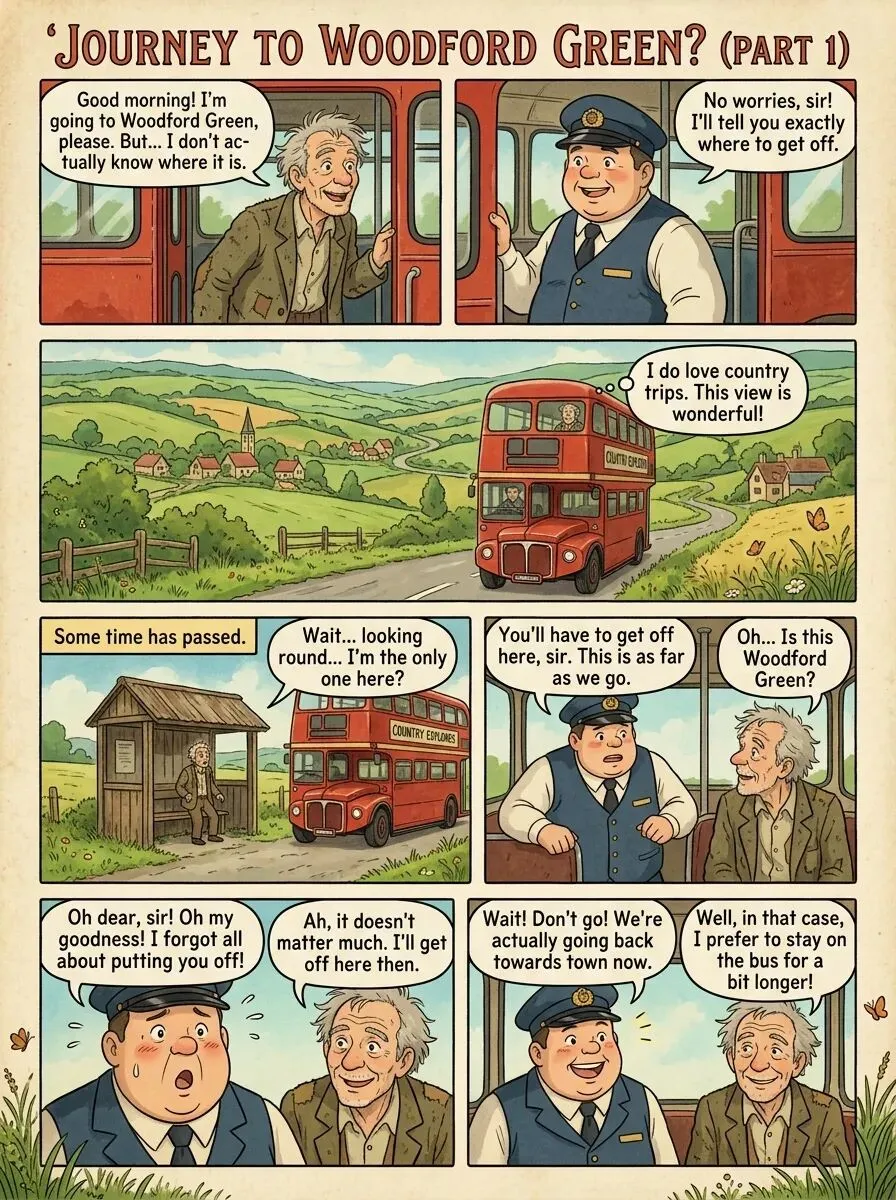
'I'm going to Woodford Green,' I said to the conductor, 'but I don't know where it is.'
'I'll tell you where to get off,' answered the conductor.
I sat in the front of the bus to get a good view of the countryside. After some time, the bus stopped. Looking round, I realized with a shock that I was the only passenger left on the bus.
'You'll have to get off here,' the conductor said. 'This is as far as we go.'
'Is this Woodford Green?' I asked.
'Oh dear,' said the conductor suddenly. 'I forgot to put you off.'
'It doesn't matter,' I said. 'I'll get off here.'
'We are going back now,' said the conductor.
'Well, in that case, I prefer to stay on the bus,' I answered.
背景简介本课选自《新概念英语》第二册,延续了该教材以小故事揭示生活趣味的风格。作者L.G. Alexander擅长捕捉日常生活中的荒诞瞬间。本课讲述了一个因沟通不畅和误会引发的小旅行轶事,体现了作者细腻的观察力和幽默的笔触。乘坐公交车旅行是西方常见的生活方式,而故事中乘客与售票员之间的互动,巧妙地展现了旅行中计划与现实的差距,以及人们在面对意外时的不同心态。
参考译文第50课 乘车兜风听录音,然后回答以下问题。作者为什么没在伍德福德绿地下车?我喜欢在乡村旅行,但我不喜欢迷路。最近我做了一次短途旅行,但这次旅行所花的时间比我预计的要长。"我要去伍德福德绿地,"我对售票员说,"但我不知道它在哪儿。""我会告诉你在哪儿下车的,"售票员回答说。我坐在汽车的前部,以便饱览乡村风光。过了一些时候,车停了。我环视四周,惊讶地意识到我是车上唯一的乘客了。"你得在这里下车,"售票员说,"我们到此为止了。""这里是伍德福德绿地吗?"我问。"哎呀,"售票员突然说,"我忘记让您下车了。""没关系,"我说,"我就在这儿下车吧。""我们现在要返回去,"售票员说。"好吧,既然如此,我宁愿留在车上,"我回答说。
🔍 第二部分:逐句精讲与词块总结
句子1
1. 原文: I love travelling in the country, but I don't like losing my way.
2. 翻译: 我喜欢在乡村旅行,但我不喜欢迷路。
3. 句子结构: 这是一个由 but 连接的并列句 (compound sentence)。前句 I love travelling in the country 和后句 I don't like losing my way 形成对比关系。- 前句:主语 (I) + 谓语 (love doing) + 宾语 (travelling in the country) - 后句:主语 (I) + 谓语 (don't like doing) + 宾语 (losing my way)
4. 重点词汇:
love 蓝思值 390 L
英音 [lʌv] 美音 [lʌv] 词性:v. 热爱,喜欢
释义:to like something very much
常用语块:love doing sth. 喜欢做某事;love to do sth. 喜欢做某事(强调特定情况)
短语搭配:fall in love (with) 爱上
例句一:I love reading books before going to sleep. 我喜欢睡觉前看书。
例句二:She loves to dance at parties. 她喜欢在派对上跳舞。
拓展:like(喜欢,程度较love弱)、enjoy(享受,强调从中获得乐趣)。[NCE知识点笔记] 中常将 love、like、enjoy 列为后接动名词的高频动词。love 后也可接不定式,但不如动名词常见。注意 love doing 强调一般性的喜爱,love to do 常指某次特定的喜爱。常见错误:I love travel in the country. (正确应为 I love travelling in the country.)
travel 蓝思值 420 L
英音 [ˈtrævl] 美音 [ˈtrævl] 词性:v./n. 旅行
释义:to make a journey; the activity of travelling
常用语块:travel in/to/through 在某地/去某地/穿越某地旅行
短语搭配:travel agency 旅行社;travel light 轻装旅行
例句一:He traveled to many different countries. 他旅行去过许多不同的国家。
例句二:Air travel has become very popular. 航空旅行已经变得非常普遍。
拓展:travel 作动词时多为不及物,需加介词才能接宾语。travelling 是其现在分词形式,本课中用作 love 的宾语。travel 与 trip 都表示旅行,trip 常指短途、有特定目的的往返旅行,而 travel 泛指旅行这一行为或活动。
country 蓝思值 240 L
英音 [ˈkʌntri] 美音 [ˈkʌntri] 词性:n. 国家;乡下,乡村
释义:an area of land that is not in towns or cities; the land of a particular nation
常用语块:in the country 在乡下
短语搭配:home country 祖国;developing country 发展中国家
例句一:We live in the country. 我们住在乡下。
例句二:Would you like to visit a foreign country? 你想去国外旅游吗?
拓展:本课取"乡村"之意,与 city 相对。countryside 是"乡村地区"的更常见表达,但 country 在此语境下意思相同。
lose 蓝思值 390 L
英音 [luːz] 美音 [luːz] 词性:v. 遗失,失去,迷失
释义:to be unable to find something or someone; to fail to keep something
常用语块:lose one's way 迷路;lose one's temper 发脾气
短语搭配:lose weight 减肥;lose face 丢面子
例句一:Don't lose your key. 别丢了钥匙。
例句二:He lost his way in the forest. 他在森林里迷路了。
拓展:lose 是不规则动词 (lose-lost-lost)。losing 是其动名词形式,在句中作 don't like 的宾语。常见错误:lose my way 的 my 不可省略,因 lose 表示"丢失"时是及物动词。lose 的对应反义词是 find。注意 lose 与 loose(松动的,形容词)拼写区别。
5. 语法点睛: 本句的核心语法点是 动名词 (Gerund) 作宾语。- 在 I love travelling... 和 I don't like losing... 中,travelling 和 losing 都是动名词,分别作及物动词 love 和 like 的宾语。- [NCE知识点笔记] 明确指出,love, like, enjoy, dislike, hate, finish, mind 等动词后必须接动名词作宾语,表示"喜爱/厌恶/完成/介意做某事"。- 对比第一册 [手绘版新概念语法笔记] 基础:第一册中已初步接触动名词,如 I like swimming. 但本课将其置于更为复杂的 but 并列句中,并赋予了具体的语境(旅行),使语法点的应用更加自然。【NCE知识点笔记】同时指出,动名词在句中还可以作主语和表语,但在本句中主要练习其作宾语的用法。动名词 travelling 和 losing 都保留了动词的属性,所以后面可以跟自己的宾语(in the country, my way),这种特性是动名词区别于普通名词的关键。
句子2
1. 原文: I went on an excursion recently, but my trip took me longer than I expected.
2. 翻译: 最近我做了一次短途旅行,但这次旅行所花的时间比我预计的要长。
3. 句子结构: 这是一个由 but 连接的并列句。- 前句:主语 (I) + 谓语动词短语 (went on) + 宾语 (an excursion) + 时间状语 (recently)。这是一般过去时,描述过去发生的一个具体动作。- 后句:主语 (my trip) + 谓语 (took) + 间接宾语 (me) + 宾语补足语 (longer than I expected)。这是一个包含比较状语从句的复合句,longer 是 long 的比较级,than I expected 是比较状语从句。
4. 重点词汇:
excursion 蓝思值 1000 L
英音 [ɪkˈskɜːʃn] 美音 [ɪkˈskɜːrʒn] 词性:n. 短途旅行,远足
释义:a short journey made for pleasure, usually by a group of people
常用语块:go on an excursion 去短途旅行
短语搭配:an excursion to the seaside 去海边的短途旅行
例句一:The school organized an excursion to the zoo. 学校组织了一次去动物园的远足。
例句二:We went on a shopping excursion. 我们出去购物了一趟。
拓展:excursion 是比 trip 更正式一些的词,强调"短途且有目的性的放松旅行"。[会说话的新概念英语单词] 中常有类似例句,帮助巩固记忆。其词根来自拉丁语 excurrere (向外跑)。
trip 蓝思值 450 L
英音 [trɪp] 美音 [trɪp] 词性:n. 旅行,行程
释义:a journey in which you go to a place and come back
常用语块:take a trip 旅行;business trip 出差
短语搭配:a day trip 一日游;a round trip 往返旅行
例句一:We are planning a trip to the mountains. 我们正在计划一次去山里的旅行。
例句二:Have a safe trip! 旅途平安!
拓展:本课中 trip 指代前文提到的 excursion,但用词不同,体现了英文避免重复的特点。trip 比 excursion 更常用、更口语化。
take 蓝思值 220 L
英音 [teɪk] 美音 [teɪk] 词性:v. 花费(时间);需要;携带
释义:to need a particular amount of time
常用语块:take sb. some time to do sth. 做某事花费某人时间
短语搭配:take a rest 休息;take a look 看一看
例句一:It takes two hours to get there by train. 坐火车到那儿需要两小时。
例句二:The repair took a long time. 修理花了很长时间。
拓展:本句中 take 表示"花费(时间)",主语是事物 (my trip),后接"人"作间接宾语 (me),再接时间 (longer than I expected)。这是一个非常重要的take用法。区别于 spend(花费时间或金钱,主语是人)和 cost(花费金钱,主语是物)。常见错误:不说 My trip spent me longer time. 而要说 My trip took me longer.
expect 蓝思值 790 L
英音 [ɪkˈspekt] 美音 [ɪkˈspekt] 词性:v. 预期,预料,期待
释义:to think that something will happen
常用语块:expect to do sth. 期待做某事;expect sb. to do sth. 期望某人做某事
短语搭配:as expected 正如所料
例句一:I expect you to arrive on time. 我期望你准时到达。
例句二:The test was harder than I expected. 这次考试比我预料的要难。
拓展:than I expected 是一个比较状语从句。expect 的宾语从句常省略引导词 that。expect 作"期待"讲时,语气较强。
5. 语法点睛: 1. 一般过去时 vs 现在完成时回顾:I went on an excursion recently 用了一般过去时 (Simple Past), 强调"去了"这个过去的事实,与现在无关。而第四课 I have just received a letter from my brother 用了现在完成时,强调"收到信"这个动作对现在的影响(我现在知道弟弟的消息了)。【名师精讲笔记】强调,recently可与两种时态连用。与过去时连用表示"最近发生的,但时间点已过去";与现在完成时连用则强调"最近完成的动作"对现在的影响。2. 比较状语从句 (Adverbial Clause of Comparison):longer than I expected 是一个由 than 引导的比较状语从句,用来修饰主句中的形容词比较级 longer。这个从句是一个省略句,完整形式是 than what I expected 或 than it was expected (by me)。这种结构在英文中非常普遍。【语法新思维】提到,than 从句中的谓语常省略,只保留 I expected 这样的主谓结构,以使句子更简洁。
句子3
1. 原文: 'I'm going to Woodford Green,' I said to the conductor, 'but I don't know where it is.'
2. 翻译: "我要去伍德福德绿地,"我对售票员说,"但我不知道它在哪儿。"
3. 句子结构: 这是一个包含直接引语 (Direct Speech) 的复合句。直接引语本身是一个由 but 连接的并列句。- 引语前句:主谓 (I) + 系表 (am going to Woodford Green) - 引语后句:主谓 (I) + 谓宾 (don't know) + 宾语从句 (where it is) - 主句:I said to the conductor
4. 重点词汇:
conductor 蓝思值 1090 L
英音 [kənˈdʌktə(r)] 美音 [kənˈdʌktər] 词性:n. (公共汽车)售票员;指挥
释义:a person who collects fares on a bus
常用语块:bus conductor 公交车售票员
短语搭配:train conductor 列车员
例句一:The conductor asked me for my ticket. 售票员向我要票。
例句二:He is the conductor of the orchestra. 他是这支管弦乐队的指挥。
拓展:conductor 也可指乐队指挥,指挥火车司机,与 driver (司机,驾驶员) 不同。conduct是动词"指挥、引导"。本课中的 conductor 是典型的英式用法,在实行无人售票的今天,这个词变得有些"复古",但依然在经典教材中出现。
wonder (此处未直接出现,但可通过 don't know 推断语境,属于相近语义场单词。严格按指令,仅对课文中出现的单词生成蓝思值)
know 蓝思值 170 L
英音 [nəʊ] 美音 [noʊ] 词性:v. 知道,了解
释义:to have information in your mind
常用语块:know sth./sb. 知道某事/认识某人;know about/of 听说
短语搭配:as you know 正如你所知
例句一:Do you know the answer? 你知道答案吗?
例句二:I know him well. 我很了解他。
拓展:know 是不规则动词 (know-knew-known)。don't know 后接由疑问副词 where 引导的宾语从句时,从句必须用陈述句语序 where it is,而非 where is it。这是一个重要考点,常见于各种考试中的宾语从句部分。
5. 语法点睛: 1. 现在进行时表将来 (Present Continuous for Future Arrangements):I'm going to Woodford Green 在此句中并非表示"我正在去伍德福德绿地",而是表示"我计划/即将去伍德福德绿地",即现在进行时表将来。这是本课的核心语法点。【名师精讲笔记】和【语法新思维】都重点强调了这一点。常用于表示计划或安排好的将来动作,主语通常是人,且常与表示将来时间的状语连用,但有时也可省略。其他常用动词包括: come, go, leave, arrive, stay, start 等。2. 宾语从句 (Object Clause):where it is 是连接副词 where 引导的宾语从句,作动词 know 的宾语。【NCE知识点笔记】提到,当主句是 I don't know 时,从句内容即为作者不知道的信息。宾语从句的语序必须是陈述句语序,即"连接词 + 主语 + 谓语动词"。这里 where 是从句的引导词,本身在从句中也作地点状语。
句子4
1. 原文: 'I'll tell you where to get off,' answered the conductor.
2. 翻译: "我会告诉你在哪儿下车的,"售票员回答说。
3. 句子结构: 这是一个倒装句 (Inversion) 的直接引语结构。'...' answered the conductor. 是倒装结构,主语 the conductor 放在谓语 answered 之后。直接引语中包含了一个简单句 I'll tell you where to get off,其中 where to get off 是"疑问词 + 不定式"结构,作宾语。
4. 重点词汇:
get off 蓝思值 420 L
英音 [ɡet ɒf] 美音 [ɡet ɔːf] 词性:phrasal v. 下车
释义:to leave a bus, train, etc.
常用语块:get off the bus 下公交车
短语搭配:get on (上车);get off work 下班
例句一:You should get off at the next stop. 你应该在下一站下车。
例句二:Please tell me where to get off. 请告诉我在哪儿下车。
拓展:get off 是动介型短语动词,宾语(如 the bus)放在 off 之后。如果宾语是人称代词(如 it),则说 get it off。其反义词是 get on (上车)。
5. 语法点睛: 1. 倒装句 (Inversion) in Direct Speech: 当直接引语的陈述部分放在句首,后接 said/answered/replied 等动词时,如果主语是名词,常用倒装结构 (said he, answered the conductor)。如果主语是人称代词,则不倒装,保持 he said, she answered 的顺序。这是为了避免句子头重脚轻,并使行文更流畅。2. "疑问词 + 不定式"结构 (Wh-word + to-infinitive):where to get off 是一个经典的"疑问词 + 不定式"结构,在句中作 tell 的直接宾语。相当于一个由 where 引导的宾语从句的省略形式,即 I'll tell you where you should get off。这种结构使句子更简洁。【语法新思维】指出,这种结构常用于 tell, show, know, learn, decide, wonder 等动词之后。这也是从第一册 I don't know what to do. 基础上进行的升级,要求掌握的词汇更多样。
句子5
1. 原文: I sat in the front of the bus to get a good view of the countryside.
2. 翻译: 我坐在汽车的前部,以便饱览乡村风光。
3. 句子结构: 简单句 (Simple Sentence)。主语 (I) + 谓语 (sat) + 地点状语 (in the front of the bus) + 目的状语 (to get a good view of the countryside)。不定式短语 to get... 作目的状语。
4. 重点词汇:
front 蓝思值 430 L
英音 [frʌnt] 美音 [frʌnt] 词性:n./adj. 前面,前部
释义:the part of something that is furthest forward
常用语块:in the front of 在...内部的前部;in front of 在...外部的前面
短语搭配:at the front 在前面;front door 前门
例句一:The teacher is standing in front of the blackboard. 老师站在黑板前面。(老师不在黑板内部)
例句二:I sat in the front of the car next to the driver. 我坐在汽车的前部,紧挨着司机。(我在车内部的前面)
拓展:in the front of 和 in front of 的区别是高频考点。前者指"在某一空间内部的前部",后者指"在某一空间外部的前面"。本课用 in the front of the bus 表明作者在公交车内部的前排座位。
view 蓝思值 650 L
英音 [vjuː] 美音 [vjuː] 词性:n. 景色,视野;观点
释义:what you can see from a particular place
常用语块:get a good view of 饱览...的景色;have a view of 有...的视野
短语搭配:in one's view 在某人看来;point of view 观点
例句一:From the top of the hill, you get a wonderful view. 从山顶上,你可以看到壮丽的景色。
例句二:What are your views on this matter? 你对此事有何看法?
拓展:view 作"景色"时是可数名词,常与 of 连用,说明是哪里的景色。同义词为 scenery (不可数,总称)和 scene (可数,一个场景或片段)。
countryside 蓝思值 820 L
英音 [ˈkʌntrisaɪd] 美音 [ˈkʌntrisaɪd] 词性:n. 乡村,农村地区
释义:land outside cities and towns
常用语块:in the countryside 在乡村
短语搭配:beautiful countryside 美丽的乡村
例句一:I love walking in the countryside. 我喜欢在乡间散步。
例句二:The English countryside is very beautiful in spring. 英国乡村的春天非常美丽。
拓展:countryside 是一个不可数名词,常与定冠词 the 连用,泛指"乡村"这个概念。而 country 作"乡村"讲时,也常与 the 连用 (in the country),两者可互换。
5. 语法点睛: 1. 不定式作目的状语 (Infinitive as Adverbial of Purpose): 这是不定式短语最核心的功能之一。to get a good view of the countryside 回答了"为什么作者会坐在前排"这个问题,即作者的目的是为了看清风景。可以用 in order to 或 so as to 替换,如 I sat... in order to get...。2. 介词的用法 (Prepositional Phrase): in the front of the bus 是地点介词短语作状语。它精确地描述了作者的位置。对介词短语的精确理解和运用是提升阅读和写作的关键。
句子6
1. 原文: After some time, the bus stopped.
2. 翻译: 过了一些时候,车停了。
3. 句子结构: 这是一个简单句 (Simple Sentence)。时间状语 (After some time, 介词短语) + 主语 (the bus) + 谓语 (stopped).
4. 重点词汇:
stop 蓝思值 260 L
英音 [stɒp] 美音 [stɑːp] 词性:v./n. 停止,车站
释义:to no longer move; a place where a bus stops
常用语块:bus stop 公交车站;stop doing sth. 停止做某事
短语搭配:come to a stop 停下来;put a stop to 阻止
例句一:The rain has stopped. 雨停了。
例句二:We waited at the bus stop for a long time. 我们在公交车站等了很长时间。
拓展:stop 后可接不定式或动名词,意思完全不同:stop doing (停止正在做的事);stop to do (停下正在做的事去做另一件事)。本课使用了 stop 的动词过去式,指公交车不再移动。常用表达 After some time 指"一段时间之后"。
5. 语法点睛: 本句语法点较为简单,主要是一般过去时的使用。stopped 是 stop 的过去式,用于描述过去某个时间点发生的动作。After some time 作为一个时间状语,明确了动作发生的时间顺序(在前一动作"坐"之后)。本句虽然简单,但其在叙事中的作用是承上启下,推动故事发展。
句子7
1. 原文: Looking round, I realized with a shock that I was the only passenger left on the bus.
2. 翻译: 我环视四周,惊讶地意识到我是车上唯一的乘客了。
3. 句子结构: 这是一个复合句 (Complex Sentence)。- 主干:I realized (that I was the only passenger left on the bus).- 状语(主动作伴随):Looking round, (现在分词短语作时间状语,等于 When I looked round) - 状语:with a shock (介词短语作方式状语,修饰 realized)
4. 重点词汇:
realize 蓝思值 630 L
英音 [ˈriːəlaɪz] 美音 [ˈriːəlaɪz] 词性:v. 意识到,认识到 (美国也常用 realise)
释义:to become aware of something
常用语块:realize one's mistake 意识到某人的错误
短语搭配:realize that... 意识到...
例句一:Suddenly I realized that I was lost. 我突然意识到我迷路了。
例句二:He has realized his dream of becoming a doctor. 他实现了成为医生的梦想。
拓展:realize 后可接 that 引导的宾语从句,或直接接一个名词。作"意识到"讲时,不可用于进行时态。realization 是其名词形式。
shock 蓝思值 640 L
英音 [ʃɒk] 美音 [ʃɑːk] 词性:n./v. 震惊,冲击;使震惊
释义:a sudden and unpleasant surprise
常用语块:with a shock 震惊地;in shock 处于震惊中
短语搭配:a shock to sb. 对某人来说是个打击
例句一:The news was a great shock to us. 这个消息让我们极为震惊。
例句二:He got a shock when he saw the bill. 他看到账单时吓了一跳。
拓展:with a shock 是一个介词短语,在句中作状语,修饰 realized,表示作者意识到时伴随的惊讶情绪。
passenger 蓝思值 810 L
英音 [ˈpæsɪndʒə(r)] 美音 [ˈpæsɪndʒər] 词性:n. 乘客,旅客
释义:a person who is traveling in a vehicle
常用语块:passenger list 乘客名单;fellow passengers 同行的乘客
短语搭配:airline passenger 飞机乘客
例句一:The bus can carry 50 passengers. 这辆公交车可载50名乘客。
例句二:All passengers must fasten their seat belts. 所有乘客必须系好安全带。
拓展:passenger 的词根是 pass (通过), -enger 是表示人的后缀。它是 pass (动词:经过)的名词化形式之一。
5. 语法点睛: 1. 现在分词短语作时间状语 (Present Participle Phrase as Adverbial of Time): Looking round 是一个现在分词短语,表示这个动作与主语的谓语动词 realized 几乎是同时发生的,并且是由主语执行的主动动作。它相当于一个时间状语从句 When I looked round。这种结构能使句子更紧凑,是【高级写作技巧】。2. that 引导的宾语从句 (that-clause as Object): that I was the only passenger left on the bus 是一个从句,作 realized 的宾语。that 在从句中不充当成分,只起连接作用,在口语中常可省略。从句中的 left on the bus 是过去分词短语作后置定语,修饰 passenger, 意为"留在车上的乘客"。3. 过去分词作后置定语: left 是 leave 的过去分词,在句中相当于一个省略的定语从句 who was left on the bus。这表明 passenger 是被留在车上的,故表示被动关系。
句子8
1. 原文: 'You'll have to get off here,' the conductor said. 'This is as far as we go.'
2. 翻译: "你得在这里下车,"售票员说。"我们到此为止了。"
3. 句子结构: 这是一个包含直接引语的句子。两个引语部分分别是两个简单句。第二个引语 This is as far as we go 是一个包含从句的复合句,其中 as far as we go 是表语从句。
4. 重点词汇:
far 蓝思值 310 L
英音 [fɑː(r)] 美音 [fɑːr] 词性:adv./adj. 远
释义:a long distance away
常用语块:as far as 远至,就...而言
短语搭配:far away 遥远;by far ...得多
例句一:How far is it to the airport? 到机场有多远?
例句二:This is as far as the bus goes. 公交车就开到这里为止了。
拓展:as far as 在本课中是"到...程度/距离为止"的意思,用于表示界限。当引导从句时,意为"就...而言",如 As far as I know, he is honest. (据我所知,他很诚实)。这是一个非常重要的短语。
5. 语法点睛: 1. 系动词 + 表语从句:This is as far as we go 这句结构中,is 是系动词,as far as we go 作表语,可视为表语从句,说明 This (此处指代"行程的终点")是什么。as far as 在从句中起连接作用,表示"到...为止"。2. have to 的用法:You'll have to get off here 中的 have to 表示"不得不",强调客观上的必要性(因为公交车不往前开了)。[名师精讲笔记] 指出,have to 与 must 的区别在于:must 表示主观上的必须,而 have to 更多强调客观上的必须。
句子9
1. 原文: 'Is this Woodford Green?' I asked.
2. 翻译: "这里是伍德福德绿地吗?"我问。
3. 句子结构: 这是一个包含直接引语的一般疑问句 (General Question)。直接引语是一个以 Is 开头的一般疑问句,结构为:系动词 (Is) + 主语 (this) + 表语 (Woodford Green)。
4. 重点词汇: 无生词。Woodford Green 是专有名词,地名。
5. 语法点睛:直接引语中的一般疑问句语序:在直接引语中,一般疑问句的语序保持不变,即"系动词/助动词/情态动词 + 主语 + 谓语...?"。当这个句子转化为间接引语时,语序需要变为陈述句语序,并引入 if 或 whether 连接。这是一个重要的语法点,将在以后反复出现。
句子10
1. 原文: 'Oh dear,' said the conductor suddenly. 'I forgot to put you off.'
2. 翻译: "哎呀,"售票员突然说,"我忘记让您下车了。"
3. 句子结构: 这是一个包含直接引语的句子。引语 I forgot to put you off 是一个简单句。主语 (I) + 谓语 (forgot) + 不定式宾语 (to put you off)。suddenly 是一个副词作状语,修饰 said。
4. 重点词汇:
put...off 蓝思值 480 L
英音 [pʊt ɒf] 美音 [pʊt ɔːf] 词性:phrasal v. 让某人下车;推迟
释义:to stop someone from getting on a bus/train by telling them to get off; to delay
常用语块:put sb. off (a bus) 让某人(从公交车上)下来
短语搭配:put off doing sth. 推迟做某事
例句一:Please put me off at the next stop. 请让我在下一站下车。
例句二:Don't put off your homework until tomorrow. 不要把作业推迟到明天。
拓展:put sb. off 是一个动副型短语动词。当宾语是代词时,必须放在 put 和 off 之间(put him/her/you off)。当宾语是名词时,可以放在中间或后面(put the passenger off 或 put off the passenger)。在本课中,它的意思是"提醒/告知(乘客)下车",售票员忘记提醒作者下车,从而导致了一系列后续事件。
5. 语法点睛: 1. 不定式作宾语 (Infinitive as Object):forget 是及物动词,可以后接不定式 to put 作宾语。forget to do sth. 意为"忘记去做某事"(事情没做)。而 forget doing sth. 意为"忘记做过某事"(事已做,但忘了)。这是 [名师精讲笔记] 中反复强调的易混淆点。本课中售票员是忘记履行让他下车的职责,所以用 forget to do。此用法对语义理解至关重要。2. 副词的用法:suddenly (突然地) 是副词,用于修饰动词 said,生动地描绘了售票员突然记起的瞬间。
句子11
1. 原文: 'It doesn't matter,' I said. 'I'll get off here.'
2. 翻译: "没关系,"我说,"我就在这儿下车吧。"
3. 句子结构: 包含直接引语的两个简单句。
4. 重点词汇:
matter 蓝思值 340 L
英音 [ˈmætə(r)] 美音 [ˈmætər] 词性:v./n. 要紧,重要;事情,问题
释义:to be important; a subject or situation
常用语块:It doesn't matter. 没关系。/ What's the matter? 怎么了?
短语搭配:as a matter of fact 事实上;no matter what/who/where 无论什么/谁/何地
例句一:Does it matter if I'm late? 我迟到要紧吗?
例句二:It's a private matter. 这是一件私事。
拓展:matter 作动词时,主要用于否定句和疑问句,主语通常是 it,意思是"重要"。What's the matter with you? 是询问某人遇到了什么麻烦。matter 作名词时,意思是"物质、问题"。
5. 语法点睛: 1. It doesn't matter 句型:这是一个固定句型,It 是形式主语,真正的主语被省略或隐含在上下文中。该句用来表示对某事的宽慰或不在意,是一种礼貌且优雅的表达方式。2. will 表意愿:I'll get off here (我就在这儿下车吧/我将在这儿下车)。这里的 will 并非单纯的将来时助动词,而是表示主语当场做出的意愿或决定。这种用法在日常口语中非常普遍。
句子12
1. 原文: 'We are going back now,' said the conductor.
2. 翻译: "我们现在要返回去,"售票员说。
3. 句子结构: 这是一个包含直接引语的简单句。
4. 重点词汇: 无需重点词汇。
5. 语法点睛:现在进行时再次表将来:We are going back now 中的 are going 再次使用了现在进行时表将来。售票员的意思是"我们现在就要/计划返回了"。now 在此处并非指"正在返回"这个动作,而是强调"现在这个时刻决定马上要返回"了。这进一步巩固了本课的语法重点。
句子13
1. 原文: 'Well, in that case, I prefer to stay on the bus,' I answered.
2. 翻译: "好吧,既然如此,我宁愿留在车上,"我回答说。
3. 句子结构: 这是一个包含直接引语的简单句。in that case 是介词短语作条件状语,to stay on the bus 是不定式短语作宾语。
4. 重点词汇:
prefer 蓝思值 770 L
英音 [prɪˈfɜː(r)] 美音 [prɪˈfɜːr] 词性:v. 更喜欢,宁愿
释义:to like one thing or person better than another
常用语块:prefer A to B 比起B更喜欢A;prefer to do 更喜欢做
短语搭配:prefer doing to doing 比起做...更喜欢做...
例句一:I prefer coffee to tea. 比起茶,我更喜欢咖啡。
例句二:She prefers to live in the city. 她更喜欢住在城市里。
拓展:prefer 是及物动词,其后可接名词 (prefer coffee)、动名词 (prefer staying)、不定式 (prefer to stay)。当两者对比时,常用 prefer A to B 或 prefer doing A to doing B。[语法新思维] 强调,prefer to 结构中的 to 是介词,不是不定式符号,后接名词或动名词。prefer 对应的名词形式是 preference。
case 蓝思值 600 L
英音 [keɪs] 美音 [keɪs] 词性:n. 情况,案件,箱子
释义:a particular situation or example
常用语块:in that case 既然那样;in this case 在这种情况下
短语搭配:in any case 无论如何;in case 以防
例句一:In that case, let's start early. 既然如此,我们就早点出发吧。
例句二:Take an umbrella in case it rains. 带把伞,以防下雨。
拓展:in that case 是一个固定短语,表示"既然情况如此,那么...",常用于对前面提到的情况做出回应,相当于 if that is the case。它起到了逻辑连接的作用,推动故事发展。
stay 蓝思值 320 L
英音 [steɪ] 美音 [steɪ] 词性:v./n. 停留,待在
释义:to continue to be in a particular place or state
常用语块:stay at home 待在家里;stay on 继续停留
短语搭配:stay up late 熬夜;stay calm 保持冷静
例句一:I decided to stay in bed. 我决定待在床上。
例句二:How long are you going to stay here? 你打算在这儿待多久?
拓展:stay on 是一个短语动词,意为"继续停留或处于某个位置/状态",本课中作者决定 "stay on the bus",意为"继续待在车上,不下车"。[新概念英语之全新全绎] 中提及 stay 可作为系动词,后接形容词 (stay healthy)。
5. 语法点睛:不定式作宾语:prefer to stay 是不定式短语作动词 prefer 的宾语。prefer 与 like, love, hate 类似,后面既可以接不定式,也可以接动名词。通常,prefer to do 强调特定情况下喜欢做某事,而 prefer doing 更强调一般性爱好,但有时可通用。
📌 核心词块总结
以下汇总了本课最核心的6-8个词块:
1. love doing sth. (热爱做某事): a verb phrase expressing a general enjoyment. Example: I love travelling in the country.
2. lose one's way (迷路): a fixed collocation meaning to become lost or disoriented. Example: He lost his way in the new city.
3. get on/off (上/下车): phrasal verbs indicating entering or leaving a bus, train, or plane. Example: Please get on the bus. / I'll get off at the next stop.
4. put sb. off (让某人下车): a phrasal verb meaning to let someone get off a vehicle, often by alerting them. Example: The driver forgot to put him off.
5. go on an excursion (进行短途旅行): a verb phrase meaning to take a short journey, usually for pleasure. Example: We went on a pleasant excursion to the lake.
6. It doesn't matter (没关系): a common phrase used to express that something is not important. Example: 'I broke your pen.' 'It doesn't matter.'
7. in that case (既然那样): a logical connector used to express a deduction based on a previously stated fact. Example: 'We're out of milk.' 'In that case, I'll have coffee without it.'
✍️ 第三部分:语篇分析与段落写作技巧
1. 语篇分析(关键术语标注英文):①识别宏观结构 (Identify the macrostructure): 本课是一篇典型的叙事文 (narrative),遵循"背景 (setting) -> 起因 (problem/conflict) -> 发展 (development) -> 高潮 (climax) -> 结局 (resolution)"的结构。*背景: 作者喜欢乡村旅行,但怕迷路 (句子1)。*起因/问题: 作者坐车前往一个不知道地点的伍德福德绿地 (句子2, 3)。*发展: 作者坐在前排看风景,售票员答应提醒他下车 (句子4, 5)。*高潮: 公交车停下,作者发现只剩自己一人,售票员意识到忘提醒他下车了 (句子6-10)。*结局: 作者决定留在车上,因为车子要返回了 (句子11-13)。这个结局出人意料,充满幽默感。②列举衔接手段 (List cohesive devices):*连词: but (句子1, 2, 3) 表示转折;and (未直接出现,但隐含在叙事中)。*时间状语: After some time (句子6) 连接时间顺序;suddenly (句子10) 制造突转。*代词: I, it, this 等指代前文所述的事物。比如,I asked. 中的 I 指代作者;it (句子3) 指代 Woodford Green.*重复与替换: 使用 excursion, trip 和 the bus ride 来指代同一段旅行,避免单调。③分析作者态度 (Analyze the author's attitude): 作者以一种幽默 (humorous) 且旁观 (observational)的态度叙述故事。他没有对售票员的失误或自己的倒霉表现出激烈的情绪,而是以一种冷静、轻松 (calm and light-hearted) 的口吻接受事实(It doesn't matter, I prefer to stay on the bus)。这种叙述语调与故事内容形成反差,增强了故事的趣味性和讽刺意味。
2. 写作技巧:① 提炼写作逻辑:对比与意外:本课的写作逻辑是"计划 vs. 现实"的对比,以及"期待 vs. 意外"的突转。作者计划去伍德福德绿地,但被售票员忘记,计划落空;作者本应下车,却因车子返回而选择留下。这种逻辑产生了戏剧冲突和幽默。这种"通过制造意外来推进故事"的叙事手法非常高明。② 提供段落写作范例:学习本课,可以模仿其结构写一段关于自己旅途中发生小插曲的段落。段落范例:I love exploring new places, but I'm always worried about getting lost. I once decided to visit a famous local park. 'Please tell me where to get off,' I said to the driver. He nodded and said he would. I sat near the window to enjoy the city views. After a while, the bus stopped. I was about to get off when the driver shouted, 'Wait! It's the stop before the park!' We both laughed. 'That's okay,' I said. 'I don't mind walking a bit.' The driver felt sorry, but I just enjoyed my walk even more.
结构特点分析:* 开头:使用 `love... but...` 结构奠定个人偏好和潜在问题,与课文句子1高度相似。* 发展:叙述计划 (`decided to visit`)、交流 (`I said... He nodded`) 和动作 (`sat... to enjoy`)。* 高潮:利用 `When...` 描述意外发生 (`The bus stopped` 和司机阻止)。* 结局:以轻松的语气 (laughter and calm acceptance) 收尾,与课文结局精神一致。语言点映射:* `I love exploring new places, but I'm always worried about getting lost.` → 映射课文句子1。* `Please tell me where to get off.` → 映射课文句子4的直接引语和`where to get off`结构。* `I was about to get off when the driver shouted,` → 映射 `Looking round...` 这种用状语或从句引入转折事件的技巧。* `'That's okay,' I said.` → 映射课文的 `It doesn't matter.`③ 布置小练笔:请模仿本课的写作逻辑,结合你自己的经历,写一段150词左右的短文,描述一次旅行或外出时发生的意外或有趣的小插曲。尽量用到本课所学的至少3个重点词汇或短语(如 get off, It doesn't matter, in that case,lose one's way 等)。要求包含完整的叙事结构。
📐 第四部分:本课语法精析(加强版)
本部分字数不少于1500-2000字。
本课的核心语法是 现在进行时表将来 (Present Continuous Tense for Future Arrangements),以及与现在完成时 (Present Perfect Tense) 的对比。同时,我们也将系统复习宾语从句 (Object Clause) 和不定式与动名词作宾语 (Infinitive & Gerund as Object)。
[来自《NCE知识点笔记》《名师精讲笔记》《语法新思维》的整合分析]
1. 现在进行时表将来 (Present Continuous for Future)
本课中,I'm going to Woodford Green 和 We are going back now 两处使用了这一语法结构。它表示一个计划好的、安排好的将来动作。
构成:be (am/is/are) + 动词的现在分词 (-ing)
用法详解:
- 表示计划:强调该动作是由主语(通常是人)经过考虑后,在不久的将来将要执行的安排。
- 与动态动词连用:此用法通常与表示位置转移的动词连用,如 go, come, leave, arrive, start, stay, fly, drive 等。(来源:[名师精讲笔记])
- 与时间状语连用:通常与明确的将来时间状语连用,如 tomorrow, next week, in the evening,但在上下文清晰的场合(如本课),时间状语可以省略。
与其他表示将来结构的对比:
- be going to do:也强调"计划、打算",且更侧重于强调主语的"意图"和说话的"根据"。在很多情况下,be doing (现在进行时表将来) 和 be going to 可以互换。但 be going to 也可以用来表达预测(如 It is going to rain)。
- will do:常用于表达即时决定、主观意愿、客观预测或承诺。例如 I'll get off here (即时决定) 和 I'll tell you where to get off (承诺)。
- shall do:主要用于第一人称 I/We,表示"征求意见"或"提供建议"。
例句 (不少于25个):
1. I am meeting my friend at the airport tomorrow. (计划好的活动)
2. She is leaving for Paris next Monday. (行程安排)
3. The boss is arriving on the 10 o'clock flight. (确定的时间表)
4. We are having a party this weekend. (提前安排好的聚会)
5. What are you doing this evening? (询问计划)
6. They are not coming to the party because they are too busy. (确定不来了)
7. He is buying a new car next month. (他的购买计划)
8. The train is departing in five minutes. (公告的时间表) (来源:[语法新思维])
9. I'm taking an exam next week. (计划中的考试)
10. My brother is starting a new job on Tuesday. (计划中的新工作)
11. After work, I'm going straight home. (计划好的路线)
12. Are you staying in this hotel tonight? (询问住宿安排) (来源:[名师精讲笔记])
13. The president is making a speech tonight. (计划中的讲话)
14. She is having her hair done tomorrow afternoon. (安排好的服务)
15. We are visiting the museum on Saturday. (计划中的游览)
16. I'm flying to London next week. (已订机票)
17. Tom is getting married in July. (已确定的婚礼日期) (来源:[语法新思维])
18. The committee is meeting again next week. (预定好的会议)
19. He is playing football this afternoon. (安排好的体育活动)
20. I'm not doing anything special tonight. (无特殊安排)
21. Are they coming to the cinema with us? (邀请他人,询问对方是否已安排)
22. She is moving to a new apartment next month. (已确定的搬家计划)
23. My parents are going on holiday to Spain this summer. (旅行计划) (来源:[名师精讲笔记])
24. The doctor is operating on the patient at noon. (医生已安排好的手术)
25. We are having dinner at a new restaurant tonight. (就餐计划)
2. 与现在完成时 (Present Perfect Tense) 的对比分析
- 用法区别:[NCE知识点笔记] 和 [语法新思维] 均指出,本课重点在于区分计划中的将来 (现在进行时表将来) 和已完成的动作/状态 (现在完成时)。
- 现在进行时表将来: 关注"未来的安排和计划"。
- 例句: I am going to Woodford Green. (我的行程安排)
- 现在完成时: 关注"过去的动作对现在的影响或结果"或"过去开始持续到现在的状态"。
- 例句: I have just received a letter from my brother. (过去"收到"这个动作对现在的影响是:我现在知道他弟弟的消息了) (第四课)
- 例句: He has been in Australia for six months. (他六月份开始就一直在澳大利亚,至今仍在那里) (第四课)
- 例句: The writer has just moved to a house in Bridge Street. (刚搬完家,现在住在那里) (第六课)
- 本质区别:现在进行时表将来指向未来 (动作尚未发生);现在完成时指向过去 (动作已发生或状态已持续至今)。
- 例句对比:
1. 进行时表将来: I am visiting the museum tomorrow. (计划明天去)现在完成时: I have visited the museum before. (之前去过,对那里有印象)
2. 进行时表将来: She is arriving at 8 p.m. (计划晚上到)现在完成时: She has just arrived. (刚刚到了,她在这儿)
3. 进行时表将来: We are having a meeting this afternoon. (计划下午开会)现在完成时: We have already had the meeting. (会已经开完了)
3. 宾语从句 (Object Clause) 的深入
I don't know where it is 是本课出现的宾语从句。这是第一册中 I think it is... 结构的深化。关键规则:
1. 引导词:由连接代词(如 who, what, which)或连接副词(如 where, when, why, how)引导。that 在引导陈述句的宾语从句时可省略。
2. 语序:宾语从句必须使用陈述句语序 (subject + verb),即使在主句是疑问句时也要遵守。
3. 时态呼应:如果主句的谓语动词是过去时,从句的谓语动词通常也要用过去时(一般过去时、过去将来时等),但若从句表示客观真理或事实,则用一般现在时。
- 练习题:
1. Could you tell me ______ the nearest bus stop is? (A. where B. what)答案:A. where (引导地点状语从句)
2. I don't understand ______ he said that. (A. what B. why)答案:B. why (引导原因状语从句)
3. She asked me ______ I had finished my homework. (A. if, 该用陈述语序)答案:A. if (引导一般疑问句的宾语从句)
4. We all know ______ the earth goes around the sun. (A. that B. what)答案:B. that (引导陈述句,且从句是客观真理)
5. Please show me ______ to fill in this form. (A. how B. what)答案:A. how (疑问词+不定式结构)
4. 不定式与动名词作宾语 (Infinitive & Gerund as Object) 的系统对比
- 相似用法:like, love, hate, prefer, start, begin, continue 等动词后既可接不定式作宾语,也可接动名词作宾语,意义基本无差或相差不大。
- I love travelling/to travel. (大多数情况下通用)
- It started to rain/raining. (大多数情况下通用)
- 相反用法:有些动词后接不定式和动名词,意思截然不同,这是考试重点。
- forget to do (忘记去做) vs. forget doing (忘记做过)
- stop to do (停下来去做别的) vs. stop doing (停止正在做的事)
- remember to do (记得要去做) vs. remember doing (记得做过)
- 固定搭配:enjoy, finish, mind, miss, suggest, give up, can't help 等动词/词组后只能接动名词作宾语。want, decide, hope, would like, refuse, promise 等动词后只能接不定式作宾语。
练习题 (不少于12题) (附详细解析)
1. I ______ to Woodford Green tomorrow afternoon. (A. am going B. go C. have gone D. went)答案:A. am going。本句有明确的将来时间 tomorrow afternoon,而且是人 I 做出的计划性动作,因此用现在进行时表将来最合适。B是现在时,C是完成时,D是过去时,均不符合语境。
2. She ______ a new book recently. (A. writes B. is writing C. wrote D. has written)答案:D. has written。recently (最近) 是一个与现在完成时紧密相关的时间提示词,表示动作已完成,对现在有影响。B是进行时,表示正在写,与 recently 不匹配。A是现在时,C是过去时,也均不合适。
3. The driver ______ forgetting where Woodford Green was. (A. admitted B. liked C. regretted D. all of the above)答案:D. all of the above。admit doing (承认做过), like doing (喜欢做), regret doing (后悔做过)。三个动词后都必须接动名词作宾语,且在语境中都成立。
4. The conductor forgot ______ (tell) me where to get off. (动名词/不定式填空)答案:to tell。forget to do 表示"忘记去做某事",符合语境:售票员忘记了告诉我下车的事(即他没做这件事)。
5. I saw him ______ on the bus quickly. (A. to get B. gets C. get D. is getting)答案:C. get。see sb. do sth. 表示"看到某人做某事"的全过程。感官动词 (see, hear, feel等) 后接不定式作宾补时,不定式要省略 to。本句表示看到他上车这个完整的动作。若用 see sb. doing,则表示"看到某人正在做某事"。
6. The doctor asked me ______ up smoking. (A. give B. giving C. to give D. given)答案:C. to give。ask sb. to do sth. 是固定句式,意为"要求某人做某事"。give up doing 中的 give up 是一个接动名词的动词短语。所以这里需要 ask sb. to give up doing。
7. ______ you ever ______ (be) to the United States? (动词填空)答案:Have, been。ever 是现在完成时的标志词。have been to 表示"曾经去过某地"(现在已经回来)。
8. He left without ______ (say) goodbye. (动名词/不定式填空)答案:saying。without 是介词,后面必须接名词或动名词作宾语。
9. The children enjoy ______ (play) in the park. (动名词/不定式填空)答案:playing。enjoy 后必须接动名词作宾语。
10. The party is ______ tomorrow night. We are all very excited. (A. holding B. to hold C. going to hold D. being held)答案:D. being held。这是一个被动语态的现在进行时表将来结构。聚会"被举行",所以要用被动。is being held 意为"预计/计划明天晚上举行"。A和C都是主动语态,不对。B is to hold 语法错误。
11. I don't know ______ he will come. (A. whether B. if C. A and B are both correct D. that)答案:C. A and B are both correct。引导宾语从句表示"是否"时,whether 和 if 通常可以互换,尤其在口语中。但当有 or not 直接跟在 whether 后,或从句在句首作主语时,只能用 whether。本句中两者都可。
12. --- I'm really sorry that I broke your pen.--- ______. (A. It doesn't matter B. Don't be sorry C. You deserve it D. That's right)答案:A. It doesn't matter。这是对道歉的常用、得体回应。B虽然是中文思维,但不符合英文习惯;C和D都是负面或不太礼貌的回应。
🎧 第五部分:听力与阅读策略训练
1. 听力技巧
结合课文录音:本课的听力材料是一段小故事。建议按照 [新概念英语讲师用书新版2] 的建议,分步进行听力训练。
① 预测关键词 (Predicting Keywords):在播放录音前,我们先看课文问题:"Why did the writer not get off the bus at Woodford Green?" 根据问题,我们可以预测录音中可能会听到关于 bus, conductor, Woodford Green, get off, forget, mistake, going back 等关键词。带着这些预期去听,会更容易定位关键信息,提高听力效率。
② 抓主旨大意 (Gist Listening):第一遍听录音时,不要试图听懂每一个词,而是尝试抓取故事的梗概。重点关注:故事的who(人物)、what(发生了什么事件)、where(地点)、why(原因)和最终结果(结局)。听完后,尝试用一句话概括故事大意,例如:A passenger missed his stop because the conductor forgot to tell him, and then he decided to stay on the returning bus.
③ 笔记方法 (Note-taking Skills):听第二遍时,可以学习做简单笔记。记下关键短语和逻辑连接词,以厘清事件发展脉络。例如:
- Writer -> love travel, but hate lose way
- Woodford Green -> conductor promise tell
- Front of bus -> view
- Bus stop -> only passenger
- Conductor -> forget put off
- Writer -> It doesn't matter
- Bus going back -> writer stay
听力理解题示例:
1. What kind of transport does the writer take? (A. A taxi B. A bus C. A train)
2. Why does the writer talk to the conductor? (A. To buy a ticket B. To ask for directions C. To complain about the ride)
3. Where does the writer sit on the bus? (A. At the back B. In the middle C. In the front)
4. What does the conductor say when he realizes his mistake? (A. "I'm very sorry." B. "Oh dear." C. "I told you.")
5. Why does the writer finally decide to stay on the bus? (A. He is too tired to get off B. The bus is going back to where he started C. He likes the conductor)
答案解析:
1. B (从标题及文中 bus, conductor 等词可判断)
2. B (原文:I said to the conductor, 'but I don't know where it is.')
3. C (原文:I sat in the front of the bus...)
4. B (原文:'Oh dear,' said the conductor suddenly.)
5. B (原文:'We are going back now,' said the conductor. 然后作者决定 prefer to stay on the bus)
2. 阅读理解策略
① 扫读 (Scanning):为了快速定位具体信息,可以使用扫读策略。
- 题目:找出作者与售票员对话发生的地点。快速扫读文章,寻找"对话"相关词。在第二段开头,可以看到 'I'm going to Woodford Green,' I said to the conductor... 由此可知,对话发生在作者刚上公交车不久或向售票员说明目的地时,地点是在公交车上。
- 题目:作者什么时候意识到自己是唯一的乘客?扫读"唯一乘客"相关的词。在文中找到 I realized with a shock that I was the only passenger left on the bus. 这句话。
② 略读 (Skimming):为了快速了解故事脉络,可以略读文章,主要关注每段的主题句(通常是第一句)。
- 第一段:I love travelling in the country, but I don't like losing my way. (表明作者对旅行的态度和担忧)
- 第二段:I went on an excursion recently... (开始讲述旅行的经过)
- 第三段:'I'm going to Woodford Green,' I said... (提出问题和交流)
- 第四段:After some time, the bus stopped. (故事发生转折)
- 最后几段:以对话形式讲述结果,结尾句是作者的决定:I prefer to stay on the bus.
通过略读,我们能快速抓住故事框架:一次因沟通而失败的旅行计划,以作者意外地留在返程车上结束。
③ 推断词义 (Inferring meaning from context):根据上下文猜测生词的意思。
- 题目:阅读第三句话 I went on an excursion recently...,根据上下文猜测 excursion 的意思。
- 上下文线索:I went on an excursion recently, but my trip took me longer than I expected. (我最近去了一个excursion,但我的行程比预期的长。)
- 推理:trip 是对 excursion 的复指,两者是同义词。结合前文作者喜欢乡村旅行,可推断 excursion 是"旅行,远足"的意思。
- 题目:理解 put you off 的含义。售票员说 I forgot to put you off.
- 上下文线索:司机让作者下车 (You'll have to get off here),但作者问那里是否是目的地,司机才意识到错了。所以 put off 应该与 get off 相关,但主语不同。put sb. off 意思是"让某人下车",是从车乘人员的视角出发的。
- 题目:理解 in that case 的含义。作者说 Well, in that case, I prefer to stay on the bus.
- 上下文线索:售票员说 We are going back now (我们要往回开)。
- 推理:in that case 是对前一句话的回应,表示"既然是这种情况/既然这样",引出作者基于此情况做出的决定。这是一个很重要的逻辑连接短语。
📝 第六部分:习题讲解
针对教材中的书面练习进行详细讲解
关键句型练习 (Key Structures):关于现在进行时表将来 (The Present Continuous for Future Arrangements)
- 练习示例:改写句子,使用现在进行时。
- 原句:I intend to go to the cinema tomorrow.
- 改写:I am going to the cinema tomorrow.
- 讲解思路:intend to do 表示"打算做",可以用现在进行时表将来这种更具体、生动的形式来表达已经计划好的安排。am going 代替了 intend to go,使句子更简洁、更符合口语习惯。
- 练习示例:用所给动词的适当形式填空。
- 例句:He ______ (leave) for Shanghai next week.
- 答案:is leaving (或 leaves,但 is leaving 更强调计划)
- 讲解:next week 是将来时间,leave 是转移性动词,用现在进行时表将来最合适,表示他已经安排好了行程。
- 例句:What time ______ the train ______ (arrive)?
- 答案:does, arrive (或 is, arriving)
- 讲解:train 是物,其到达可以用现在时表示按时间表的计划,也可以用现在进行时。更常用的是 does...arrive,表示根据时刻表即将发生的事。但如果强调这个到达是经过具体安排的,也可以用 is arriving。**[新概念英语语法新思维 第2册.pdf]**中专门比较过,对于交通工具、时间表等,一般现在时 (arrives) 和现在进行时 (is arriving) 都可以用来表示将来,但前者更客观(按时刻表),后者更强调主观安排。
难点练习 (Special Difficulties):关于 put sb. off 等短语
- 练习示例:用 put...off 完成句子。
- 例句:Don't forget to ______ me ______ at the station.
- 答案:don't forget to put me off
- 讲解:put sb. off 是个动副型短语动词。当宾语是代词(如 me)时,必须放在动词和副词之间,即 put me off。
- 练习示例:选择正确的词组填空 (put off, get off, take off, turn off)。
1. Please ______ the bus at the next stop. (你需要在下一站下车)
2. He forgot to ______ the lights. (他忘记关灯了)
3. The plane will ______ at 3 p.m. (飞机下午3点起飞)
4. The meeting was ______ until next week. (会议被推迟到下周)
- 答案解析:
1. get off (下车)
2. turn off (关掉)
3. take off (起飞)
4. put off (推迟)------注意这里 put off 是"推迟"的意思,与课文中的"让某人下车"意思不同,这也是一个多义词,需要结合上下文理解。**[新概念英语习语惯用语大全]**中会详细列出类似短语的多重含义。
多项选择题 (Multiple Choice Questions):教材中通常会有5-10道阅读理解题和词汇题。
- 例题讲解 (举例分析):
- 题目1: The writer was going to Woodford Green ______ .
- A. for a holiday
- B. for an excursion
- C. to visit his friends
- D. for an important meeting
- 答案: B
- 解题思路: 对应原文 I went on an excursion recently,作者在进行短途旅行,去Woodford Green就是此次 excursion 的一部分。
- 题目2: Why didn't the conductor tell the writer to get off at first?
- A. He didn't know the place.
- B. He was busy with other passengers.
- C. He simply forgot.
- D. He wanted the writer to enjoy the ride.
- 答案: C
- 解题思路: 课文明确提到 I forgot to put you off,所以直接原因是售票员忘了。
- 题目3: The writer decided to stay on the bus because ______ .
- A. he didn't like Woodford Green
- B. he wanted to ride back with the bus
- C. it was a comfortable bus
- D. he was too tired
- 答案: B
- 解题思路: 作者说 in that case, I prefer to stay on the bus,前文售票员说车子要开回去。所以作者决定坐车返回。这是一种幽默的结局:既然目的地没到,不如跟着车回去。
🤔 第七部分:英文深度思考与拓展(强化版)
本部分总篇幅不少于2500-3000字。
A. 层次化英文问题与答案
Level 1 (Factual): 事实性问题
1. Q: What personal characteristic does the writer mention at the very beginning of the story?A: The writer mentions that he loves travelling in the country but does not like losing his way.
2. Q: What did the conductor promise to do for the writer?A: The conductor promised to tell the writer where to get off.
3. Q: What was the writer doing when the bus stopped after some time?A: The writer was sitting in the front of the bus to get a good view of the countryside. He then looked around and realized he was the only passenger left.
Level 2 (Inferential): 推理性问题4. Q: Why do you think the writer says "I don't know where it is" about Woodford Green, even though he is going there on an excursion?A: It can be inferred that Woodford Green is a place the writer hasn't visited before, or he doesn't know its exact location within the town. He relies on the public transport system to take him there.
5. Q: How did the writer probably feel when he "realized with a shock that I was the only passenger left"?A: He probably felt confused, anxious, and a bit foolish. He realized he had been so absorbed in the view that he missed the fact that all other passengers had gotten off, leaving him alone with the conductor.
6. Q: Why did the conductor suddenly say "Oh dear. I forgot to put you off"?A: The conductor realized his mistake only after the bus had stopped and the writer questioned whether this was Woodford Green. The question prompted the conductor to remember his earlier promise.
Level 3 (Evaluative): 评价性问题7. Q: Do you think the conductor's mistake is acceptable? Why or why not?A: No, the conductor's mistake is not truly acceptable, as it caused inconvenience for the passenger. However, it is a very human mistake that can happen to anyone who is tired or busy. The story presents it as a humorous, forgivable error rather than a serious offense.
8. Q: The writer says "It doesn't matter" when the conductor forgets to put him off. Is this a good attitude to have? Explain your view.A: Yes, the writer's attitude is good because it shows he is understanding and forgiving. He does not get angry at the conductor's honest mistake. This positive attitude diffuses a potentially awkward situation and makes the interaction more pleasant. It reflects a calm and mature personality. **[新概念英语之全新全绎 第2册.pdf]**中强调,这种"不以物喜,不以己悲"的定力是英语学习者在跨文化交流中需要培养的优秀品质。
9. Q: The story ends with the writer deciding to stay on the returning bus. What do you think happens next? Use your imagination.A: The writer probably rode back to the bus station. Once there, he might have asked the conductor for directions again, or he might have simply decided to end his excursion there, thinking it was not a good day for it. The funny experience might even become a good story to tell his friends later. The ending leaves the reader with a sense of comic anticlimax.
10. Q: What is the main theme or message of this story? Is it just about a funny mistake, or is there a deeper meaning?A: The story can be interpreted in several ways. On the surface, it's a funny anecdote about a simple miscommunication. Deeper than that, it highlights the unpredictability of plans and the importance of maintaining a good sense of humor when things go wrong. It also shows that sometimes, accepting an unexpected turn of events ("It doesn't matter") can be a simpler solution than fighting it. The journey itself, not the destination, becomes the real story.
11. Q: If you were the writer, what would you have done differently after learning the bus was going back?A: If I were the writer, I might have felt disappointed, but I would probably also choose to stay on the bus, as the writer did. It's the most practical and calm decision. However, I might have asked the conductor for more detailed directions for the next time, or jokingly asked for a free ticket for the ride back, as a form of compensation for the mistake.
B. 多类型拓展阅读
类型 1: 时事新闻拓展Title: A Passenger's Unplanned Sightseeing TourA recent news story from London tells of a passenger who fell asleep on the tube (subway) and missed his stop. He woke up at the end of the line, which was in a completely different part of the city. Much like the writer in our lesson, he had no idea where he was. Instead of panicking, he decided to treat it as an unexpected adventure. He got off, walked around the new area, discovered a small, excellent coffee shop, and had a lovely time before catching the train back. "It was a blessing in disguise," he told the reporter, "I got to 'take a free ride' to a place I would never have visited otherwise." This real-life story perfectly mirrors the theme of turning a travel mishap into a positive experience.
- 引导性问题: How did the passenger in this news story turn a potential problem into a positive experience?
- 语言点映射:
- fell asleep, missed his stop → 映射 conductor forgot to put off
- no idea where he was → 映射 I don't know where it is
- treat it as an unexpected adventure → 映射 I'll get off here / I prefer to stay on the bus (类似随遇而安的态度)
- free ride → 映射课文标题 Taken for a ride (此处是正面语义的"免费乘车",与课文的负面语义形成对比)
类型 2: 文化背景解析Title: The Role of a Bus ConductorIn the days before modern, one-person-operated buses, almost every bus in the UK had a conductor. Their job was to collect fares, issue tickets, and help passengers by announcing stops and answering questions. The term "bus conductor" is becoming old-fashioned as most buses now use electronic ticket machines and drivers who do both jobs. However, the image of a friendly conductor who knows every route perfectly is a common and nostalgic figure in British culture, especially in classic films and textbooks like ours. In many parts of the world, especially in developing countries, conductors are still the norm. The story in our lesson reflects a time when such personal service was expected, and the conductor's mistake feels like a personal failure, which adds to the story's gentle, human humor. **[官方教材之新概念英语学生用书 第2册.pdf]**中关于背景的介绍也提及,了解文化背景有助于理解故事的幽默基调。
- 引导性问题: How does the role of the bus conductor in the story affect the plot and the humor?
- 语言点映射:
- conductor (n.) → 历史角色,本课的核心人物。
- personal service → 映射 I'll tell you where to get off (售票员的承诺,体现了个人化的服务)
- nostalgic → 解释了为什么这个故事在今天依然有趣,因为它带有一种"旧日时光"的温馨感。
类型 3: 今昔对比分析Title: Navigation Then vs. NowIn 1967 (when this lesson was likely written), if you didn't know where you were going, you had to:
1. Ask a local: Like the writer, you would ask the conductor.
2. Read a paper map: You would need to unfold a large map and try to find your location.
3. Use a telephone box: To call a friend or a local business for directions.Today, the situation is very different. With smartphones and GPS apps like Google Maps, almost no one relies on asking strangers for directions. The writer would have simply typed "Woodford Green" into his phone before leaving. He would have seen the exact route, the bus number, and the precise stop where to get off. The whole drama of "not knowing where it is" and "asking the conductor" would have been avoided. This contrast highlights how dramatically technology has changed our daily lives, especially travel. The story, therefore, can be seen as a charming historical snapshot of a pre-digital era travel experience.
- 引导性问题: How would the story have been different if it happened today, with modern technology like smartphone maps?
- 语言点映射:
- I don't know where it is → 映射"过去"的无助感,如今被"GPS定位"所替代。
- I'll tell you where to get off → 映射"过去"人与人之间的依赖,如今被"电子导航"所替代。
- This contrast makes the story a nostalgic tale from a pre-internet generation.
类型 4: 新潮英语改写Title: An Epic Bus FailSo, I'm like, totally into countryside road trips, but getting lost? No way. This one time, I decided to go on a day trip. I hopped on this bus. "Hey, I'm heading to Woodford Green," I told the bus driver (no conductor now, everything's automated!). "Can you tell me where to get off?" He was like, "Yep, I'll give you a shout." I parked myself right up front for the best views. Time flies. Next thing I know, the bus pulls over and I'm the last person on board. The driver turns around and goes, "Uh, this is the end of the line, you have to get off." "Is this Woodford Green?" I asked. He suddenly looked guilty. "Oops! My bad! I totally spaced on telling you!" I was like, "No worries, I'll get off here." Then he said, "Oh, we're heading back now." I was like, "Well, in that case, I'll just chill here and come along for the return trip!"
- 语言点映射:
- totally into → 映射 love
- getting lost? No way → 映射 don't like losing my way
- I'll give you a shout → 映射 I'll tell you where to get off
- I totally spaced on telling you! → 映射 I forgot to put you off
- No worries → 映射 It doesn't matter
- I'll just chill here → 映射 I prefer to stay
类型 5: 难度略高的拓展阅读Title: The Psychology of Routine and SurpriseOur brains are wired to predict the world around us based on past experiences, a process known as "predictive processing." When we plan a journey, our brain creates a mental model of what will happen: we get on the bus, we look out the window, we arrive at our stop, we get off. The story's humorous twist occurs when the writer's mental model is shattered. The conductor's forgotten promise and the bus's return journey violate the writer's expectation. This "prediction error" is what causes the initial shock, but also what makes the story memorable and funny. From a psychological standpoint, the writer's calm acceptance ("It doesn't matter", "I prefer to stay") represents a rapid and successful cognitive reappraisal. Instead of getting frustrated by the broken expectation, he reframes the situation as a new, albeit unplanned, experience: staying on the bus for a free ride back. This shows a high degree of cognitive flexibility and emotional resilience.
- 引导性问题: How does the concept of "predictive processing" help explain why the story is both surprising and humorous?
- 语言点映射:
- prediction error → 映射 with a shock (打破预期的震惊)
- cognitive reappraisal → 映射 in that case, I prefer to stay (对突发状况的重新评估和调整)
- emotional resilience → 映射 It doesn't matter (展现出的情绪韧性)
类型 6: 真实故事或人物传记Title: A Travel Writer's Best Laid PlansThe famous American travel writer Paul Theroux once wrote that the best travel stories often come from things going wrong. In his book The Great Railway Bazaar, he describes a journey where his train was unexpectedly diverted, adding an extra 8 hours to his trip. Initially frustrated, he got off at the wrong station, walked into a completely empty town on a misty morning, and ended up having a profound and beautiful experience that he would later describe as the highlight of his journey. Like the writer in our lesson, Theroux's experience shows that a "failed plan" can often be the gateway to a much more interesting and authentic adventure. The willingness to accept the unexpected and say "It doesn't matter" or "in that case, I prefer to stay" is a secret to many great travel stories. He understood that the journey, with all its mishaps, is the real destination.
- 引导性问题: How does Paul Theroux's philosophy about travel mishaps relate to the writer's attitude in our story?
- 语言点映射:
- mishap, diverted → 映射 forgot to put you off, going back
- "failed plan" -> gateway to... → 映射 It doesn't matter, I prefer to stay (将消极转化为积极)
- The journey is the real destination → 映射课文的深层主题:意外本身构成了旅行的故事。
🌍 第八部分:日常应用与文化拓展
1. 介绍相关文化背景知识
- 英国的公交车文化 (British Bus Culture):在故事发生的时代,英国的公交车上有专门的售票员 (conductor)。他们不仅卖票,还是移动的"向导",负责报站和回答乘客的问题。至今,在英国一些乡村或特定旅游线路,双层巴士上依然保留着这一传统角色。Taken for a ride 这个习语也很有文化背景。它字面意思是"被骗/被愚弄",作者本想去目的地,却被售票员遗忘,确实有点"上当"的意味。这个标题一语双关。
- 问路与沟通 (Asking for Directions and Communication):在跨文化交际中,清晰、礼貌的沟通非常重要。本课中,作者主动问路,售票员乐于助人,但因疏忽导致误解。这个故事提醒我们,即使在友好的环境中,二次确认或发出提醒信号也是明智的。例如,在快到目的地时,乘客可以主动走向售票员说:"I'm getting close, could you remind me when to get off?" 这能有效避免误会。
2. 推荐拓展学习资源
- 电影片段:英国经典喜剧电影《一条叫旺达的鱼》(A Fish Called Wanda) 中有一个非常搞笑的片段,讲的是主角们在车里因为迷路和地图问题吵作一团。影片中角色们因为沟通不畅和计划失败而产生的尴尬与幽默,与本课的基调非常契合。
- 英文歌曲:歌曲 Don't Stop Believin' by Journey。虽然歌词并非直接关于旅行,但其核心精神"在旅途中相信美好"与本课作者随遇而安的态度有相通之处。尤其是歌词 "Just a small town girl, livin' in a lonely world...",描述的也是一种"在路上"的状态。
- 读物:可以阅读《新概念英语美文欣赏 第2册.pdf》中的相关文章,如"The Art of Loving"或"What a Difference a Day Makes",这些文章都讨论过"意外与惊喜"、"计划之外的收获"等生活哲学,与本课的深层主题形成互文。
- 在线资源:BBC Learning English 的 "The English We Speak" 栏目,其中有一期专门讲解 "taken for a ride" 这个俚语的多种用法,可以作为课后拓展。
💡 第九部分:引导性思考
1. English: In the story, the writer's plan to enjoy the countryside goes awry. Can you think of a time when a small miscommunication or unexpected event ruined or completely changed your plan? How did you handle it? Did you say "It doesn't matter" or were you frustrated?中文:在故事中,作者欣赏乡村的计划被打乱了。你能想到一次因小小的沟通不畅或意外事件破坏或完全改变了你的计划的经历吗?你是如何处理它的?你是说了"没关系"还是很沮丧?
2. English: The conductor says "I forgot to put you off" and the writer responds with "It doesn't matter." Do you think this is a typical or realistic reaction? In your culture, how would people usually respond to such a service failure from a public servant?中文:售票员说"我忘记让你下车了",作者回答说"没关系"。你认为这是一种典型的或现实的反应吗?在你的文化中,人们通常会对服务人员的这种失误做出怎样的反应?
3. English: The title "Taken for a ride" has a double meaning. It can mean "taken on a trip" or "tricked or deceived." How does this double meaning add to the humor and depth of the story? Can you think of another title that would also work?中文:标题"Taken for a ride"有双重含义。它可以指"被带去兜风"也可以指"被欺骗了"。这个双关含义是如何增强故事的幽默感和深度的?你能想到另一个也能行得通的标题吗?
🗂️ 第十部分:本课知识图谱(结构化逻辑图)
核心事件:作者因售票员疏忽而错过目的地,最终选择随车返回。
├─ 主要支撑点一:作者的旅程开始与隐忧
│ ├─ 关键细节 1: 作者热爱旅行,但惧怕迷路。 (背景铺垫)
│ ├─ 关键细节 2: 作者参加了一次短途旅行 (excursion),前往未知地点 Woodford Green。 (问题的起点)
│ └─ 逻辑关系: 个人喜好 (怕迷路) + 未知目的地 = 潜在的麻烦。
├─ 主要支撑点二:计划中的确认与承诺
│ ├─ 关键细节 1: 作者主动向售票员说明目的地并坦承不认识路。
│ ├─ 关键细节 2: 售票员做出承诺: "I'll tell you where to get off." (建立信任与依赖)
│ ├─ 关键细节 3: 作者为了饱览美景,坐在前排,全神贯注。(分散了注意力,忘记了二次确认)
│ └─ 逻辑关系: 建立沟通 → 获得承诺 → 放松警惕。
├─ 主要支撑点三:计划失败的爆发
│ ├─ 关键细节 1: 公交车到站停车,作者环顾四周,惊讶地发现只剩自己一人。(意外发生)
│ ├─ 关键细节 2: 售票员让作者下车,并指出"我们到此为止了。"(矛盾爆发)
│ ├─ 关键细节 3: 作者反问是否是目的地,售票员才突然记起自己的失误: "I forgot to put you off."(真相揭露)
│ └─ 逻辑关系: 意外发生 → 矛盾揭示 → 真相大白 → 计划落空。
└─ 主要支撑点四:结局与意外决定
├─ 关键细节 1: 作者表示淡定接受: "It doesn't matter. I'll get off here." (情绪稳定)
├─ 关键细节 2: 售票员告知公交车即将返回: "We are going back now." (新情况)
├─ 关键细节 3: 作者基于新情况做出新决定: "In that case, I prefer to stay on the bus." (结局反转)
└─ 逻辑关系: 接受挫折 → 获得新信息 → 调整决策 → 意外结局。
总结:整个故事遵循 "计划 → 信任 → 期待 → 意外 → 真相 → 接受 → 调整" 的心理和行为逻辑线。结局既是对前文"担心迷路"的回应 (他没迷路,却错过了),也是对"计划不如变化"这一主题的幽默诠释。
© 本文为狂暴英语教案 · 新概念英语第二册第50课
排版设计 · 仅供学习交流使用

贝琪酱英语无痛逆袭站
微信扫描二维码,关注我的账号