【FIFA官方教案】罗杰·施密特(Roger Schmidt)-果断向前进攻-Part1
- 2026-09-23 08:29:27
罗杰·施密特(Roger Schmidt)-果断向前进攻-Part1
【训练主题】果断向前进攻-Part1
【适合水平】精英提高,五人制与八人制
【训练人数】9-12人
【场区大小】20×40米以内区域
【练习强度】高
视频演练:
【图示】:
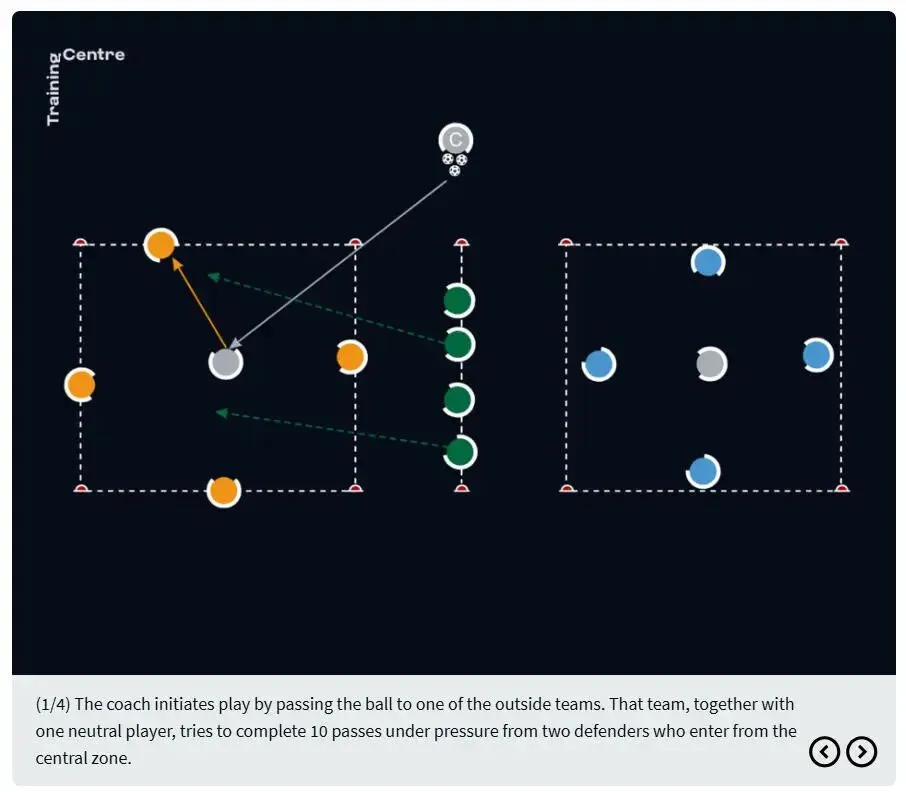
教练通过传球给其中一支外围球队来发起进攻。该球队与一名中立球员一起,在两名从中央区域进入的防守球员的压力下,试图完成10次传球。
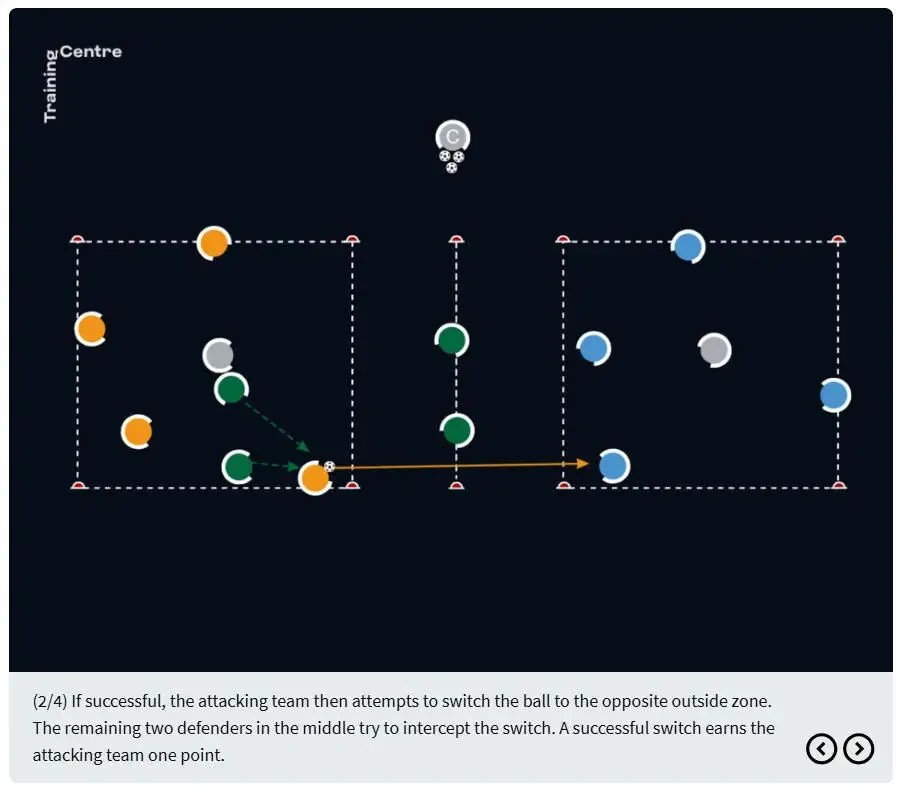
如果成功,进攻方随后尝试将球转移到对面的外围区域。中间剩下的两名防守球员试图拦截这次转移。成功的转移为进攻方赢得一分。
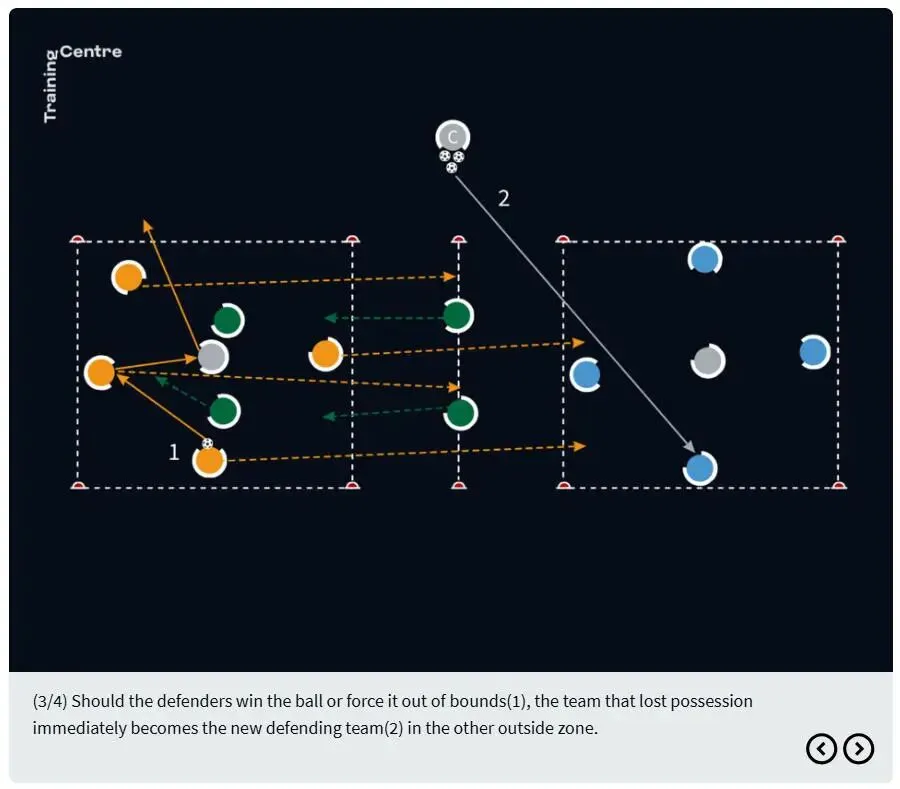
如果防守方赢得球权或将球逼出界外(1),失去球权的一方立即成为另一外围区域的防守方(2)。
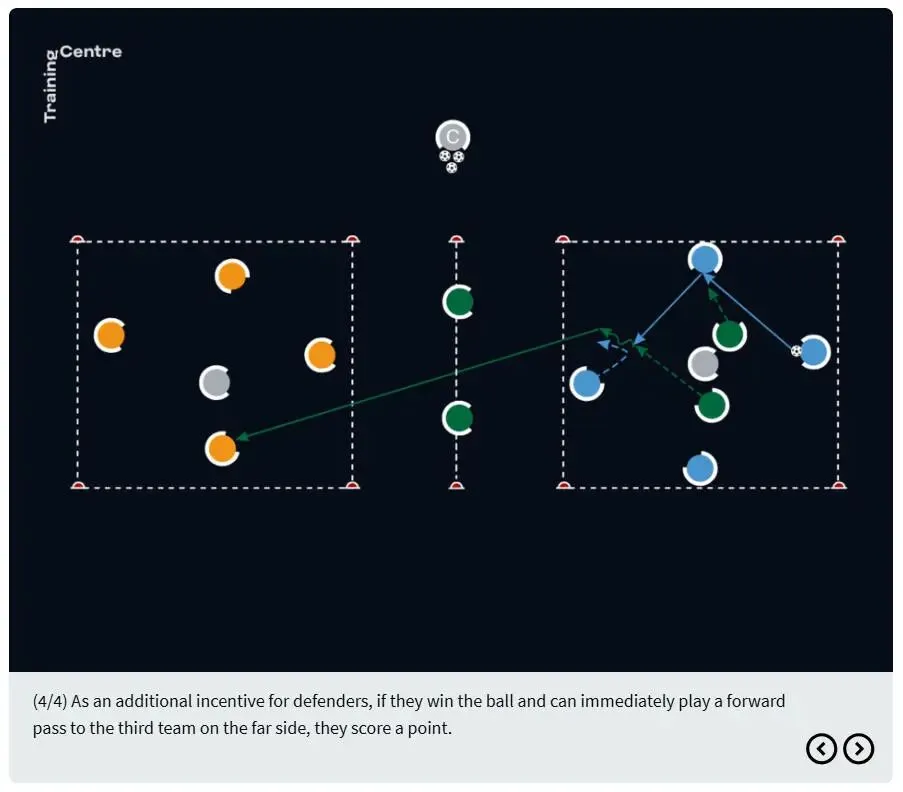
作为对防守方的额外激励,如果他们赢得球权并能立即向远端的第三支球队进行向前传球,他们得一分。
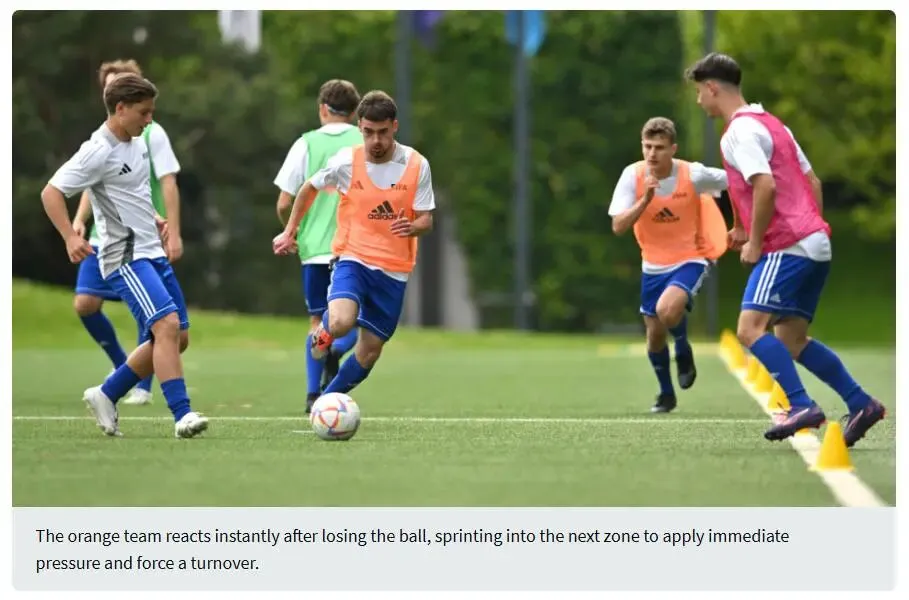
橙色队在丢球后立即做出反应,冲向下一个区域,立即施加压力,迫使对方失误。
英文原版:
The setup
Three teams of four players and two neutral players take part in this game which is played across three zones. At the beginning of every round, each team occupies one zone, with the middle team acting as defenders.
Why it matters
This is more than just a warm-up. It is a tactical activation. It primes players physically, mentally and tactically for the demands of Schmidt’s style. Fast, complex and competitive, the drill reinforces four key behaviors central to his footballing identity:
Forward-thinking play: Players are encouraged to find vertical passes and move the ball with intent.
Quick transitions: The drill is built on rapid changes of possession, teaching players to switch mindsets instantly.
High-intensity defending: Defenders apply immediate pressure, mirroring the aggressive pressing seen in Schmidt’s teams.
Purposeful ball recovery: Rewarding teams only when they turn defensive actions into attacking opportunities.
Design and delivery
What makes this exercise especially effective is the dual scoring system. Teams can score by keeping the ball and progressing it forward, or by winning it and quickly switching play. This reflects the dual nature of Schmidt’s game model: his teams are trained to create chances both in possession, through quick, vertical combinations and out of possession, by using intense pressing and counter-pressing as tools to win the ball high and strike immediately. In this philosophy, defending is not just about preventing goals, but about creating opportunities to score.
The effectiveness of this exercise depends not only on the setup, but also on how it is delivered. Small adjustments in duration, intensity or flow can significantly affect its impact.
Key 1: Rounds last only 90 seconds, allowing players to operate at maximum intensity.
Key 2: The coach ensures continuous play by immediately feeding new balls into the game.
Key 3: Scorekeeping adds a competitive edge and keeps players mentally engaged.
This design pushes players physically while anchoring them tactically. It’s a mental reset and a clear message: this is how we train, and this is how we play.
What is next?
This opening exercise lays the foundation for the rest of the session. It is not just preparation, it is indoctrination. Within minutes, players are immersed in the behaviours that define Roger Schmidt’s teams.
In the next article, we will build on these foundations with a second possession-based game that shifts the tactical emphasis, while maintaining the same intensity and principles. Stay tuned for more insights into how one of Europe’s most daring coaches brings his bold philosophy to life on the training ground.

