哈师大学科英语868教案,课标上的写法
- 2026-10-02 22:26:16

点击上方蓝字,关注我们

哈尔滨师范大学考研
@ 哈师大学科英语考生
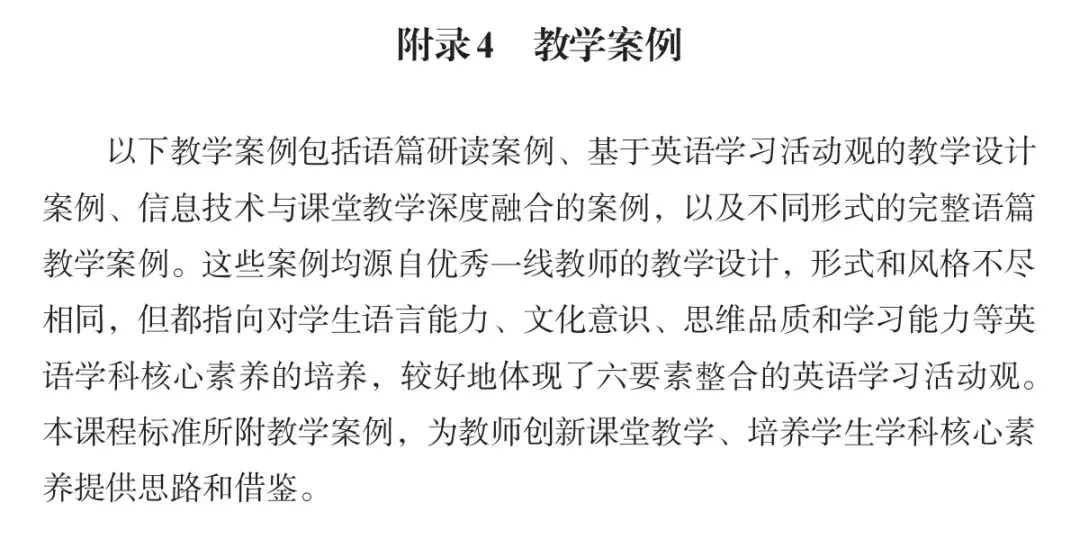
哈尔滨师范大学学科英语专业868科目的教案题并未提供写法上明确范式,备考往往缺乏直接参照。而《普通高中英语课程标准(2017年版2025年修订)》附录中呈现了几篇教案(教学设计)的示范。课标是教育部正式发布的纲领性文件,代表国家层面对英语课堂教学的统一规范和价值导向,兼具权威性与规范性,也贴合英语学科核心素养导向与课堂教学逻辑,可为备考哈师大学科英语的同学提供写法上的指引。
需注意,看以下案例主要看设计的理念,看教学过程各环节的设计;实际写教学设计时,主要写教学目标、教学步骤和教学活动。
文章原文:
Nature Is Turning on Us
The last few years have seen environmental disasters on a grand scale, and experts are predicting far worse to come. Jin Li reports on our Earth’s changeable weather patterns.
A In the last decade, thunderstorms, floods, earthquakes, typhoons, volcanic eruptions, tsunamis and forest fires have become increasingly common. There has been terrible flooding in Asia, Africa, America and Oceania. Even Europe has suffered and large areas have been under water. Storms have been getting worse everywhere too, with a growing number of hurricanes hitting the US, and Central America. Reduced rainfall has affected large areas of Africa for years leaving irrigation canals dry and many other zones are becoming drier. For example, the Yellow River, once famous for flooding, failed to reach the sea at all for 226 days in 1997. A number of nations have already been in armed conflict over water, and reduced rainfall in the west of the US has resulted in huge forest fires.
B Volcanic eruptions and earthquakes have always been a threat in certain parts of the world. A volcanic eruption nearly wiped out the small island of Montserrat in 1997, and there have been serious earthquakes in many parts of Asia, Europe and South America. In the last three years, Indonesia has had a rough time, suffering several killer quakes and it is still recovering from the Asian tsunami caused by an offshore earthquake on December 26th, 2004. The tsunami killed 132,000 Indonesians and another 100,000 people of other nationalities. This catastrophe is still very fresh in the minds of people worldwide who have not yet got over their separation from loved ones lost in the tsunami.
C So why is nature beginning to turn on us? One answer is overpopulation. The population of the world is growing at the disturbing rate of 10,000 people an hour, nearly 90 million a year, with most of the growth in the developing world. People in agricultural areas, without any means to earn their living, move to the cities, and then construct shabby homes from whatever materials they can find on poor clay soil. These homes, seldom made of bricks, can easily fall down in earthquakes or slip and slide downhill in landslides, especially in mountainous areas. On top of that add global warming. This had mainly been caused by the huge amounts of carbon dioxide produced by factories and vehicles, and the destruction of the world’s forests. As a result, a hotter ocean causes more powerful winds. Atlantic hurricanes‑their howling winds with speeds of over 300 kilometres an hour‑are 40% stronger now than they were 30 years ago.
D Volcanoes and earthquakes are even more dangerous than in the past as around half the world’s population now lives in cities. There are more than 300 active volcanoes, about fifty of which erupt each year, and more than 500 million people now live within the range of a volcanic eruption. Because these natural disasters occur at random times, it is difficult to warn people in advance. In May 2006, thousands of Indonesians living near Mt Merapi (which means mountain of fire) had to flee as they thought it was about to erupt. An even greater number of people live at risk, to some degree, from earthquakes which have claimed more than 1.6 million lives in the last hundred years.
E Most disaster experts believe there is the potential that things could get a lot worse. Professor Hou Ming of Peking University studies volcanoes and he warns that the world has not seen the worst nature can do. The worst eruption in human history was probably Mt Tambora in 1815, in Indonesia. Dust from the volcano rolled across the Earth’s skies and pretty much cancelled the following summer in Europe and America. But evidence shows that 73,000 years ago there was a much greater eruption. “It reduced temperatures by maybe 6℃ in some places and the whole planet was sent into winter for years. And there are about two of these events every 100,000 years …”
【教学目标】经过本课的学习,学生能够:
(1)提取语篇大意,梳理文章结构,归纳文中关于自然灾害的事实
性信息;
(2)通过阅读圈活动,基于自主学习与小组合作学习,进一步梳理
和整合所读的文章信息,从不同角度对语篇进行分析和深度解读;
(3)基于所读语篇和视频材料,讨论人与自然的关系,发表个人
观点。
【学习准备】学生课前自学了新单词,预习了课文。
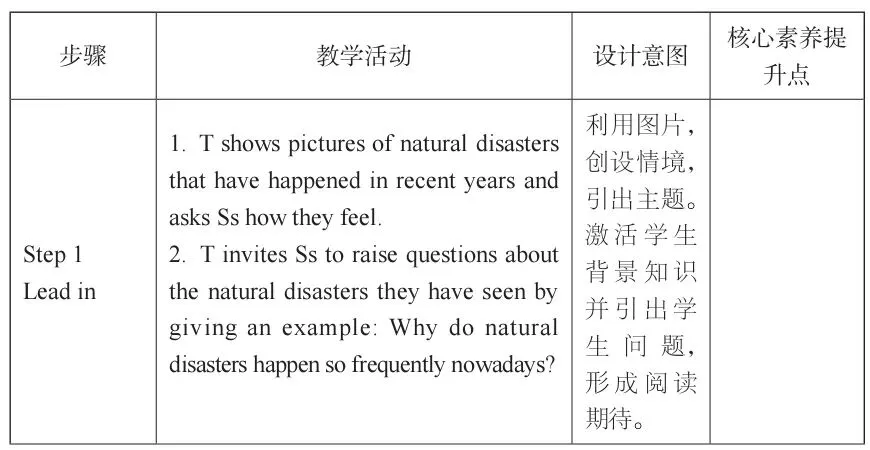
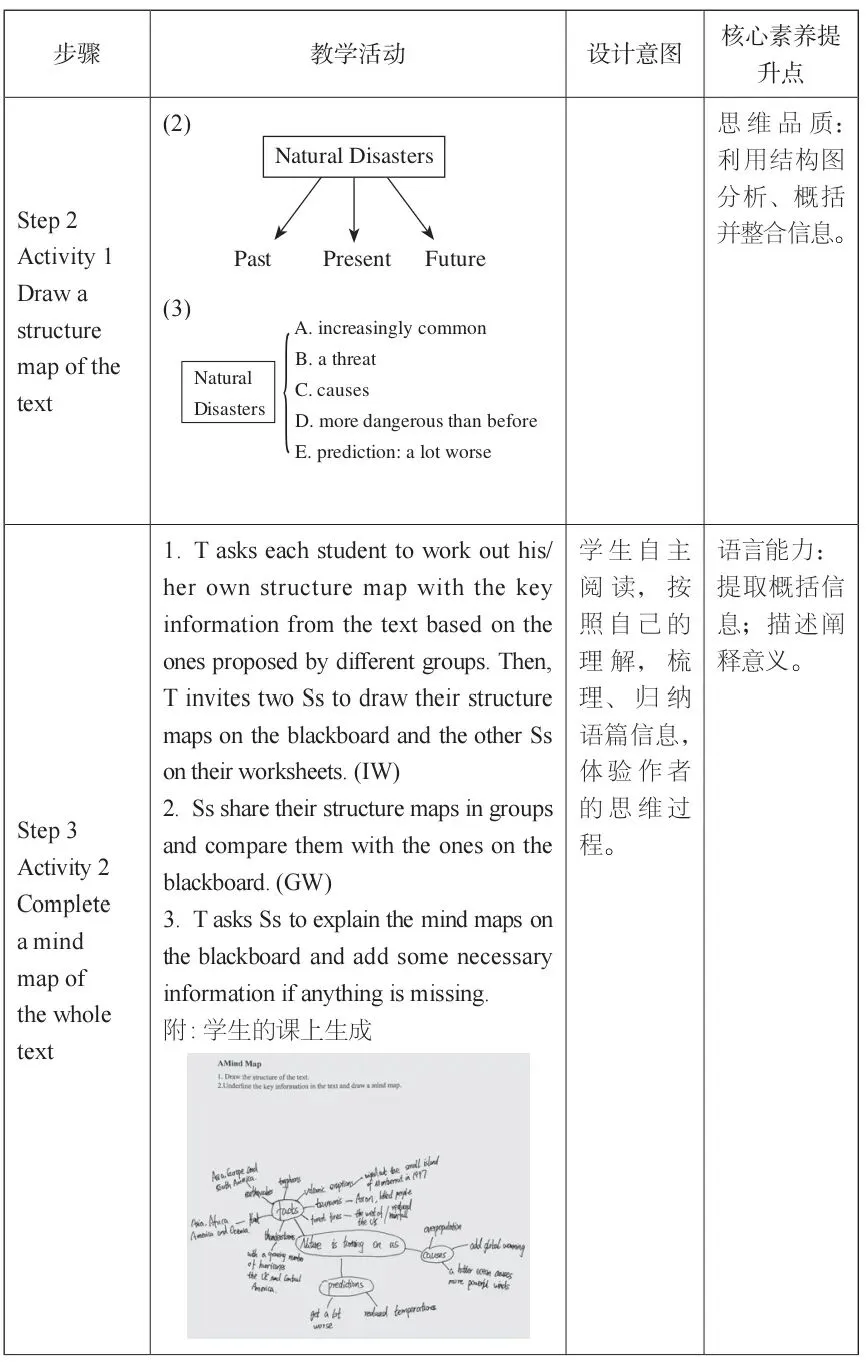
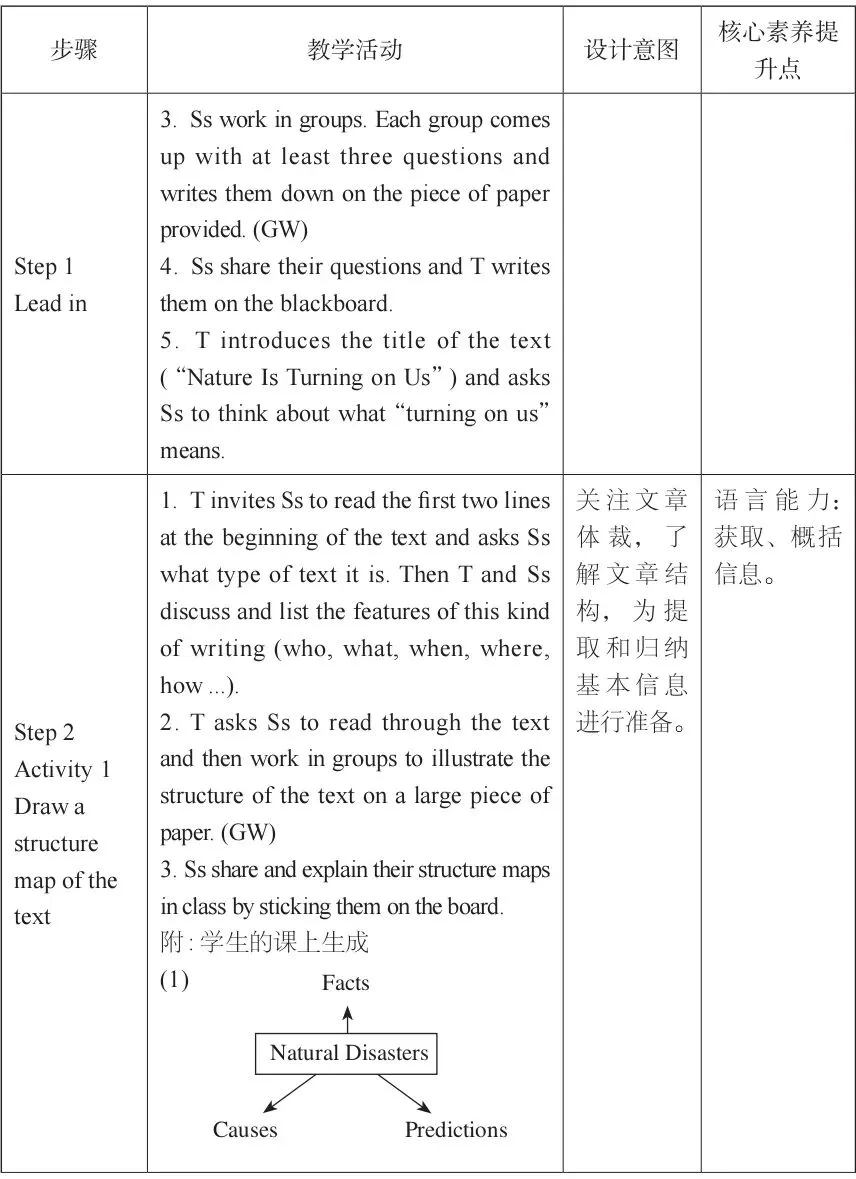
【教学过程】
【案例说明】
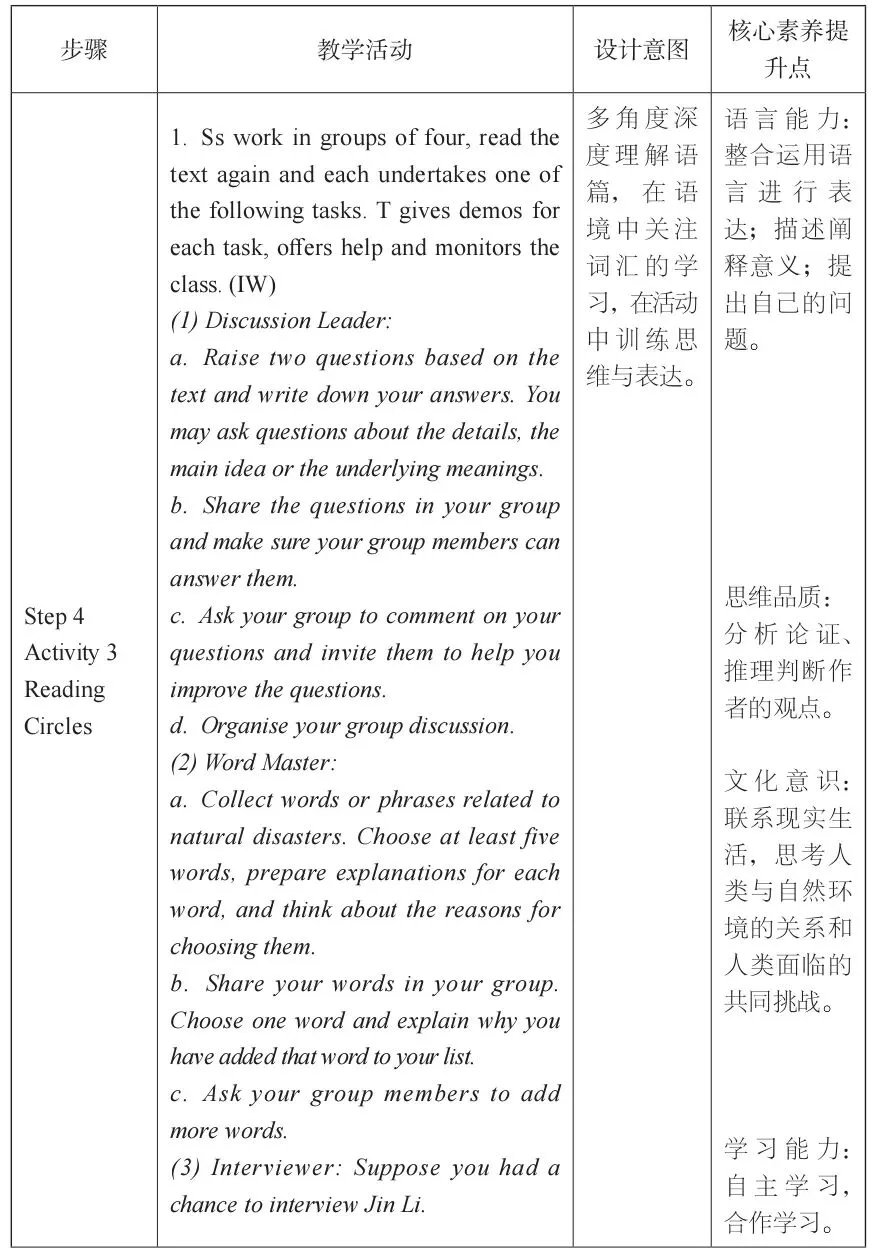
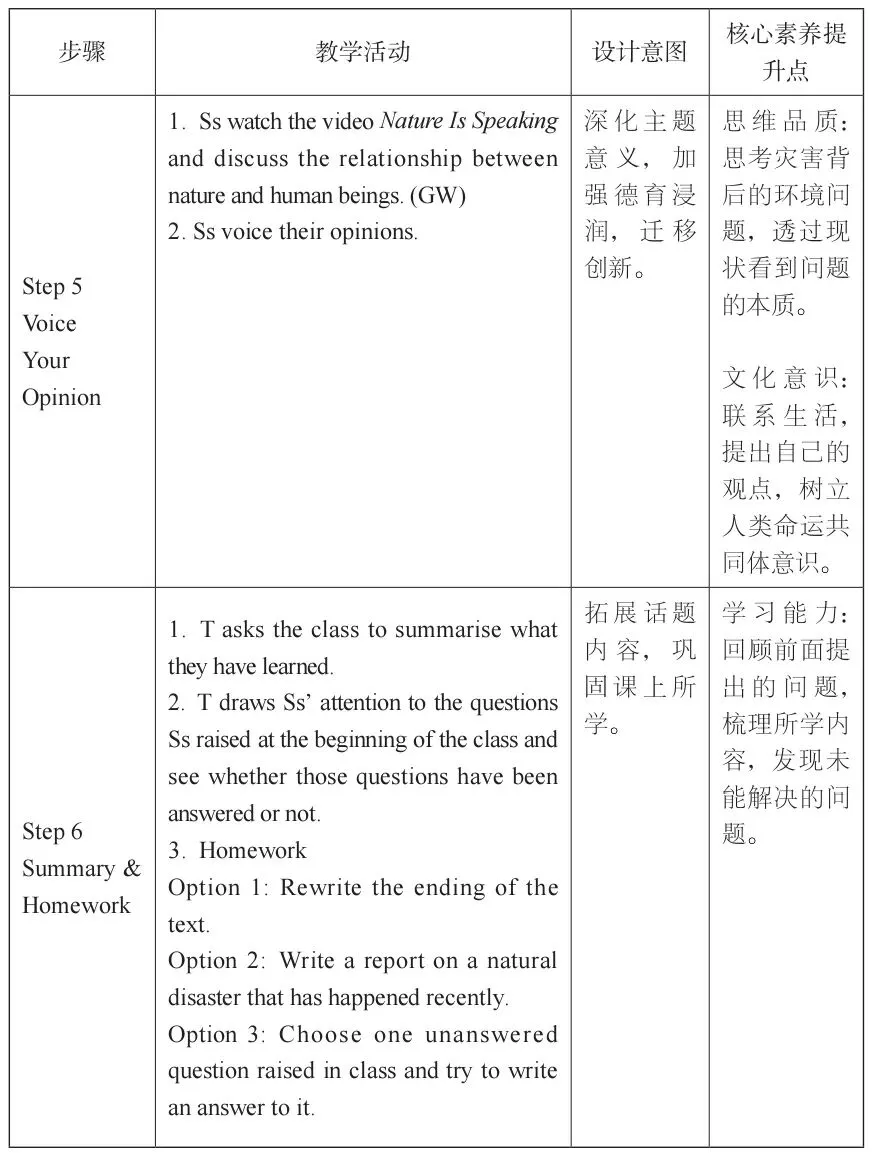
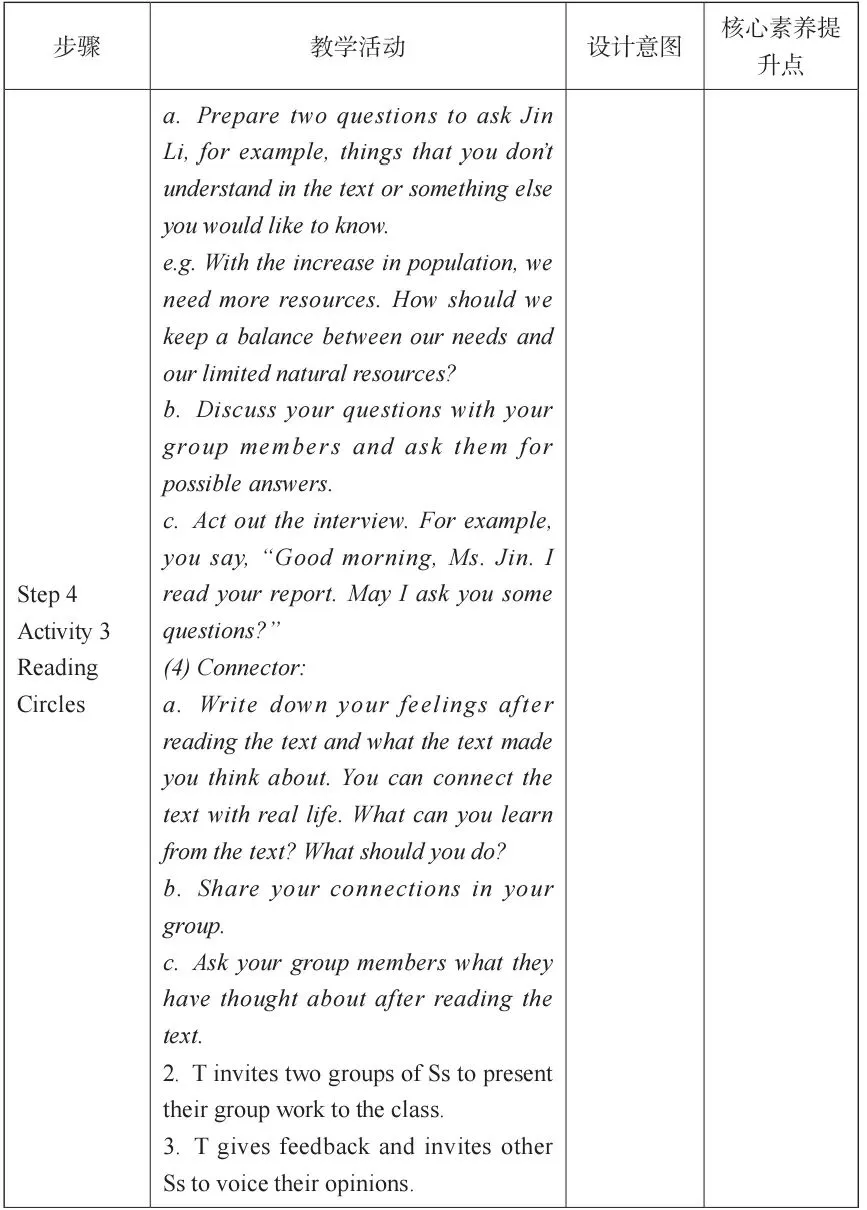
本案例教师基于对语篇和学情的细致分析,确定了本课的教学目标,并基于教学目标设计了五个层次的教学活动,包括创设情境,激活已知;关注体裁,梳理结构;获取事实性信息,交流内化信息;深度理解语篇,分享阅读成果;发展批判性思维,鼓励创意表达。活动之间的内在逻辑清晰,层层递进,体现了综合性、关联性和实践性的特点。特别是教师采用了阅读圈活动,为学生分组自主完成阅读任务提供了平台。由于任务设计明确,要求具体,可操作性强,为学生主动参与、积极思考、互助合作、主动探究、真实交流与表达提供了保障。课后作业设计既包括巩固所学内容的任务,也包括扩展性任务,分层可选择的作业有效地兼顾了学生的个体差异。

END





长按扫描二维码添加学长微信

