【英语教招笔试资料】教学设计之如何撰写教学目标(附笔试真题展示)
- 2026-10-31 23:51:45
引言
在本篇开篇前先给同学们做个相关测试,以某同学撰写的教学目标为例,来看看同学们常见在书写教学目标时候存在的问题吧
Teaching Objectives: Enable students to talk about festivals and customs in English and express or support an opinion with suitable expressions.
一、教学目标的定义
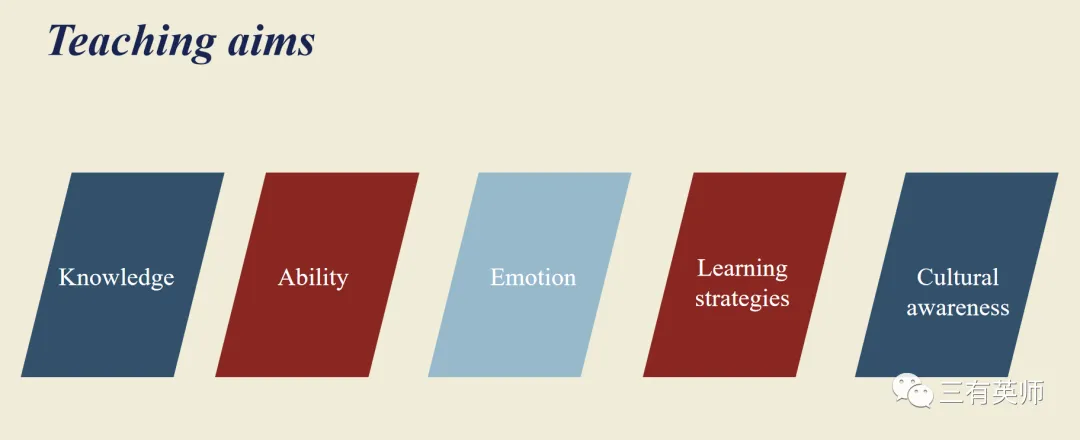
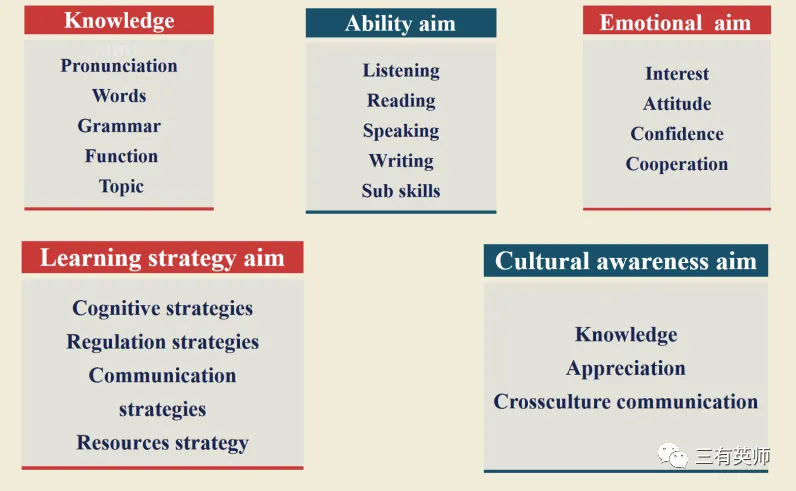
教学目标是指教学活动实施的方向和预期达成的结果,是一切教学活动的出发点和最终归宿。根据课程标准,英语教学目标应包括五个方面:语言知识、语言能力、情感态度、学习策略、文化意识。通常我们书写三维目标即可
二、确定教学目标的原则
1.综合性原则:综合性原则是基于国家英语课程标准以及三维目标的关系制定并有机结合的。其包括认知、情感、能力等不同学习领域的目标,符合语言素质与综合素质共同发展的要求
(“过程与方法”是“情感、态度与价值观”和“知识与技能”目标的桥梁、纽带,是学生获取知识与技能,以及形成正确的情感、态度与价值观的主渠道,是掌握科学的学习方法的途径。“知识与技能”是基础性目标,是过程与方法、情感态度与价值观的物质载体;“情感、态度、价值观”是终结性目标,是实现知识与技能的掌握、形成实效性过程和科学方法的动力,在探索知识和科学方法的过程中起到推动作用,是实现教书育人的基本功能。但它不能独立或直接进行。)
2.主体性原则:教学目标的陈述从学生的角度出发,体现出教学过程由教师本位向学生本位的转变,真正实现“以学生发展为本”。
3.可测性原则:目标要简明、具体、易操作、易检测。
4.灵活性原则:根据实际教学情况,把课时目标做些微调,关注学生即时表现,加以适当影响、引导,既帮助学生增长知识、提高能力,又保护学生积极参与、主动探究的自主精神,真正体现学生的主体地位。
5.阶段性原则:一个课时的课堂教学只需完成一个课时的教学目标。
三、教学目标撰写的四要素
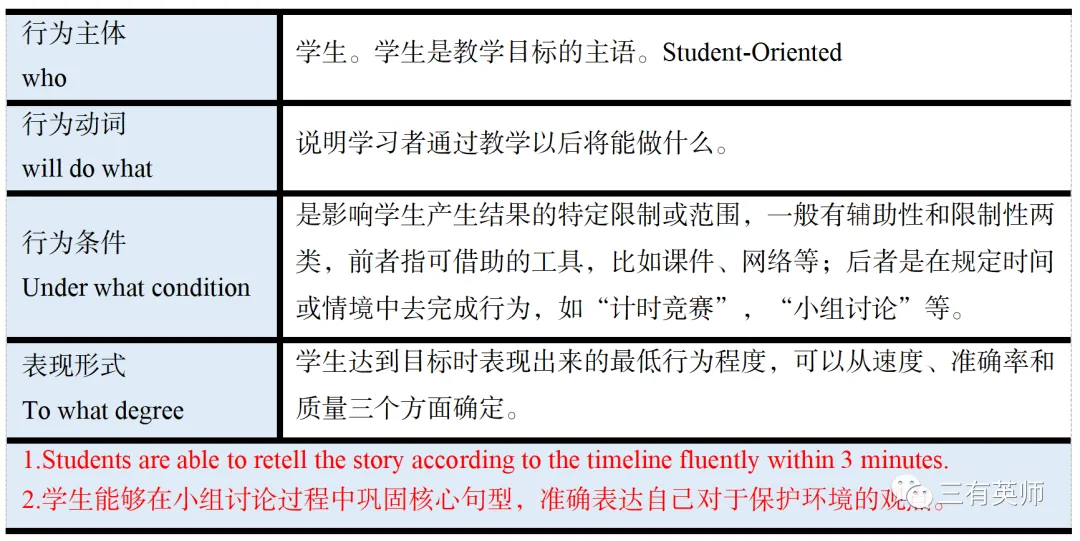
教学设计中提倡用行为目标对学生通过学习后行为及能力的变化进行描述。行为目标的编写方法也叫的 ABCD 模式,即对象(audience)、行为(behavior)、条件(condition)和标准(degree),也叫行为主体、行为动词、行为条件、表现程度。
四、教学目标的五个维度
Tips:
1.教学目标的主语是学生;
2.目标中不能出现“培养”,“让”、“使”等强制性、被动性的词语;
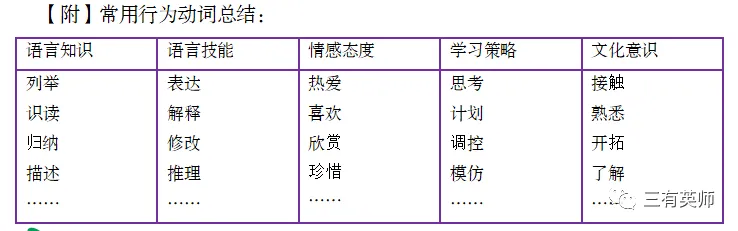
五、如何撰写教学目标(以往年杭统考小学和中学的真题为例)
【小学真题】
Sarah: Hey, Zhang Peng. We have a new classroom.
Zhang Peng: Really? What’s in the classroom?
Sarah: Let’s go and see!
Zhang Peng: It’s so big!
Sarah: Look! My picture!
Zhang Peng: Where is it?
Sarah: It’s near the window.
The harmful effect of smoking is more than you can imagine. When I was young, I didn't know much about the harmful effects of smoking. I didn't know, for example, that it could do terrible damage to your heart and lungs or that it was more difficult for smoking couples to become pregnant. I certainly didn't know their babies may have a smaller birth weight or even be abnormal in some way. Neither did I know that my cigarette smoke could affect the health of non-smokers. However, what I did know was that my girlfriend thought I smelt terrible. She said my breath and clothes smelt, and that the ends of my fingers were turning yellow. She told me that she wouldn't go out with me again unless I stopped! I also noticed that I became breathless quickly, and that I wasn't enjoying sport as much. When I was taken off the school football team because I was unfit, I knew it was time to quit smoking.
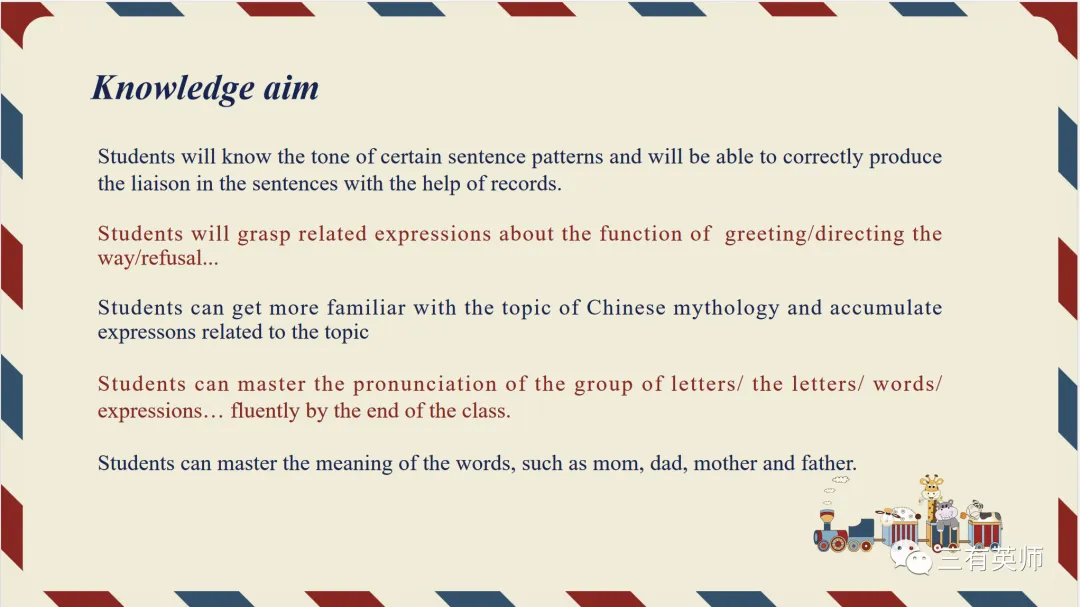
1.语言知识目标(Knowledge Objective):指本堂课中要让学生了解和掌握的主要知识点。对于英语教学来讲,一堂课汇总的知识目标无非就是词汇,句型,语法等。
Knowledge Aim: Students can read and recognize the words: classroom, really, picture, near, window. (小学真题)
Knowledge objective: Students can explain some new words and expressions according to the context, such as non-smoker, smoking couple, lung and soon.(中学真题)
【知识目标方法指导】
在知识方面:(学生)“能”——说出、列举、背诵、复述、识别、解释、说明、分类、对比、归纳等。
Students “can” — speak, list, recite, retell, distinguish from, explain, classify, contrast, conclude…
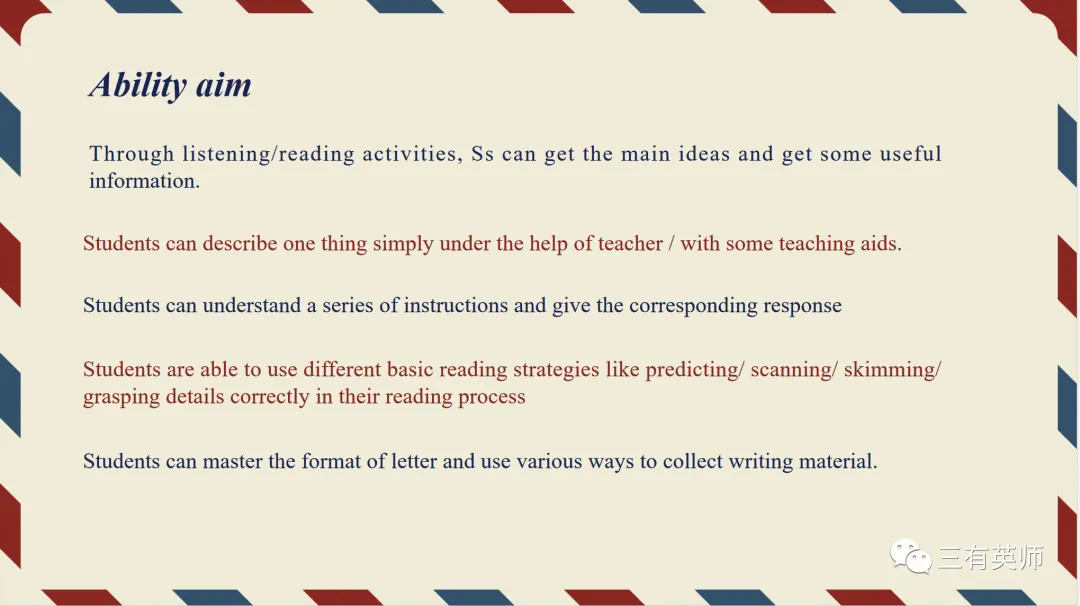
2.语言技能目标(Ability Objective):是指通过这堂课学生能够锻炼什么样的能力。
Ability Objective: Through activities and games, students can learn how to ask about the position of the things in the classroom.(小学真题)
【能力目标方法指导】
在能力方面:通过——“经历、参与、讨论、交流、合作、分享”等——(学生)能 “了解、掌握、学习……”
Through — “experience, taking part in, discussion, communication, cooperation, sharing” — students can “understand, master, learn…”
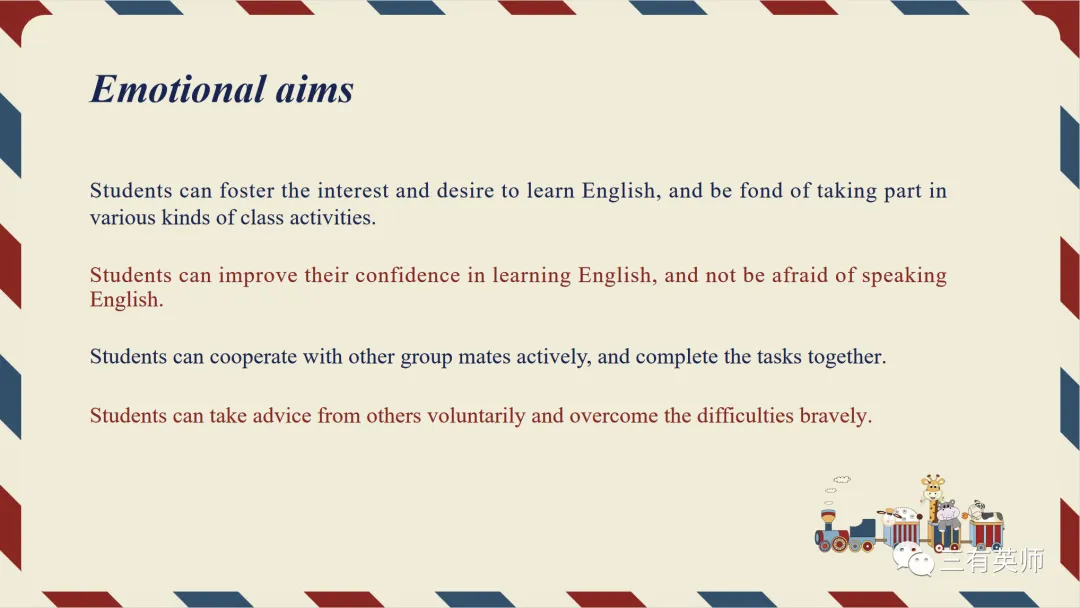
3.情感态度目标(Emotional Objective):是学生通过课堂学习,参与活动,以及教师在情感上进行什么样的引导,从而让学生在情感上产生什么样的倾向。
Emotional Aim: Students can learn to pay more attention to their classroom and classmates through the discussion.(小学真题)
【情感与态度目标方法指导】
在情感方面:学生学会认可、接受、称赞、喜欢、关心、关注、热爱、坚持、保持、重视、追求、培养、尊重……
Students learn to approve, accept, praise, like, care about, love, persist in, retain, value, promote, pursue, cultivate, respect…
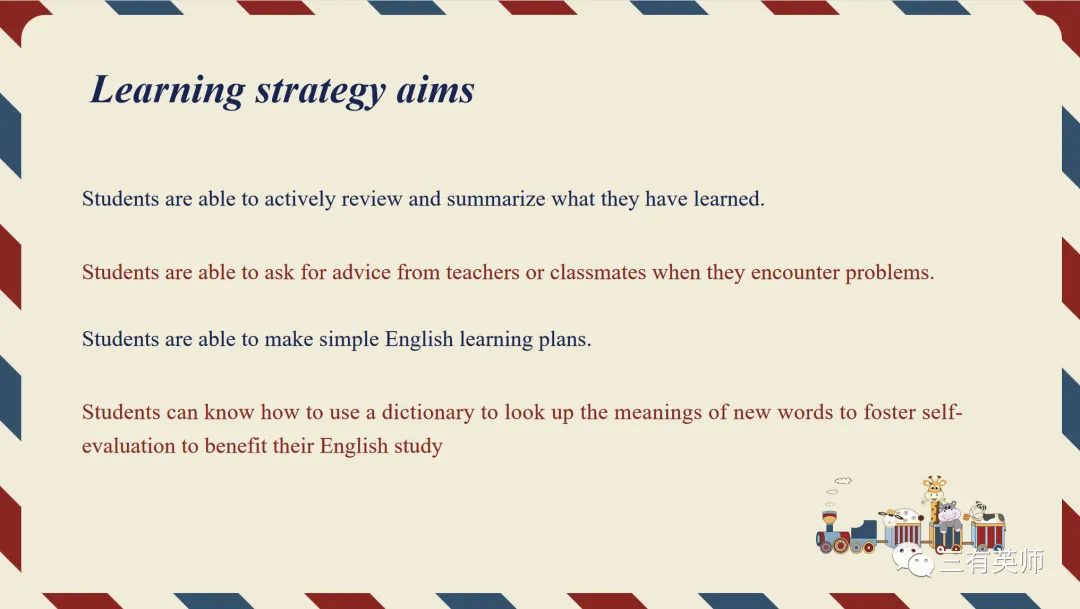
4.学习策略目标(Learning strategies Objective)
学 习 策 略 主 要 有 这 几 方 面 :Cognitive strategies; Metacognitive strategies; Communicative strategies; Resource strategies。
【学习策略目标方法指导】
学会使用词典,分类记忆词汇,通过标题抓住文章主旨大意,运用记忆策略、学会合作学习等。
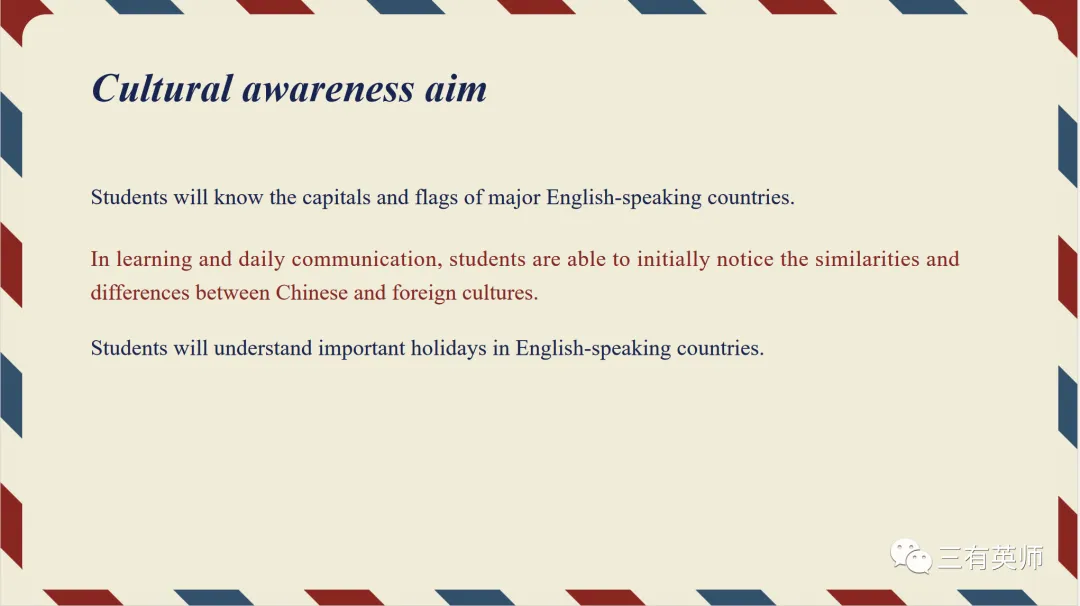
5.文化意识(Cultural Awareness Objective)
文化意识主要包括以下几个方面:Cultural knowledge; Cultural understanding; Awareness of and ability in cross-cultural communication.
【文化意识方法指导】
了解西方文化、礼仪、礼貌用语、饮食习惯、中外文化比较等。
六、笔试真题现场训练
【小学真题】
1. 请根据人民教育出版社义务教育教科书《英语(三年级起点)》四年级下册 Unit 6 Shopping Part A Let’s learn 部分的课程截图,完成本课时的目标设计。
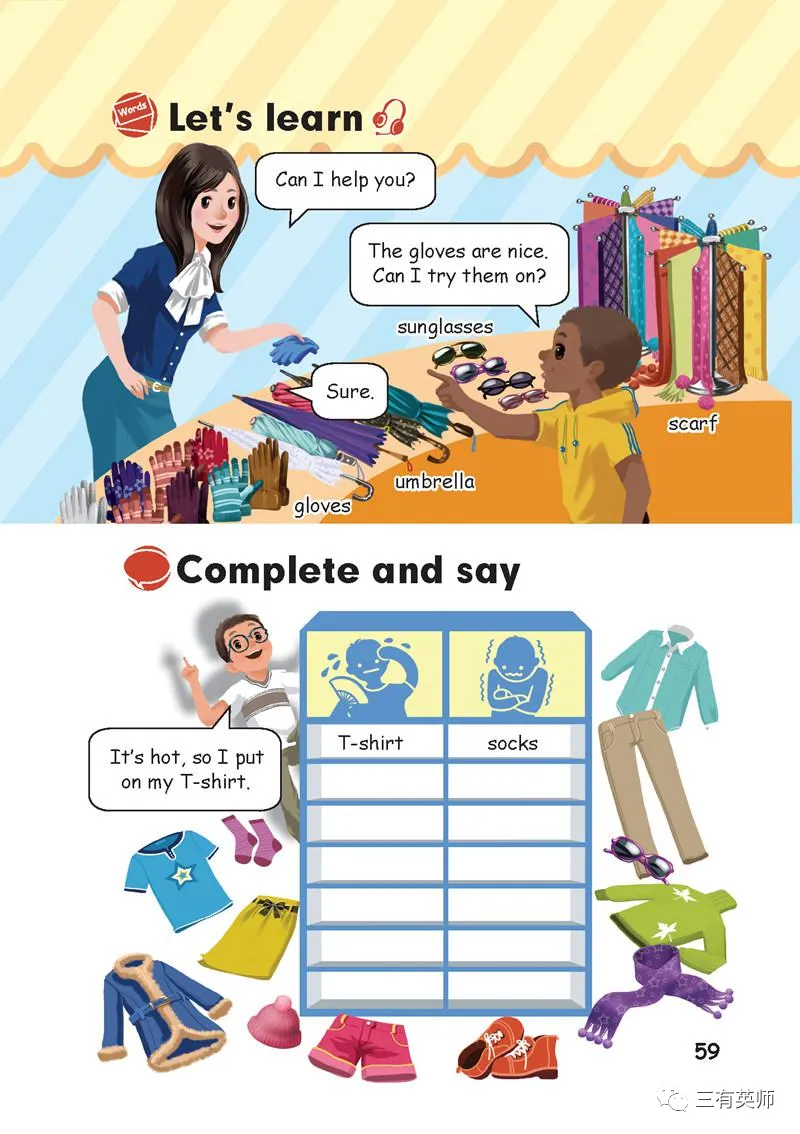
【参考答案】
Teaching aims:
1. Knowledge aims:
(1) Students will have a good command of the pronunciation, the spelling and the meaning of the new words, such as scarf, umbrella, gloves, etc.
(2) Students can understand the sentence structure: Can I help you?
2. Ability aims:
(1) Students can introduce the objects that they wear.
(2) Students can use these key words and the sentence pattern in their daily life correctly.
3. Emotional aim:
(1) Students can raise the awareness of independence and students are willing to buy things by themselves.
【中学真题】
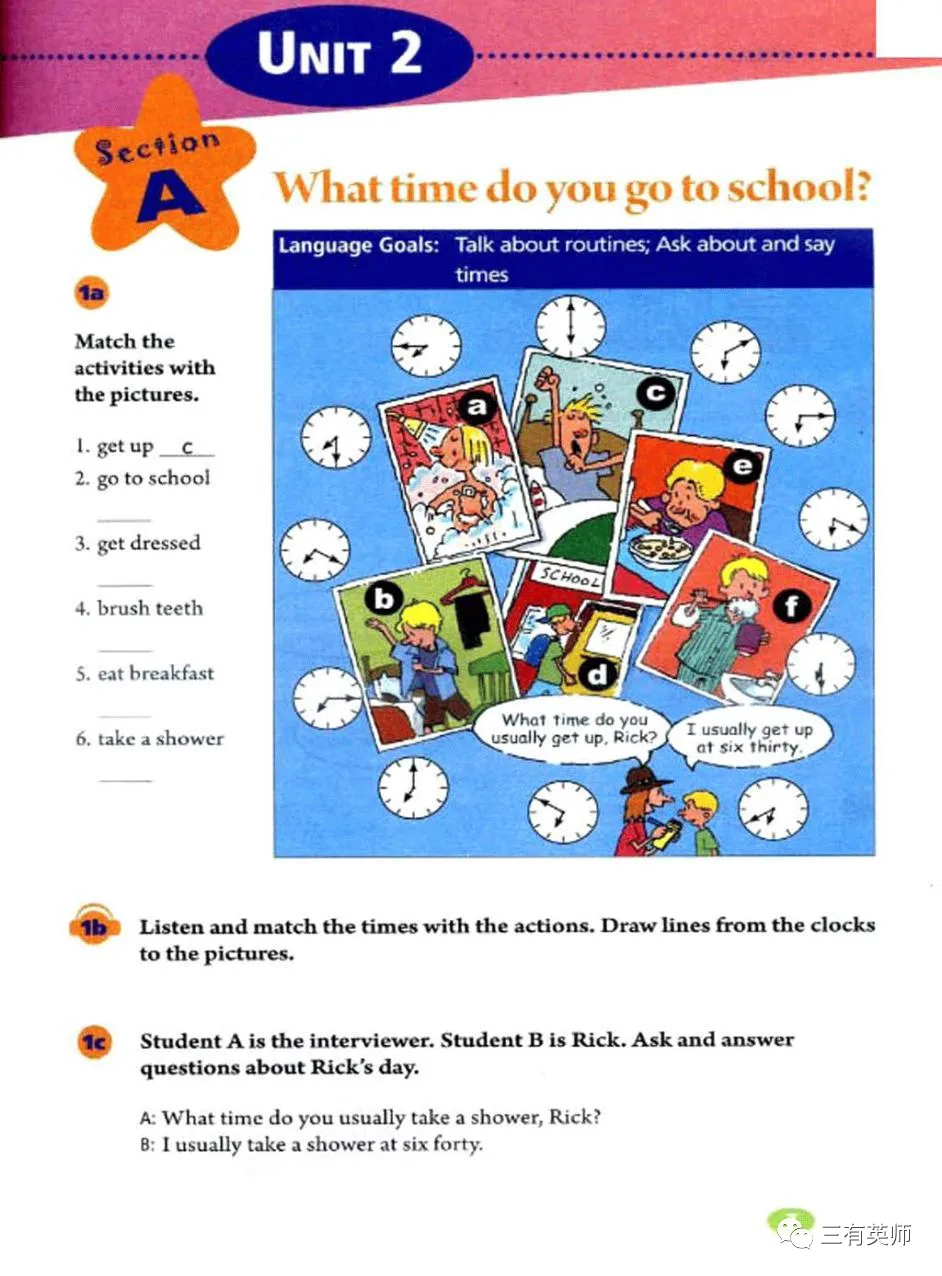
【参考答案】
Teaching aims:
1. Knowledge aims:
(1) Students can match the meaning of each word with its picture or actual action in daily life.
(2) Students are able to grasp the concept of the sentence structures and comprehend this topic.
2. Ability aim:
(1) Students will enhance the proficiency of doing a matching while listening.
3. Emotional aim:
(1) Students can cultivate the sense of time, and be punctual in their study and everyday life.
其他更多的资料(考情、资料、真题等)大家去菜单栏查看
需要进群的,直接加微信:

