【狂暴英语教案】新概念英语第二册第55课:不是金矿
- 2026-09-20 10:15:00
📚 狂暴英语教案 · 新概念英语第二册
第55课 Not a gold mine
不是金矿
📘 本课信息教材:新概念英语第二册 · 第55课核心功能:叙述寻宝故事 · 幽默叙事 · 意外转折语法焦点:被动语态(现在完成时被动和一般过去时被动) · used to do 与 would do · 定语从句 · 分词作状语
🏷️ 热门标签
🎯 本课学习目标
词汇维度:
掌握核心词汇 treasure, revealer, invent, detect, bury, seashore, pirate, hide, collect, arm, examine, entrance, dig, coin, worthless, thoroughly, trunk, confident, reveal, value 等的含义与用法。所有重点词汇将强制标注蓝思值。
语法维度:
深入理解并运用被动语态(现在完成时被动和一般过去时被动),区分 used to do 和 would do 表示过去习惯的用法,掌握 where 和 which 引导的定语从句,理解 be doing when... 结构表示过去正在发生某事时另一事发生,以及过去分词作状语和现在分词作状语(hoping to do)的用法。
技能维度(段落写作):
学习叙事结构中"意外转折"的写作手法,掌握通过细节描写增强场景真实感的技巧。能够模仿课文写一段关于"寻找某物"的短文,运用被动语态和时间状语从句。
文化维度:
了解西方"寻找丢失宝藏"的文化传说,认识海盗历史背景,了解现代金属探测器在考古和寻宝中的应用。
📖 第一部分:课文完整内容
Lesson 55 Not a gold mine
📜 课文原文
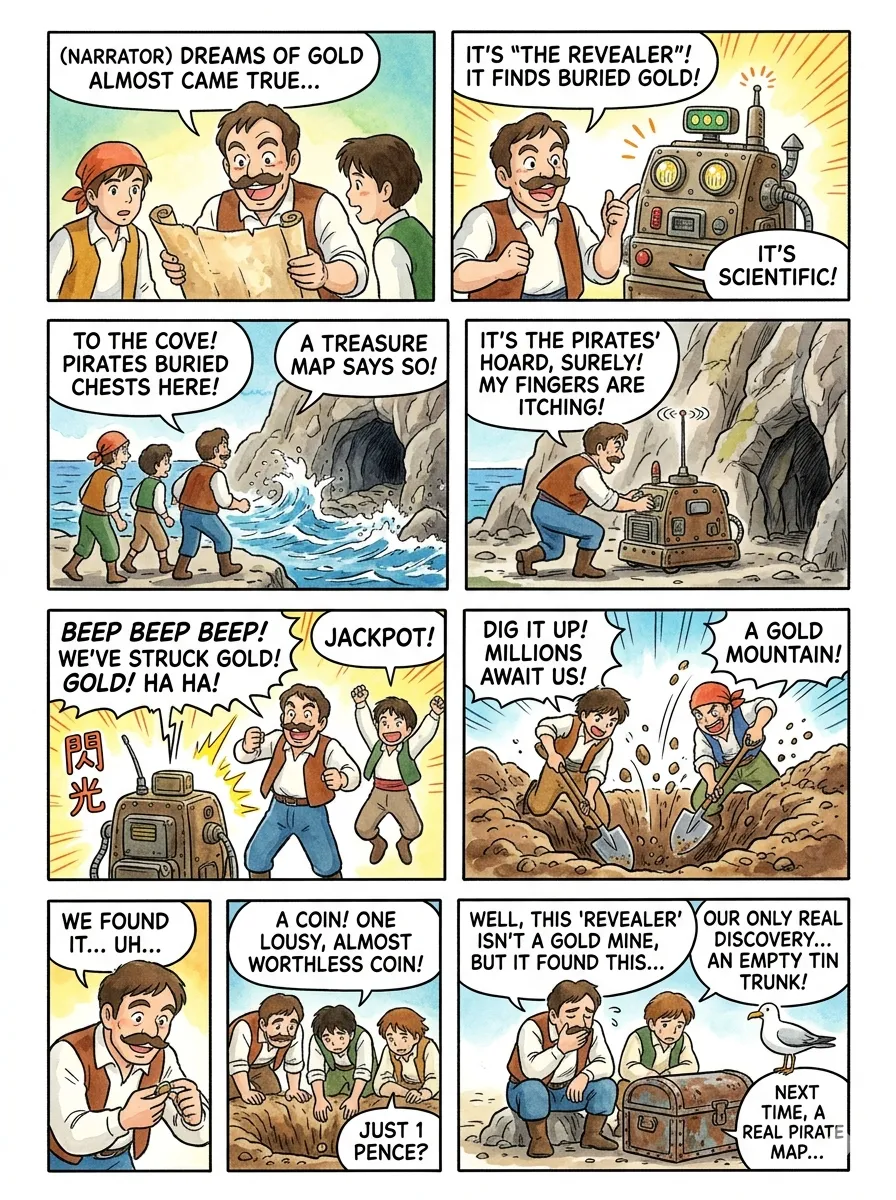
First listen and then answer the question.What did the team find?Dreams of finding lost treasure almost came true recently. A new machine called 'The Revealer' has been invented and it has been used to detect gold which has been buried in the ground. The machine was used in a cave near the seashore where – it is said – pirates used to hide gold. The pirates would often bury gold in the cave and then fail to collect it. Armed with the new machine, a search party went into the cave hoping to find buried treasure. The leader of the party was examining the soil near the entrance to the cave when the machine showed that there was gold under the ground. Very excited, the party dug a hole two feet deep. They finally found a small gold coin which was almost worthless. The party then searched the whole cave thoroughly but did not find anything except an empty tin trunk. In spite of this, many people are confident that 'The Revealer' may reveal something of value fairly soon.
背景简介:本课讲述了一个梦想成真的故事——寻找丢失宝藏的梦想几乎成真。一种名为"揭示者"的新型机器被发明出来,用于探测埋藏在地下的黄金。一个搜索队带着这台机器进入海边的一个山洞,据说那里曾是海盗藏金之地。当探测到地下的金子时,队员们兴奋地挖掘,结果只找到一枚几乎毫无价值的小金币。虽然收获甚微,但许多人仍坚信这台机器很快会发现更有价值的东西。课文围绕"寻宝"这一令人兴奋的主题,巧妙运用了被动语态和多种从句,营造了从希望到失望的戏剧性转折。
参考译文:寻找丢失宝藏的梦想最近几乎成真了。一种名为"揭示者"的新机器已经被发明出来,并且已被用于探测埋藏在地下的黄金。这台机器被用于海边的一个山洞里,据说海盗过去常把黄金藏在这个洞里。海盗们常常把黄金埋在山洞里,但后来却没能取走。带着新机器,一支搜索队进入了山洞,希望能找到埋藏的宝藏。队长正在检查洞口附近的土壤,这时机器显示地下有黄金。队员们非常兴奋,挖了一个两英尺深的洞。他们最后找到了一枚几乎毫无价值的小金币。接着,搜索队彻底搜查了整个山洞,但除了一只空的铁皮箱外,什么也没发现。尽管如此,许多人还是相信,"揭示者"不久可能会揭示出一些有价值的东西。
🔍 第二部分:逐句精讲与词块总结
句子1
原文: Dreams of finding lost treasure almost came true recently.
翻译: 寻找丢失宝藏的梦想最近几乎成真了。
句子结构: 这是一个简单句。主语是 Dreams of finding lost treasure,其中 of finding lost treasure 是介词短语作后置定语修饰 Dreams。谓语是 came true(不及物动词短语),almost 和 recently 是状语。
重点词汇:
dream 蓝思值 320 L
英音[driːm] 美音[driːm] 词性:名词/动词
释义:梦想,梦
常用语块:dream of doing sth. / dream about
短语搭配:have a dream, dream team, pipe dream
例句一:His dream of becoming a pilot came true. 他成为飞行员的梦想实现了。
例句二:She dreamed of finding a hidden treasure. 她梦想找到隐藏的宝藏。
拓展:dream 既可作可数名词(梦想、梦境),也可作动词。come true 是固定搭配,意为"实现",主语通常为梦想、愿望等。
treasure 蓝思值 780 L
英音[ˈtreʒə(r)] 美音[ˈtreʒər] 词性:名词/动词
释义:财宝,宝藏;珍品
常用语块:buried treasure, treasure hunt, treasure chest
短语搭配:treasure trove (无主珍宝), treasure island
例句一:They searched for the buried treasure but found nothing. 他们寻找埋藏的宝藏,但一无所获。
例句二:This book is a treasure of information. 这本书是信息的宝库。
拓展:treasure 还可作动词,意为"珍视、珍惜"。其形容词形式是 treasured(珍爱的)。
come true 蓝思值 360 L
英音[kʌm truː] 美音[kʌm truː] 词性:动词短语
释义:实现,成真
常用语块:wish come true
短语搭配:make one's dream come true
例句一:All my wishes came true on my birthday. 我生日那天所有愿望都实现了。
例句二:It took years for his plan to come true. 他的计划花了多年才实现。
拓展:come true 是不及物动词短语,没有被动语态。类似短语还有 become reality。
语法点睛:本句使用了一般过去时 came true,时间副词 recently 常用于一般过去时或现在完成时。短语 dreams of finding lost treasure 中,of finding 是动名词短语作后置定语。动名词 having lost treasure 保留动词特征,后接宾语 lost treasure。整体句子简短,却交代了故事的主题——寻宝梦想的接近实现。
语音要点: Dreams of finding 连读 /driːmz əv ˈfaɪndɪŋ/;lost treasure 中 lost 与 treasure 连读;came true 连读 /keɪm truː/。
句子2
原文: A new machine called 'The Revealer' has been invented and it has been used to detect gold which has been buried in the ground.
翻译: 一种名为"揭示者"的新机器已经被发明出来,并且已被用于探测埋藏在地下的黄金。
句子结构: 这是一个并列复合句。两个并列分句由 and 连接。第一个分句是 A new machine called 'The Revealer' has been invented,过去分词短语 called 'The Revealer' 作后置定语。第二个分句是 it has been used to detect gold which has been buried in the ground,其中 which has been buried in the ground 是定语从句修饰 gold。两个分句均使用现在完成时被动语态。
重点词汇:
invent 蓝思值 990 L
英音[ɪnˈvent] 美音[ɪnˈvent] 词性:动词
释义:发明,创造
常用语块:invent a machine, be invented by
短语搭配:invent an excuse(捏造借口)
例句一:Who invented the telephone? 谁发明了电话?
例句二:He invented a new type of engine. 他发明了一种新型发动机。
拓展:invent 的名词是 invention(发明),inventor(发明家)。区分 discover(发现原本存在的事物)和 invent(创造原本不存在的事物)。
detect 蓝思值 1050 L
英音[dɪˈtekt] 美音[dɪˈtekt] 词性:动词
释义:探测,发觉,检测
常用语块:detect a change, detect gold
短语搭配:detect a lie, detect a signal
例句一:The dog detected the smell of drugs in the suitcase. 狗在行李箱中嗅到了毒品的气味。
例句二:This instrument can detect very small amounts of radiation. 这台仪器能探测到极微量的辐射。
拓展:detect 的名词是 detection(探测)和 detective(侦探)。前缀 de- 表示"去除",词根 tect 意为"掩盖",故 detect 字面意思是"去除掩盖",即"发现"。
bury 蓝思值 680 L
英音[ˈberi] 美音[ˈberi] 词性:动词
释义:埋葬,埋藏
常用语块:bury gold, be buried in
短语搭配:bury oneself in(埋头于), bury the hatchet(休战言和)
例句一:The dog buried the bone in the garden. 狗把骨头埋在花园里。
例句二:He was buried in thought and didn't hear me. 他陷入沉思,没听见我叫他。
拓展:bury 的过去式和过去分词为 buried。形容词 buried 表示"被埋的"。注意发音,不要与 berry(浆果)混淆。
语法点睛:本句集中展现了现在完成时被动语态(has been invented, has been used, has been buried)。这表示动作发生在过去但对现在有影响——机器已发明可用,黄金已被埋所以可被探测。不定式 to detect 作目的状语,说明机器被使用的目的。定语从句 which has been buried 进一步说明黄金的状态。通过被动语态,句子聚焦于机器和黄金,而非发明者或埋藏者。
语音要点: A new machine called 'The Revealer' 中 called 与 The 连读;has been invented 连读 /hæz biːn ɪnˈventɪd/;it has been used 连读 /ɪt hæz biːn juːzd/;which has been buried 连读 /wɪtʃ hæz biːn ˈberid/。
句子3
原文: The machine was used in a cave near the seashore where – it is said – pirates used to hide gold.
翻译: 这台机器被用于海边的一个山洞里,据说海盗过去常把黄金藏在这个洞里。
句子结构: 这是一个复合句。主句是 The machine was used in a cave near the seashore。where – it is said – pirates used to hide gold 是定语从句,修饰 a cave,关系副词 where 相当于 in which。it is said 是插入语,意为"据说"。
重点词汇:
cave 蓝思值 710 L
英音[keɪv] 美音[keɪv] 词性:名词/动词
释义:山洞,洞穴
常用语块:in a cave, cave exploration
短语搭配:cave in(塌陷;屈服)
例句一:The explorers went deep into the cave. 探险者们深入洞穴。
例句二:The roof of the cave collapsed. 洞穴的顶部塌了。
拓展:cave 作动词时意为"塌陷"或"屈服"。
seashore 蓝思值 860 L
英音[ˈsiːʃɔː(r)] 美音[ˈsiːʃɔːr] 词性:名词
释义:海岸,海滨
常用语块:near the seashore, on the seashore
短语搭配:seashore resort
例句一:We collected shells on the seashore. 我们在海滨捡贝壳。
例句二:The hotel is located right on the seashore. 酒店就在海滨。
拓展:seashore 是 sea 和 shore 的合成词。与 beach 相比,seashore 更强调紧邻海水的陆地狭长地带。
pirate 蓝思值 970 L
英音[ˈpaɪrət] 美音[ˈpaɪrət] 词性:名词/动词
释义:海盗/盗版
常用语块:pirate ship, pirate treasure
短语搭配:pirate copy(盗版拷贝)
例句一:The pirates attacked the ship and stole the gold. 海盗袭击了船并抢走了黄金。
例句二:This is a pirate edition of the book. 这是该书的盗版。
拓展:pirate 的名词为 piracy(海盗行为;盗版),形容词 piratical。
used to 蓝思值 500 L
英音[juːst tuː] 美音[juːst tuː] 词性:情态动词短语
释义:过去常常(现在已不如此)
常用语块:used to do sth.
短语搭配:be used to doing(习惯于),注意区别
例句一:I used to get up early when I was a child. 我小时候常常早起。
例句二:There used to be a cinema here. 过去这里有一家电影院。
拓展:used to 只有过去式,表示过去的习惯或状态,强调与现在的对比。其否定形式为 didn't use to 或 used not to。疑问句为 Did...use to? 或 Used...to?(较正式)。
语法点睛:本句包含关系副词 where 引导的定语从句,修饰地点名词 cave,where 在从句中充当地点状语。插入语 it is said 是固定结构,意为"据说",相当于 People say that...。used to hide gold 中 used to 表示过去习惯性动作,且现已不再如此,暗示海盗已经不再活跃或已经消失,为寻宝提供了合理性。本句同时展示了一般过去时被动(was used)和 used to 结构。
语音要点: was used 连读 /wɒz juːzd/;cave near the seashore 中 near 与 the 连读;it is said 中 it is 弱读 /ɪt ɪz/;used to 读作 /juːst tə/。
句子4
原文: The pirates would often bury gold in the cave and then fail to collect it.
翻译: 海盗们常常把黄金埋在山洞里,但后来却没能取走。
句子结构: 这是一个简单句。主语 The pirates,谓语由并列动词组成:would often bury... and then fail to collect...。would 是情态动词,表示过去习惯性动作。fail to collect 是不定式短语作宾语。
重点词汇:
would 蓝思值 300 L
英音[wʊd] 美音[wʊd] 词性:情态动词
释义:会,总是(表示过去习惯性动作)
常用语块:would often do, would sometimes do
短语搭配:would rather, would like
例句一:In summer, we would often swim in the river. 夏天我们常去河里游泳。
例句二:He would sit there for hours reading. 他过去常常坐在那里看几个小时书。
拓展:would 表示过去习惯时,与 used to 类似,但 would 更强调自愿性、动作的重复性,且多与时间状语连用;used to 可表示状态和动作,而 would 通常只表示动作。
fail 蓝思值 460 L
英音[feɪl] 美音[feɪl] 词性:动词
释义:失败,未能(做)
常用语块:fail to do sth, fail an exam
短语搭配:without fail(必定)
例句一:He failed to arrive on time. 他没能准时到达。
例句二:All our plans failed. 我们所有的计划都失败了。
拓展:fail 的名词是 failure(失败)。fail to do 表示"未能做成某事",后接不定式。
collect 蓝思值 540 L
英音[kəˈlekt] 美音[kəˈlekt] 词性:动词
释义:收集,领取;取走
常用语块:collect money, collect stamps
短语搭配:collect a debt, collect one's thoughts
例句一:I need to collect my luggage from the airport. 我需要去机场取行李。
例句二:She collects old coins as a hobby. 她收集古钱币作为爱好。
拓展:collect 的名词 collection(收藏品),名词 collector(收藏家)。
语法点睛:would 在这里表示过去反复发生的习惯性动作,常与 often, sometimes, always 等频度副词连用。本句中 would often bury... and then fail to collect... 描述了海盗的典型悲剧性模式:埋金却最终未能取回,从而留下了待寻的宝藏。这种"意图落空"的设定为故事的冲突做了铺垫。fail to do 是固定搭配,to 后接动词原形,表示"未做成某事"。
语音要点: would often 连读 /wʊd ˈɒfən/;bury gold 中 bury 与 gold 连读;fail to collect 中 fail 与 to 连读 /feɪl tə/。
句子5
原文: Armed with the new machine, a search party went into the cave hoping to find buried treasure.
翻译: 带着新机器,一支搜索队进入了山洞,希望能找到埋藏的宝藏。
句子结构: 这是一个简单句。Armed with the new machine 是过去分词短语作状语,表示伴随状态。主语 a search party,谓语 went into,宾语 the cave。hoping to find buried treasure 是现在分词短语作目的状语。
重点词汇:
armed 蓝思值 750 L
英音[ɑːmd] 美音[ɑːrmd] 词性:形容词(过去分词)
释义:武装的,带有……装备的
常用语块:armed with, armed forces
短语搭配:armed robbery, armed to the teeth
例句一:The police are armed with guns. 警察配有枪支。
例句二:He came to the meeting armed with all the facts. 他带着所有事实资料来开会。
拓展:arm 作动词意为"武装、装备",armed 是过去分词用作形容词。arm 作名词意为"手臂;武器(复数 arms)"。
search party 蓝思值 880 L
英音[sɜːtʃ ˈpɑːti] 美音[sɜːrtʃ ˈpɑːrti] 词性:名词短语
释义:搜索队,搜寻小组
常用语块:organize a search party
短语搭配:search party of volunteers
例句一:A search party was sent to look for the missing hikers. 一支搜索队被派去寻找失踪的徒步者。
例句二:The leader of the search party gave instructions. 搜索队的队长下达了指示。
拓展:party 在此意为"(共同行动的)一组人",而非"聚会"。
语法点睛:本句包含两个分词短语作状语。过去分词短语 Armed with... 表示方式或伴随状况,其逻辑主语是主句主语 a search party,它们之间是被动关系(被武装)。现在分词短语 hoping to find... 表示目的,逻辑关系是主动。这种分词作状语可以使句子结构紧凑,信息丰富。类似的例子还有:Surrounded by the enemy, they held their ground. / Holding a map, he searched for the street.
语音要点: Armed with 连读 /ɑːmd wɪð/;went into 连读 /went ˈɪntə/;hoping to find 连读 /ˈhəʊpɪŋ tə faɪnd/。
句子6
原文: The leader of the party was examining the soil near the entrance to the cave when the machine showed that there was gold under the ground.
翻译: 队长正在检查洞口附近的土壤,这时机器显示地下有黄金。
句子结构: 这是一个复合句。主句是 The leader of the party was examining the soil near the entrance to the cave,使用过去进行时。when 引导时间状语从句,表示"正在做……时突然发生另一件事"。从句为 when the machine showed that there was gold under the ground,其中 that there was gold under the ground 是宾语从句。
重点词汇:
examine 蓝思值 910 L
英音[ɪɡˈzæmɪn] 美音[ɪɡˈzæmɪn] 词性:动词
释义:检查,考察,审查
常用语块:examine the soil, examine a patient
短语搭配:examine closely, examine for
例句一:The doctor examined the wound carefully. 医生仔细检查了伤口。
例句二:The police examined the scene of the crime. 警方勘查了犯罪现场。
拓展:examine 的名词是 examination(考试;检查)。近义词 inspect(检查,强调仔细查看)、scrutinize(细查,强调仔细审查)。
entrance 蓝思值 720 L
英音[ˈentrəns] 美音[ˈentrəns] 词性:名词
释义:入口,进入
常用语块:entrance to the cave, main entrance
短语搭配:entrance fee, entrance exam
例句一:They met at the entrance to the cinema. 他们在电影院入口处见面。
例句二:The entrance to the building was guarded. 大楼入口有守卫。
拓展:entrance 也可表示"进入(权)"。注意与 entry(进入、条目)的区别。动词 enter 的派生名词 entrance 强调入口地点。
语法点睛:本句采用了 was examining... when... 结构,这是英语中常见的句型:过去进行时(was/were doing)+ when + 一般过去时(did),表示"正在做某事,这时突然发生了另一件事"。when 在这里相当于 and at that time,具有转折意味。这种结构在叙事中用于引入意外转折。showed 后接 that 宾语从句。there be 句型嵌入宾语从句中,表达"地下有金"。本句是故事的高潮转折点,机器的显示给全队带来了兴奋。
语音要点: was examining 连读 /wɒz ɪɡˈzæmɪnɪŋ/;near the entrance 连读 /nɪə ði ˈentrəns/;when the machine showed 连读 /wen ðə məˈʃiːn ʃəʊd/。
句子7
原文: Very excited, the party dug a hole two feet deep.
翻译: 队员们非常兴奋,挖了一个两英尺深的洞。
句子结构: 这是一个简单句。Very excited 是形容词短语作状语,表示主语的状态和原因。主语 the party,谓语 dug,宾语 a hole,two feet deep 是后置定语修饰 hole。
重点词汇:
excited 蓝思值 440 L
英音[ɪkˈsaɪtɪd] 美音[ɪkˈsaɪtɪd] 词性:形容词
释义:兴奋的,激动的
常用语块:very excited, get excited about
短语搭配:excited about, excited by
例句一:The children were very excited about the trip. 孩子们对这次旅行非常兴奋。
例句二:Excited by the news, she jumped up and down. 她听到消息后兴奋得跳起来。
拓展:excited 用于描述人的感受, exciting 用于描述事物本身令人兴奋。区别:I am excited about the exciting movie.
dig 蓝思值 350 L
英音[dɪɡ] 美音[dɪɡ] 词性:动词
释义:挖,掘
常用语块:dig a hole, dig for treasure
短语搭配:dig out, dig up, dig into
例句一:The dog dug a hole in the garden. 狗在花园里挖了个洞。
例句二:We need to dig deeper to find the truth. 我们需要更深入地挖掘以找到真相。
拓展:dig 的过去式和过去分词为 dug。名词形式 digging(挖掘)。
deep 蓝思值 420 L
英音[diːp] 美音[diːp] 词性:形容词/副词
释义:深,深处
常用语块:two feet deep, deep water
短语搭配:deep in thought, deep down
例句一:The river is ten meters deep. 这条河有十米深。
例句二:They dug a hole three feet deep. 他们挖了一个三英尺深的洞。
拓展:deep 可用作形容词或副词。在表示具体深度时,常放在名词后作后置定语,如 a well 20 meters deep。
语法点睛:Very excited 是形容词短语作状语,表示原因或状态,相当于 Because they were very excited。这种用法是省略了 being 的形容词短语作状语,在英语中很普遍,如 Sure of winning, he didn't practice hard. 后置定语 two feet deep 修饰 a hole,表示度量的名词短语通常后置,例如 a room 10 meters long。
语音要点: Very excited 连读 /ˈveri ɪkˈsaɪtɪd/;dug a hole 连读 /dʌɡ ə həʊl/;two feet deep 连读 /tuː fiːt diːp/。
句子8
原文: They finally found a small gold coin which was almost worthless.
翻译: 他们最后找到了一枚几乎毫无价值的小金币。
句子结构: 这是一个复合句。主句是 They finally found a small gold coin。which was almost worthless 是限制性定语从句,修饰 a small gold coin。
重点词汇:
coin 蓝思值 760 L
英音[kɔɪn] 美音[kɔɪn] 词性:名词/动词
释义:硬币,钱币/铸造硬币;创造(新词)
常用语块:gold coin, collect coins
短语搭配:coin money, coin a phrase
例句一:He put a coin into the machine. 他往机器里投了一枚硬币。
例句二:I have a collection of ancient Chinese coins. 我收藏了一些中国古代钱币。
拓展:coin 作动词可表示"创造(新词语)",如 Who coined the term 'modern art'?
worthless 蓝思值 1080 L
英音[ˈwɜːθləs] 美音[ˈwɜːrθləs] 词性:形容词
释义:无价值的,不值钱的
常用语块:almost worthless, completely worthless
短语搭配:worthless coin, worthless effort
例句一:The painting was a fake and completely worthless. 那幅画是赝品,一文不值。
例句二:They were selling worthless goods. 他们在卖毫无价值的商品。
拓展:worthless 由 worth(价值)+ 否定后缀 -less(无……的)构成。反义词是 valuable 或 precious。名词形式为 worthlessness。类似构成:useless, helpless, careless.
语法点睛:本句包含一个 which 引导的限制性定语从句,修饰先行词 coin。先行词指物,关系代词 which 在从句中作主语(was worthless),也可用 that。almost 修饰 worthless,表示程度。本句揭示出寻宝结果的戏剧性反差——期待金矿,却只得到一枚无价值小金币,为下文进一步失望做了铺垫。
语音要点: finally found 连读 /ˈfaɪnəli faʊnd/;small gold coin 连读 /smɔːl ɡəʊld kɔɪn/;which was almost worthless 连读 /wɪtʃ wɒz ˈɔːlməʊst ˈwɜːθləs/。
句子9
原文: The party then searched the whole cave thoroughly but did not find anything except an empty tin trunk.
翻译: 接着,搜索队彻底搜查了整个山洞,但除了一只空的铁皮箱外,什么也没发现。
句子结构: 这是一个并列句,由 but 连接两个分句。第一个分句是 The party then searched the whole cave thoroughly;第二个分句是 did not find anything except an empty tin trunk,省略了主语 The party。
重点词汇:
thoroughly 蓝思值 1020 L
英音[ˈθʌrəli] 美音[ˈθɜːrəli] 词性:副词
释义:彻底地,完全地
常用语块:search thoroughly, clean thoroughly
短语搭配:thoroughly enjoy, thoroughly investigate
例句一:The police searched the house thoroughly. 警察彻底搜查了房子。
例句二:I thoroughly enjoyed the concert. 我非常享受这场音乐会。
拓展:thoroughly 是 thorough 的副词形式。形容词 thorough 意为"彻底的、周密的"。名词为 thoroughness。
except 蓝思值 480 L
英音[ɪkˈsept] 美音[ɪkˈsept] 词性:介词/连词
释义:除……之外
常用语块:except for, except that
短语搭配:except when, except where
例句一:Everyone except John came to the party. 除了约翰,所有人都来了派对。
例句二:The shop is open daily except Sunday. 这家商店除周日外每天都营业。
拓展:except 与 besides 的区别:except 表示"排除在外",besides 表示"包括在内且添加"。例如:All went except him(除了他全去了);All went besides him(除了他去了,其他人也去了)。
trunk 蓝思值 650 L
英音[trʌŋk] 美音[trʌŋk] 词性:名词
释义:箱子;树干;大鼻子(象)
常用语块:tin trunk, luggage trunk, tree trunk
短语搭配:trunk road(主干道), trunk call(长途电话)
例句一:They found an old wooden trunk full of clothes. 他们发现了一个装满衣服的旧木箱。
例句二:He packed his trunk and left. 他收拾好箱子离开了。
拓展:trunk 多义:汽车后备箱(美式 trunk,英式 boot),树干,大象鼻子,躯干等。
语法点睛:本句用 but 连接两个分句,形成对比:虽然彻底搜查了,但只发现一个空箱子。except 是介词,后面通常接名词或代词。anything except 意为"除了……之外什么都没有"。不定代词 anything 在否定句中作宾语。注意:nothing except 相当于 only。本句可以改写为:The party searched the whole cave thoroughly but found only an empty tin trunk.
语音要点: searched the whole cave 连读 /sɜːtʃt ðə həʊl keɪv/;did not find 连读 /dɪd nɒt faɪnd/;except an empty tin trunk 连读 /ɪkˈsept ən ˈempti tɪn trʌŋk/。
句子10
原文: In spite of this, many people are confident that 'The Revealer' may reveal something of value fairly soon.
翻译: 尽管如此,许多人还是相信,"揭示者"不久可能会揭示出一些有价值的东西。
句子结构: 这是一个复合句。主句是 many people are confident。that 引导宾语从句,作 confident 的宾语(或视作形容词后 that 从句)。从句是 'The Revealer' may reveal something of value fairly soon。
重点词汇:
in spite of 蓝思值 720 L
英音[ɪn spaɪt ɒv] 美音[ɪn spaɪt ʌv] 词性:介词短语
释义:尽管,不顾
常用语块:in spite of this, in spite of the fact
短语搭配:in spite of difficulties
例句一:In spite of the rain, they went out. 尽管下雨,他们还是出去了。
例句二:He failed in spite of his hard work. 尽管努力,他还是失败了。
拓展:in spite of 后接名词或动名词,相当于 despite。注意不能接从句;若接从句需用 in spite of the fact that...。
confident 蓝思值 700 L
英音[ˈkɒnfɪdənt] 美音[ˈkɑːnfɪdənt] 词性:形容词
释义:自信的,确信的
常用语块:be confident that, be confident of
短语搭配:confident about, confident in
例句一:She is confident that she will win the competition. 她确信自己会赢得比赛。
例句二:I am confident of his ability to finish the job. 我相信他有能力完成工作。
拓展:confident 的名词是 confidence(信心),副词 confidently。注意区分 confident(自信的)和 confidant(密友)。
reveal 蓝思值 980 L
英音[rɪˈviːl] 美音[rɪˈviːl] 词性:动词
释义:揭示,揭露,显示
常用语块:reveal a secret, reveal the truth
短语搭配:reveal itself, reveal one's identity
例句一:He promised not to reveal the secret. 他承诺不透露秘密。
例句二:The investigation revealed some important facts. 调查揭示了一些重要事实。
拓展:reveal 的反义词是 conceal(隐藏)。名词形式为 revelation(揭露,启示)。该词与电子产品显示或"剧透"同义。
语法点睛:本句形容词 confident 后接 that 从句,这是英语中常见的形容词后跟从句的结构,如 I am sure that..., I am certain that...。情态动词 may 表示可能性"也许、可能"。fairly soon 意为"不久",fairly 程度副词,相当于 quite。something of value 是"有价值的东西",of value 是介词短语作后置定语修饰 something。句首 In spite of this 中的 this 指代上一句几乎一无所获的结果,形成强烈转折,表达乐观态度。本句作为全文结尾,点明主题——尽管失望,但希望犹存。
语音要点: In spite of this 连读 /ɪn spaɪt əv ðɪs/;many people are confident 连读 /ˈmeni ˈpiːpl ɑː ˈkɒnfɪdənt/;may reveal 连读 /meɪ rɪˈviːl/。
📌 核心词块总结
1. come true: to become reality, to happen as hoped.例:My dream of visiting Paris came true.
2. be used to do: to be employed for a particular purpose.例:This knife is used to cut bread.
3. used to do: something happened regularly in the past but no longer happens now.例:We used to live in London.
4. fail to do: not succeed in doing something.例:He failed to pass the driving test.
5. armed with: equipped with.例:She arrived armed with a list of questions.
6. in spite of: despite; not being prevented by.例:In spite of the bad weather, the game continued.
7. search party: a group of people organized to look for someone or something lost.例:A search party was sent to find the missing child.
8. be confident that: be certain that something will happen.例:We are confident that we will finish on time.
✍️ 第三部分:语篇分析与段落写作技巧
1. 语篇分析① 识别宏观结构 (Identify the macrostructure):本文是一篇典型的叙事文(narration),结构清晰,分为三个部分:- 背景介绍(第1-2句):引入梦想和新机器。- 行动与发现(第3-8句):搜索队进入洞穴,发现金币但几乎无价值。- 结果与展望(第9-10句):只找到空箱子,但人们对机器仍有信心。叙事遵循"期待建立→行动→发现(低于预期)→反应(依然乐观)"的曲线,制造出戏剧性张力。
② 列举衔接手段 (List cohesive devices):时态衔接通过一般过去时与过去完成时、现在完成时的转换保证时间逻辑;词汇衔接通过关键词 treasure, gold, machine, cave 的重复形成语义场;逻辑连接词 but(表转折)、then(表时间顺序)、in spite of this(表让步)使语篇连贯;指代(it 指代 machine, the party 指代 search party)避免重复;插入语 it is said 增加神秘色彩。
③ 分析作者态度 (Analyze the author's attitude):作者以冷静、略带幽默的口吻叙述。开头 dreams almost came true 暗示失望;发现 worthless coin 带有讽刺;尾句 many people are confident 又给人以希望。作者通过事实的对比(机器先进但结果微小)传达"现实中充满意外"的意味,未直接评论,保持客观叙事。
2. 写作技巧① 提炼写作逻辑:本课写作逻辑可概括为"设置期望→付诸行动→意外结果→情感反应"。首先用"梦想几乎成真"建立期待;再描写高科技机器和海盗传说,强化期待;接着搜索队兴奋挖掘,但只得到无价值金币;最后以乐观收尾。起承转合的结构适合叙事类写作。
② 提供段落写作范例Example Paragraph (范文):A team of archaeologists recently used a ground-penetrating radar to search for ancient ruins near the river. The machine had been designed to detect structures buried beneath the earth. The scientists were examining the data when the radar showed a large rectangular shape underground. Very excited, the team began to dig carefully. After hours of work, they finally uncovered a small clay pot which was almost empty. The pot contained only a few grains of carbonized rice. The team then scanned the entire area but found nothing else except some broken tiles. In spite of this, the leader was confident that the radar would help them locate more significant finds in the future.
全文翻译:一支考古学家团队最近使用探地雷达沿河搜索古代遗迹。这台机器被设计用来探测埋藏在地下的结构物。科学家们正在分析数据,这时雷达显示地下有一个巨大的矩形形状。队员们非常兴奋,开始小心挖掘。经过几个小时的工作,他们最终发现了一个几乎空了的小陶罐。罐内只有几粒碳化的稻米。接着团队扫描了整个区域,除了一些碎瓦片外没有找到其他东西。尽管如此,队长相信雷达未来会帮助他们找到更有意义的发现。
难词简析:-archaeologist(蓝思值 1100 L) 英音[ˌɑːkiˈɒlədʒɪst] 美音[ˌɑːrkiˈɑːlədʒɪst] 词性:名词 释义:考古学家-ground-penetrating radar(蓝思值 1200 L) 词性:名词短语 释义:探地雷达-buried(蓝思值 680 L) 英音[ˈberid] 美音[ˈberid] 词性:形容词 释义:埋藏的-rectangular(蓝思值 1010 L) 英音[rekˈtæŋɡjələ(r)] 美音[rekˈtæŋɡjələr] 词性:形容词 释义:矩形的-carbonized(蓝思值 1150 L) 英音[ˈkɑːbənaɪzd] 美音[ˈkɑːrbənaɪzd] 词性:形容词 释义:碳化的-tiles (蓝思值 840 L) 英音[taɪlz] 美音[taɪlz] 词性:名词 释义:瓦片
③ 布置小练笔并提供例文小练笔题目:Write a short passage (100-120 words) about a group of people using a new device to search for something valuable, but the result is not what they expected. Use at least one passive voice sentence and one 'when' clause.Example (例文):A group of treasure hunters took a metal detector to a beach where old coins had been found before. The detector had been adjusted to maximum sensitivity. They were walking slowly along the sand when the device suddenly made a loud sound. Excitedly, they started to dig a hole two feet deep. After some minutes, they unearthed a rusty nail which was completely worthless. Then they searched the area thoroughly but found nothing except some bottle caps. In spite of this, many believed the detector would still lead them to a real treasure one day.
全文翻译:一群寻宝者带着金属探测器来到一个此前曾发现古钱币的海滩。探测器已经被调到最大灵敏度。他们正沿着沙滩慢慢走着,这时设备突然发出巨大的响声。他们兴奋地开始挖一个两英尺深的洞。几分钟后,他们挖出了一枚生锈的钉子,这枚钉子毫无价值。然后他们彻底搜查了该区域,但只找到一些瓶盖。尽管如此,许多人相信探测器仍会有一天引导他们找到真正的宝藏。
难词简析:- metal detector (蓝思值 1050 L) 英音[ˈmetl dɪˈtektə(r)] 美音[ˈmetl dɪˈtektər] 词性:名词短语 释义:金属探测器- adjusted (蓝思值 810 L) 英音[əˈdʒʌstɪd] 美音[əˈdʒʌstɪd] 词性:形容词 释义:调整好的- sensitivity (蓝思值 1000 L) 英音[ˌsensəˈtɪvəti] 美音[ˌsensəˈtɪvəti] 词性:名词 释义:灵敏度- unearthed (蓝思值 970 L) 英音[ʌnˈɜːθt] 美音[ʌnˈɜːrθt] 词性:动词 释义:挖出- rusty (蓝思值 750 L) 英音[ˈrʌsti] 美音[ˈrʌsti] 词性:形容词 释义:生锈的
结构特点分析:例文采用与课文相似的结构:背景(海滩有旧钱币)→设备(金属探测器)→行动(发现信号,挖掘)→结果(钉子和瓶盖)→展望(仍相信)。使用了被动语态(had been adjusted)、时间状语从句(when the device...)、过去分词作状语(Excitedly 其实是副词,但结尾可改为 excited 作状语)。语言点映射:课文中的 armed with/be examining...when/excited/in spite of… 等结构在例文中都有体现。
常见错误预警:- 时态混乱:应统一使用一般过去时和过去完成时。- 缺少连接词:在句与句之间加 than, then, after, but, in spite of 等连接词。- 被动语态构成错误:漏掉 be 动词或过去分词形式不正确(例如,被动态应写为 was adjusted 而不是 had adjusting)。- when 从句误用:常写成 when the device suddenly makes,应为 made。- in spite of 后跟从句:应接名词或动名词(in spite of the bad result 而非 in spite of the result was bad)。- 建议:写作前明确时态计划;使用连接词列表;反复练习被动语态基本结构;注意 when 的用法;记住 in spite of 是介词短语。
📐 第四部分:本课语法精析(加强版)
本部分字数较多,将全面梳理本课主要语法点,结合实际例句深化理解。
1. 被动语态(现在完成时与一般过去时)
被动语态是表示主语是动作承受者的语法形式。本课出现了两种被动语态:现在完成时被动(has been invented, has been used, has been buried)和一般过去时被动(was used)。现在完成时被动强调动作对现在的影响,一般过去时被动强调过去发生的动作本身及承受者。
被动语态的基本结构:be + 过去分词,时态变化体现在 be 动词上。
常见时态的被动语态:- 一般现在时:am/is/are + 过去分词- 一般过去时:was/were + 过去分词- 现在完成时:have/has been + 过去分词- 过去完成时:had been + 过去分词- 一般将来时:will be + 过去分词
例句:1. English is spoken all over the world.2. The letter was written yesterday.3. The work has been finished.4. The house had been built before the war.5. The new road will be opened next month.
本课中:A new machine called 'The Revealer' has been invented 表示最近被发明出来,对现在有用。it has been used to detect gold 同理。gold which has been buried in the ground 强调黄金被埋的状态。The machine was used in a cave... 是一般过去时被动,叙述过去某次使用。使用被动语态时,动作执行者不重要或未知时尤其恰当。
2. used to do 与 would do 的区别
used to do 表示过去习惯性动作或状态,强调与现在的对比。would do 表示过去习惯性动作,侧重于自愿性或重复性,不能用于表状态。
例句:6. I used to smoke.(现在不抽了)7. When I was a child, I would visit my grandmother every weekend.8. There used to be a cinema here.(状态,不能用 would)9. He would often sit under the tree reading.10. She used to live in New York.
本课中:pirates used to hide gold 表示海盗过去习惯藏金,与现在对比。The pirates would often bury gold... 描述他们过去的具体习惯行为。两者可以互用,但 used to 更强调与现在的对比,would 更注重描述具体习惯。
3. 定语从句(where 与 which)
where 引导的定语从句修饰地点名词,在从句中作地点状语。which 引导的定语从句修饰事物名词,在从句中作主语或宾语。
例句:11. This is the house where I was born.(where = in which)12. I remember the day when we first met.13. The book which you gave me is fascinating.(which 作宾语,可省略)14. The machine which was invented last year is very efficient.(which 作主语,不可省)15. The cave where pirates hid treasure has been found.
本课中:where pirates used to hide gold 修饰 cave,where 相当于 in which。which was almost worthless 修饰 coin,which 作主语。
4. was/were doing... when... 结构
表示过去正在进行的动作被另一个动作打断。时态:过去进行时 + when + 一般过去时。
例句:16. I was cooking dinner when the phone rang.17. They were walking in the park when it started to rain.18. She was reading a book when someone knocked at the door.19. He was driving home when he saw the accident.20. We were playing chess when the electricity went off.
本课中:The leader of the party was examining the soil... when the machine showed... 正是这种用法,引入意外转折。
5. 分词作状语
过去分词(短语)作状语表示被动或完成;现在分词(短语)作状语表示主动或伴随。
例句:21. Surrounded by his friends, he felt safe.(过去分词)22. He stood there, waiting for the bus.(现在分词)23. Worried about the exam, she couldn't sleep.24. The children ran out, laughing happily.25. Given more time, I could do it better.
本课中:Armed with the new machine(过去分词被动),hoping to find buried treasure(现在分词主动目的)。
6. 宾语从句(that 从句)
动词或形容词后接 that 从句作宾语。that 仅起连接作用,常可省略。
例句:26. He said (that) he would come.27. I am confident that we will win.28. The machine showed that there was gold.
本课中:show 和 are confident 后接 that 从句。
练习题(12题,附详细解析)
1. My dream of becoming a pilot finally ______ last year.A. came true B. came truly C. come true D. coming true答案:A。解析:come true 是固定短语,过去时 came true。
2. A new type of mobile phone ______ last month.A. has been invented B. was invented C. is invented D. had invented答案:B。解析:last month 是过去时间,应用一般过去时被动 was invented。
3. He used to ______ up early when he was young.A. get B. getting C. got D. gets答案:A。解析:used to do 中 to 后接动词原形。
4. She would often ______ stories to her children before bedtime.A. tell B. telling C. told D. tells答案:A。解析:would 后接动词原形。
5. The cave ______ the pirates used to hide gold is now a tourist attraction.A. where B. which C. that D. in that答案:A。解析:先行词 cave,从句缺地点状语,用 where。
6. I ______ my homework when my friend called me.A. did B. was doing C. have done D. had done答案:B。解析:be doing... when... 结构,表示正在做作业时电话响。
7. ______ with the necessary tools, they started the repair work.A. Armed B. Arming C. To arm D. Having armed答案:A。解析:被动意义,过去分词短语作状语。
8. The gold coin they found was almost ______.A. worth B. worthy C. worthless D. worthwhile答案:C。解析:根据"几乎无价值"应选 worthless。
9. In spite of ______ hard, he failed the exam.A. working B. work C. to work D. worked答案:A。解析:in spite of 是介词短语,后接名词或动名词。
10. Many people are confident ______ the team will succeed.A. that B. in C. about D. of答案:A。解析:be confident that 后接从句。
11. The machine ______ to detect gold has been very useful.A. used B. using C. is used D. to use答案:A。解析:过去分词短语作后置定语,表示"被用来探测黄金的机器"。
12. He failed ______ the train because of the traffic jam.A. to catch B. catching C. catch D. caught答案:A。解析:fail to do 是固定搭配。
与第一册相关语法点对比分析:
第一册中接触了最简单的一般现在时被动(如 It is made in China)和一般过去时被动(如 It was built last year)。第二册在此基础上引入了现在完成时被动(has been invented),时态更复杂,要求学生理解动作对现在的影响。第一册学过 used to 的初步用法(如 He used to be a teacher),但第二册增加了 would 作为过去习惯表达,强调其与 used to 的细微区别。定语从句在第一册以 who/which 为主(如 The man who came yesterday),第二册拓宽到 where 引导的地点定语从句。分词作状语在第一册未出现,第二册开始系统学习。动词时态配合在第二册也更复杂,如 was doing when 结构。因此,本课语法是第一册相关知识的延伸和深化,学习者应巩固基础,注意细节。
🎧 第五部分:听力与阅读策略训练
1. 听力技巧① 预测关键词:听录音前让学生根据标题"Not a gold mine"和课文图片预测关键词:treasure, machine, gold, cave, pirate, discover, coin, worthless。这可以激活背景知识。
② 抓主旨大意:第一遍听录音,回答主旨问题:What did the team find? 答案:They only found a small worthless gold coin and an empty tin trunk.
③ 笔记方法:第二次播放时,采用时间线笔记法,记录事件顺序:dream came true → machine invented → used in cave → leader examining soil → machine showed gold → dug two feet → found small coin → searched thoroughly → found empty trunk → people confident. 然后根据笔记复述。
2. 阅读理解策略① 扫读 (Scanning):定位具体信息。例如:How deep did they dig? (two feet). What is the machine called? (The Revealer). Where was it used? (cave near the seashore).
② 略读 (Skimming):快速阅读首段和末段,预测故事结局。然后读全文验证。
③ 推断词义 (Context Clues):根据上下文推断词义。例如:"The machine showed that there was gold under the ground. Very excited, the party dug a hole." 推断 very excited 意思;又如 "fail to collect" 结合 fail 和 collect 推测含义。
综合理解题:- Why did the search party go into the cave? (To find buried treasure.)- What made them think there was gold? (The machine showed gold under the ground.)- What did they finally find? (A small gold coin which was almost worthless.)- What else did they find? (Nothing except an empty tin trunk.)
📝 第六部分:习题讲解
教材书面练习讲解(参考《新概念英语练习详解》等)。
题型一:理解选择题
1. The machine called 'The Revealer' is used to ______.A. detect buried gold B. find empty trunks C. dig holes D. search caves答案:A。解析:课文明确说 it has been used to detect gold buried in the ground.
2. Where did the search party use the machine?A. In a city park B. In a cave near the seashore C. On a ship D. In a museum答案:B。解析:第三句。
3. What did the leader of the party do when the machine showed gold?A. He called for help B. He was examining the soil C. He left the cave D. He started singing答案:B。解析:was examining the soil... when the machine showed...
4. What did the party find at last?A. A large gold bar B. A small worthless coin C. A trunk full of gold D. A diamond答案:B。解析:a small gold coin which was almost worthless.
题型二:句型转换(改为被动语态)
1. Someone invented the machine last year.→ The machine was invented last year.
2. The pirates buried gold in the cave.→ Gold was buried in the cave by the pirates.
3. They have used the machine to detect gold.→ The machine has been used to detect gold.
题型三:用所给词的正确形式填空
1. The machine was ______ (invent) in 2010.2. The gold had been ______ (bury) in the ground for centuries.3. They were ______ (excite) about the discovery.4. The coin was almost ______ (worth).5. The search party searched the cave ______ (thorough).
答案:1. invented 2. buried 3. excited 4. worthless 5. thoroughly
题型四:连词成句
1. used to / pirates / the cave / in / hide / gold→ Pirates used to hide gold in the cave.
2. machine / the / showed / under / gold / was / ground / the / that / there→ The machine showed that there was gold under the ground.
🤔 第七部分:英文深度思考与拓展(强化版)
本部分总字数不少于2500-3000字。
A. 层次化英文问题与答案
Level 1 (Factual):1. What is the name of the machine mentioned in the passage?Answer: The machine mentioned in the passage is called 'The Revealer'.2. How deep did the search party dig?Answer: They dug a hole two feet deep.3. What did the party find besides a small gold coin?Answer: They found an empty tin trunk.
Level 2 (Inferential):4. Why does the author say that the dream "almost came true" instead of "came true"?Answer: The author used "almost" because although they found something (a gold coin), it was almost worthless and not the rich treasure they hoped for. So the dream did not fully come true.5. What does "it is said" indicate about the pirates' treasure?Answer: "It is said" shows that the information about pirates hiding gold there is based on rumor or tradition, not proven fact. This adds a sense of mystery and uncertainty.6. Why do you think the pirates failed to collect the gold they buried?Answer: Possible reasons could include being captured, killed, or forced to leave the area before they could retrieve it. The story leaves it unclear, adding to the mystery.
Level 3 (Evaluative):7. Do you think the machine 'The Revealer' is useful or not? Support your answer.Answer: Although it only detected a small coin, it did detect something that turned out to be gold. So it was technically effective. However, its usefulness is limited because the coin was almost worthless. Some might say it is useful because it still found gold; others might say it's not useful because the result was disappointing. The machine itself may be improved or used in other places.8. If you were a member of the search party, how would you feel after the search? Why?Answer: I would feel both disappointed and hopeful. Disappointed because we did not find a large treasure, but hopeful because the machine proved it can detect gold, and maybe next time we will find something more valuable. It depends on one's expectations.9. What does this story teach us about expectations and reality?Answer: It teaches that even with advanced technology and high expectations, reality may not match our dreams. It also shows that people tend to remain optimistic despite setbacks. This reflects a common experience in both treasure hunting and life in general.10. In your opinion, should people continue to search for lost treasure using such machines? Why?Answer: People can continue if they enjoy the adventure and the possibility of discovery. However, they should be realistic about the chances of finding.
B. 多类型拓展阅读
拓展阅读一:时事新闻拓展Metal Detectorist Finds Viking Treasure in UK FieldIn 2015, an amateur treasure hunter named Derek McLennan made an incredible discovery in a field in Scotland. Using a metal detector, he found a large collection of Viking artifacts, including silver bracelets, gold rings, and a rare cross. The hoard, known as the Galloway Hoard, dates back to the 9th century and is considered one of the most important Viking discoveries in Britain. McLennan had been searching for years with little success before that day. When his detector signaled something underground, he began digging carefully. What he uncovered was not just a single coin, but a treasure trove worth millions of pounds. The discovery reminded people that even with modern technology, finding buried treasure still requires patience, luck, and a good machine. In spite of many previous failures, McLennan's perseverance paid off, much like the search party in our lesson who, though disappointed, still hoped for future success.
全文翻译:2015年,一位名叫德里克·麦克伦南的业余寻宝者在苏格兰的一块田地里做出了令人难以置信的发现。他用金属探测器找到了一大批维京文物,包括银手镯、金戒指和一枚罕见的十字架。这批被称为"加洛韦宝藏"的窖藏可追溯到9世纪,被认为是英国最重要的维京发现之一。在此之前,麦克伦南多年来一直搜寻却收获甚微。当天,当他的探测器显示地下有信号时,他开始小心挖掘。他挖出的不仅是一枚硬币,而是一批价值数百万英镑的宝藏。这一发现提醒人们,即使拥有现代技术,找到埋藏的宝藏仍然需要耐心、运气和一台好机器。尽管经历了多次失败,麦克伦南的坚持终于得到了回报,这很像本课中的搜索队,虽然失望但仍期待未来的成功。
难词简析:-detectorist(蓝思值 1140 L) 英音[dɪˈtektərɪst] 美音[dɪˈtektərɪst] 词性:名词 释义:金属探测器使用者-artifact(蓝思值 1010 L) 英音[ˈɑːtɪfækt] 美音[ˈɑːrtɪfækt] 词性:名词 释义:手工艺品,文物-hoard(蓝思值 990 L) 英音[hɔːd] 美音[hɔːrd] 词性:名词 释义:窖藏,囤积物-Viking(蓝思值 950 L) 英音[ˈvaɪkɪŋ] 美音[ˈvaɪkɪŋ] 词性:名词 释义:维京人(北欧海盗)-treasure trove(蓝思值 1080 L) 英音[ˈtreʒə trəʊv] 美音[ˈtreʒər troʊv] 词性:名词短语 释义:无主珍宝,宝藏-perseverance (蓝思值 1120 L) 英音[ˌpɜːsɪˈvɪərəns] 美音[ˌpɜːrsɪˈvɪrəns] 词性:名词 释义:坚持不懈
引导性问题: 1. What device did Derek McLennan use to find the Viking treasure? 2. How does his discovery compare to the search party's result in our lesson? 3. What qualities besides technology are important for finding treasure?
语言点映射说明: 本阅读使用了本课的核心词汇(metal detector, treasure, buried, digging, coin, in spite of),并再现了 used to(had been searching for years)、现在完成时被动(has been considered)、让步状语从句(though disappointed)等语法结构,帮助学习者在真实语境中巩固所学。
拓展阅读二:文化背景解析Why Pirates Buried Treasure – The Truth Behind the LegendThe image of pirates burying chests of gold on lonely beaches is rooted more in fiction than history. Real pirates, such as those in the Caribbean during the 17th and 18th centuries, rarely buried their loot. Most pirate crews divided the spoils quickly and spent the money on food, drink, and repairs. However, a few famous pirates like Captain Kidd did bury treasure, which gave rise to many legends. The idea of "buried treasure" became popular after the novel *Treasure Island* was published in 1883. In our lesson, the story mentions pirates used to hide gold in a cave. This reflects the romantic image rather than historical fact. Yet the belief that treasure might still be hidden somewhere continues to drive adventurers and dreamers. The machine 'The Revealer' in our text represents modern technology used to chase this ancient dream, a perfect blend of myth and science.
全文翻译:海盗在荒凉海滩上埋藏金箱的形象更多地源于小说而非历史。真正的海盗,例如17和18世纪加勒比地区的海盗,很少埋藏他们的战利品。大多数海盗团伙会迅速分掉赃物,并将钱花在食物、酒水和维修上。然而,少数著名的海盗如基德船长确实埋藏过财宝,这催生了许多传说。"埋藏宝藏"的概念在1883年小说《金银岛》出版后变得流行起来。在本课中,故事提到海盗过去常在山洞里藏金。这反映的是浪漫化的形象而非历史事实。然而,宝藏可能仍藏在某处的信念继续驱使着冒险家和梦想家。本课中的"揭示者"机器代表着用于追寻这一古老梦想的现代科技,是神话与科学的完美结合。
难词简析:-legend(蓝思值 900 L) 英音[ˈledʒənd] 美音[ˈledʒənd] 词性:名词 释义:传说,传奇-fiction(蓝思值 880 L) 英音[ˈfɪkʃn] 美音[ˈfɪkʃn] 词性:名词 释义:小说,虚构-loot(蓝思值 870 L) 英音[luːt] 美音[luːt] 词性:名词 释义:战利品,赃物-spoils(蓝思值 910 L) 英音[spɔɪlz] 美音[spɔɪlz] 词性:名词 释义:掠夺物,战利品(常用复数)-romantic(蓝思值 850 L) 英音[rəʊˈmæntɪk] 美音[roʊˈmæntɪk] 词性:形容词 释义:浪漫的,传奇化的-myth (蓝思值 800 L) 英音[mɪθ] 美音[mɪθ] 词性:名词 释义:神话
引导性问题: 1. Did most real pirates bury their treasure? 2. Why did the idea of buried treasure become so popular? 3. How does the lesson's story combine myth with modern technology?
语言点映射说明: 本篇出现used to hide gold(本课核心结构)、would(过去习惯)、一般现在时与一般过去时交叉使用,同时包含被动语态(is rooted, was published, is used)。文化背景增强了课文理解。
拓展阅读三:今昔对比分析Treasure Hunting Then and NowIn the past, treasure hunters relied on old maps, rumors, and their own instincts. They often dug in random places, hoping to find gold. Many expeditions failed, and some ended in disaster. Today, technology has transformed the search. Metal detectors, ground-penetrating radar, and satellite imaging allow hunters to scan large areas accurately. The machine 'The Revealer' in our lesson is a perfect example: it can detect gold buried deep underground without digging first. However, even with advanced tools, success is not guaranteed. As the search party discovered, a promising signal can lead to something almost worthless. The main difference between past and present is efficiency, not certainty. While pirates used to rely on memory and luck, modern hunters rely on science. Yet the thrill of discovery and the disappointment of failure remain the same across centuries.
全文翻译:过去,寻宝者依赖旧地图、传闻和自身直觉。他们常常在随机地点挖掘,希望能找到黄金。许多探险以失败告终,有些甚至以灾难收场。如今,技术彻底改变了搜寻方式。金属探测器、探地雷达和卫星成像技术使寻宝者能够大规模准确扫描。本课中的"揭示者"机器就是一个完美的例子:它无需先挖掘就能探测到埋藏在地下深处的黄金。然而,即使有了先进的工具,成功也并不能保证。正如搜索队所发现的,一个有希望的信号可能只会带来几乎毫无价值的东西。过去与现在的主要区别在于效率,而不是确定性。过去海盗依靠记忆和运气,而现代搜寻者依靠科学。然而,发现的兴奋和失败的沮丧在几个世纪里依然相同。
难词简析:-instinct(蓝思值 940 L) 英音[ˈɪnstɪŋkt] 美音[ˈɪnstɪŋkt] 词性:名词 释义:直觉,本能-expedition(蓝思值 1070 L) 英音[ˌekspəˈdɪʃn] 美音[ˌekspəˈdɪʃn] 词性:名词 释义:探险,远征-transform(蓝思值 940 L) 英音[trænsˈfɔːm] 美音[trænsˈfɔːrm] 词性:动词 释义:彻底改变-ground-penetrating radar(蓝思值 1250 L) 词性:名词短语 释义:探地雷达-satellite imaging(蓝思值 1200 L) 词性:名词短语 释义:卫星成像-thrill (蓝思值 780 L) 英音[θrɪl] 美音[θrɪl] 词性:名词 释义:兴奋,震颤
引导性问题: 1. How did people hunt for treasure in the past? 2. What advantages does modern technology offer? 3. Does technology guarantee success? Use examples from the passage.
语言点映射说明: 本篇使用了used to 结构(relied on, dug, ended)与一般现在时对比,过去时被动(was transformed)和现在完成时被动(has transformed)。学生可在语境中体会时态切换。核心词汇如 treasure, gold, detect, worthless 重复出现。
拓展阅读四:新潮英语改写Not a Gold Mine (Modern Rewrite)Everyone dreams of finding some lost treasure, right? Well, it almost happened for real not long ago. There's this new machine called 'The Revealer' that can sniff out gold buried underground. Cool, huh? So they took it to a seaside cave where, like, pirates used to stash their gold back in the day. The pirates would totally bury it and then forget to pick it up. So a search crew goes in with the machine, all pumped up. The leader is checking the dirt near the entrance when boom—the machine says there's gold below! Super excited, they dig a hole two feet deep. And what do they find? Just a tiny gold coin that's barely worth anything. Then they search the whole cave but only find an old tin trunk. Bummer! But hey, a lot of people still think 'The Revealer' might find something really valuable pretty soon. You never know!
全文翻译:每个人都梦想找到丢失的宝藏,对吧?嗯,这事儿不久前差点儿成真了。有这么一种叫"揭示者"的新机器,能嗅出埋在地下的黄金。酷吧?于是他们把这机器带到一个海边的山洞里,据说以前海盗经常把金子藏在那儿。这些海盗会埋了金子然后忘了取走。于是搜索队带着机器进去了,个个都很兴奋。队长正在洞口检查泥土,突然——机器显示地下有金子!超级兴奋的他们挖了一个两英尺深的洞。结果呢?只找到一枚几乎不值钱的小金币。然后他们搜遍了整个山洞,只找到一只旧铁皮箱。真扫兴!但嘿,很多人仍然认为"揭示者"很快会发现真正有价值的东西。谁知道呢!
难词简析:-sniff out(蓝思值 700 L) 英音[snɪf aʊt] 美音[snɪf aʊt] 词性:动词短语 释义:嗅出,发现-stash(蓝思值 820 L) 英音[stæʃ] 美音[stæʃ] 词性:动词 释义:藏匿-pumped up(蓝思值 680 L) 英音[pʌmpt ʌp] 美音[pʌmpt ʌp] 词性:形容词短语 释义:兴奋的,充满干劲的-boom(蓝思值 440 L) 英音[buːm] 美音[buːm] 词性:感叹词 释义:轰的一声(表示突然)-barely(蓝思值 640 L) 英音[ˈbeəli] 美音[ˈberli] 词性:副词 释义:几乎不,仅仅-bummer (蓝思值 720 L) 英音[ˈbʌmə(r)] 美音[ˈbʌmər] 词性:名词/感叹词 释义:令人失望的事
引导性问题: 1. How does the tone of this version differ from the original textbook? 2. Find three examples of informal words or slang. 3. Which style do you prefer for telling a story? Why?
语言点映射说明: 新潮版保留了课文核心情节和词汇(treasure, The Revealer, machine, cave, pirates, bury, gold, worthless, empty trunk, in spite of this 改为 but hey)。语法上多用简单现在时和口语省略结构(So they took it...),适宜对比正式与非正式语体。
拓展阅读五:难度略高的拓展阅读The Legal Side of Treasure HuntingWhen a person discovers buried treasure, the question of ownership immediately arises. In many countries, laws require that significant finds be reported to the authorities. For example, in the United Kingdom, the Treasure Act of 1996 defines what constitutes treasure and establishes a legal process. If an item is declared treasure, it must be offered for sale to a museum at a price set by an independent board. The finder and the landowner then share the reward. In the case of the Galloway Hoard mentioned earlier, the finder received a substantial payment. However, if treasure is found on private land without permission, the finder may lose all rights. This legal complexity adds a layer of risk to treasure hunting. In our lesson's story, the search party likely had permission to use the cave, but if they had found a real fortune, they would have faced legal procedures similar to those today. Understanding these rules helps learners see that the search for treasure is not just about adventure, but also about responsibility and law.
全文翻译:当一个人发现埋藏的宝藏时,所有权问题立即出现。在许多国家,法律要求将重大发现报告给当局。例如,在英国,1996年的《宝藏法》定义了何为宝藏并建立了法律程序。如果一件物品被宣布为宝藏,它必须以独立委员会设定的价格出售给博物馆。发现者和土地所有者随后分享报酬。在之前提到的加洛韦宝藏案例中,发现者获得了一笔可观的报酬。然而,如果在未经许可的私人土地上发现宝藏,发现者可能会失去所有权利。这种法律复杂性为寻宝增加了一层风险。在本课的故事中,搜索队很可能得到了使用山洞的许可,但如果他们真的发现了巨大财富,他们将面对与今天类似的法律程序。理解这些规则有助于学习者认识到,寻宝不仅关乎冒险,也关乎责任和法律。
难词简析:-ownership(蓝思值 860 L) 英音[ˈəʊnəʃɪp] 美音[ˈoʊnərʃɪp] 词性:名词 释义:所有权-constitute(蓝思值 1140 L) 英音[ˈkɒnstɪtjuːt] 美音[ˈkɑːnstɪtuːt] 词性:动词 释义:构成,被视为-board(蓝思值 660 L) 英音[bɔːd] 美音[bɔːrd] 词性:名词 释义:委员会,板-substantial(蓝思值 1090 L) 英音[səbˈstænʃl] 美音[səbˈstænʃl] 词性:形容词 释义:大量的,可观的-complexity(蓝思值 1120 L) 英音[kəmˈpleksəti] 美音[kəmˈpleksəti] 词性:名词 释义:复杂性-procedure (蓝思值 1030 L) 英音[prəˈsiːdʒə(r)] 美音[prəˈsiːdʒər] 词性:名词 释义:程序,步骤
引导性问题: 1. What does the Treasure Act of 1996 require? 2. Why might treasure hunting involve legal risks? 3. How would the story change if the search party had found a large treasure?
语言点映射说明: 本文大量使用被动语态(be reported, is declared, must be offered, is found),条件句(if they had found... they would have faced...,混合虚拟语气),以及情态动词(may, must)。与本课语法中的被动语态和used to(arises)形成对比,增加语法深度。
拓展阅读六:真实故事或人物传记The Man Who Found a Fortune: Mel Fisher's DreamMel Fisher was a famous American treasure hunter who spent years searching for the wreck of the Spanish galleon *Nuestra Señora de Atocha*, which sank off the coast of Florida in 1622. Fisher believed the ship carried a huge amount of gold and silver. He used advanced metal detectors and magnetometers, and led a team of divers. For over fifteen years, he faced storms, lawsuits, and financial difficulties. Many people thought he was chasing a foolish dream. In 1985, his team finally discovered the main wreck. They recovered gold bars, silver coins, and emeralds worth hundreds of millions of dollars. Fisher's dream had come true. His story mirrors the theme of our lesson: the dream of finding treasure, the use of detection technology, and the persistence in spite of repeated setbacks. Unlike the search party in the lesson, Fisher's efforts resulted in immense wealth, but both stories illustrate the power of hope and technology.
全文翻译:梅尔·费舍尔是一位著名的美国寻宝者,他花费多年寻找1622年在佛罗里达海岸沉没的西班牙大帆船"阿托查夫人"号的残骸。费舍尔相信这艘船载有大量的黄金和白银。他使用先进的金属探测器和磁力计,并带领一队潜水员。十五年来,他面临着风暴、诉讼和财务困难。许多人认为他在追逐一个愚蠢的梦想。1985年,他的团队最终发现了主要的沉船。他们打捞出了金条、银币和祖母绿,价值数亿美元。费舍尔的梦想终于成真。他的故事与本课主题相映衬:寻找宝藏的梦想、探测技术的使用、以及不顾一再受挫的坚持。与本课中的搜查队不同,费舍尔的努力带来了巨大的财富,但两个故事都说明了希望和科技的力量。
难词简析:-wreck(蓝思值 790 L) 英音[rek] 美音[rek] 词性:名词 释义:沉船,残骸-galleon(蓝思值 1100 L) 英音[ˈɡæliən] 美音[ˈɡæliən] 词性:名词 释义:西班牙大帆船-magnetometer(蓝思值 1280 L) 英音[ˌmæɡnɪˈtɒmɪtə(r)] 美音[ˌmæɡnɪˈtɑːmɪtər] 词性:名词 释义:磁力计,地磁仪-lawsuit(蓝思值 1040 L) 英音[ˈlɔːsuːt] 美音[ˈlɔːsuːt] 词性:名词 释义:诉讼-emerald(蓝思值 1020 L) 英音[ˈemərəld] 美音[ˈemərəld] 词性:名词 释义:祖母绿-immense (蓝思值 980 L) 英音[ɪˈmens] 美音[ɪˈmens] 词性:形容词 释义:巨大的,无边的
引导性问题: 1. How long did Mel Fisher search for the Atocha before finding it? 2. What hardships did he face? 3. How is his story similar to and different from the search party in our lesson?
语言点映射说明: 本文使用了现在完成时(has been, have recovered)、过去完成时(had sunk, had faced)、被动语态(was chased, is mirrored)、以及used to 的变体(spent years searching)。词汇层面多次出现 treasure, gold, silver, machine, detect, dream, come true, in spite of,与本课紧密呼应。
🌍 第八部分:日常应用与文化拓展
1. 文化背景知识介绍
- 海盗藏宝的历史真相:17至18世纪加勒比海盗的黄金时代,虽然文学作品热衷于描写埋藏宝藏,但多数海盗更倾向于迅速分赃。著名的海盗如"黑胡子"爱德华·蒂奇和威廉·基德船长确有过藏宝传说,但极少得到证实。本课故事引用海盗藏宝的传说,增加神秘感与探险色彩。在现代,寻宝成为一种娱乐活动,许多人利用金属探测器在海滩或乡间寻找失落的硬币与文物,欧洲甚至存在"寻宝者俱乐部"。每年都有业余爱好者发现重要文物的报道。
- 金属探测器:现代金属探测器利用电磁感应原理探测地下金属物体。它们被广泛应用于考古、安保(机场安检)和工业领域。本课虚构的'The Revealer'代表这一类技术,激发学生了解科技如何改变传统冒险活动。
- 寻宝与法律:许多国家对出土文物的所有权有严格规定。在英国,1996年《宝藏法》要求发现者必须报告所有潜在的宝藏,否则可能面临刑事处罚。在中国,所有地下出土文物归国家所有。了解这些背景知识有助于学生理解"如果发现宝藏会怎样"的现实问题。
2. 推荐拓展学习资源
- 纪录片:Netflix纪录片《宝藏猎手》(Treasure Hunters)或BBC纪录片《金属探测器迷》(The Detectorists)。
- 阅读:《新概念英语》第二册第55课配合"美文欣赏"中关于探险的文章(如第55课《The Formaldehyde Pollution》不同主题,但可以选择同册类似话题)。另外推荐简易读物《海盗的故事》(Penguin Readers Level 2)。
- 词汇游戏:用本课核心词汇制作单词卡,分组进行"寻宝"接力。
- 写作扩展任务:write a short story about a modern treasure hunt using at least five passive voice sentences and one used to/would structure.
💡 第九部分:引导性思考
English:1. What would you do if you were a member of the search party after finding only a worthless coin? Would you continue using 'The Revealer' elsewhere? Why?
中文:1. 假如你是搜索队的一员,在挖到几乎无价值的金币后,你还会继续使用'The Revealer'去其他地方搜索吗?为什么?
English:2. The first sentence says the dream "almost came true" but the result was disappointing. Is the author suggesting that modern technology sometimes fails us? How should we view the limits of technology?
中文:2. 课文第1句说"寻找丢失宝藏的梦想几乎成真",结果却发现并不值得。作者是否在暗示现代科技有时会让人失望?我们该如何理性对待技术的局限?
English:3. If you found an ancient coin on the beach today, should you hand it to a museum or keep it? Why? How do we balance cultural heritage and personal interest?
中文:3. 如果今天你在海滩上发现了一枚古钱币,你认为应该交给博物馆还是自己保留?为什么?在保护文物与个人利益之间如何平衡?
🗂️ 第十部分:本课知识图谱(结构化逻辑图)
核心事件:寻宝队使用"揭示者"机器搜索洞穴,最终只发现无价值的物品,但仍保持信心。
↓
主要支撑点一:背景与期望建立(句子1-3)• 关键细节1:找回失宝的梦想几乎成真 → 引发期待• 关键细节2:新机器"揭示者"能探测地下黄金 → 科技支持• 关键细节3:机器被用于海盗藏金洞穴 → 传说增强合理性• 逻辑关系:递进:梦想 → 技术 → 地点 → 准备行动
主要支撑点二:行动与发现过程(句子4-8)• 关键细节1:海盗经常埋金后忘记取走 → 埋下伏笔• 关键细节2:搜索队武装新机器进入洞穴 → 充满希望• 关键细节3:队长检查洞口土壤时机显示地下有金 → 高潮与转折• 关键细节4:兴奋挖洞两英尺深 → 行动• 关键细节5:结果找到一枚几乎无价值的小金币 → 失望• 逻辑关系:因果+时间顺序:期望↑ → 行动 → 结果↓
主要支撑点三:结局与反应(句子9-10)• 关键细节1:彻底搜查只找到空铁皮箱 → 彻底失望• 关键细节2:但许多人仍坚信"揭示者"很快会揭示有价值物 → 保持乐观• 逻辑关系:对比(失望 vs 乐观)并开放结尾
主题:科技与梦想碰撞现实,但希望永存。
© 本文为狂暴英语教案 · 新概念英语第二册第55课
排版设计 · 仅供学习交流使用
相关热门标签:

