Gemini加持,我的阅读课件互动设计让人眼前一亮!
- 2026-09-23 00:10:24
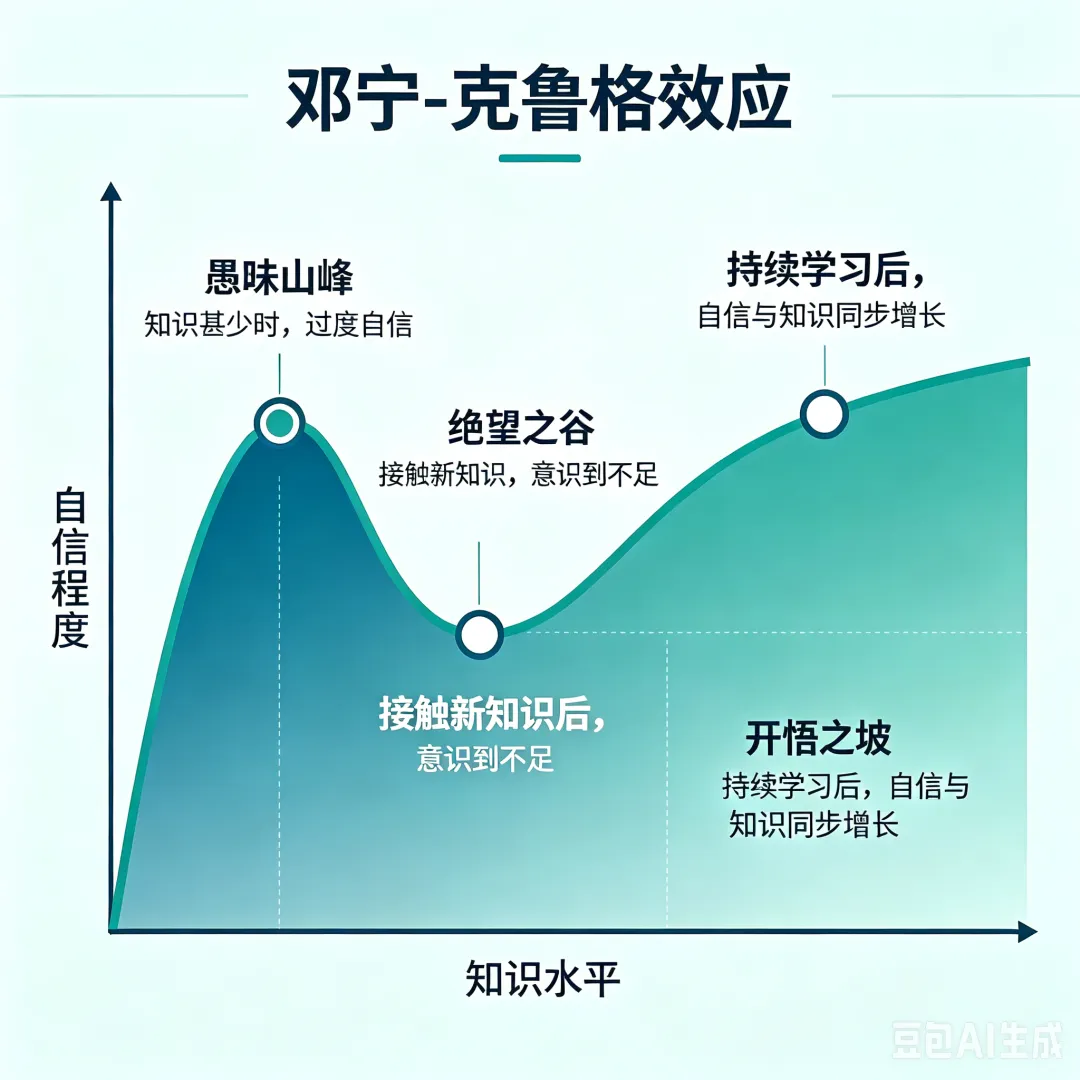
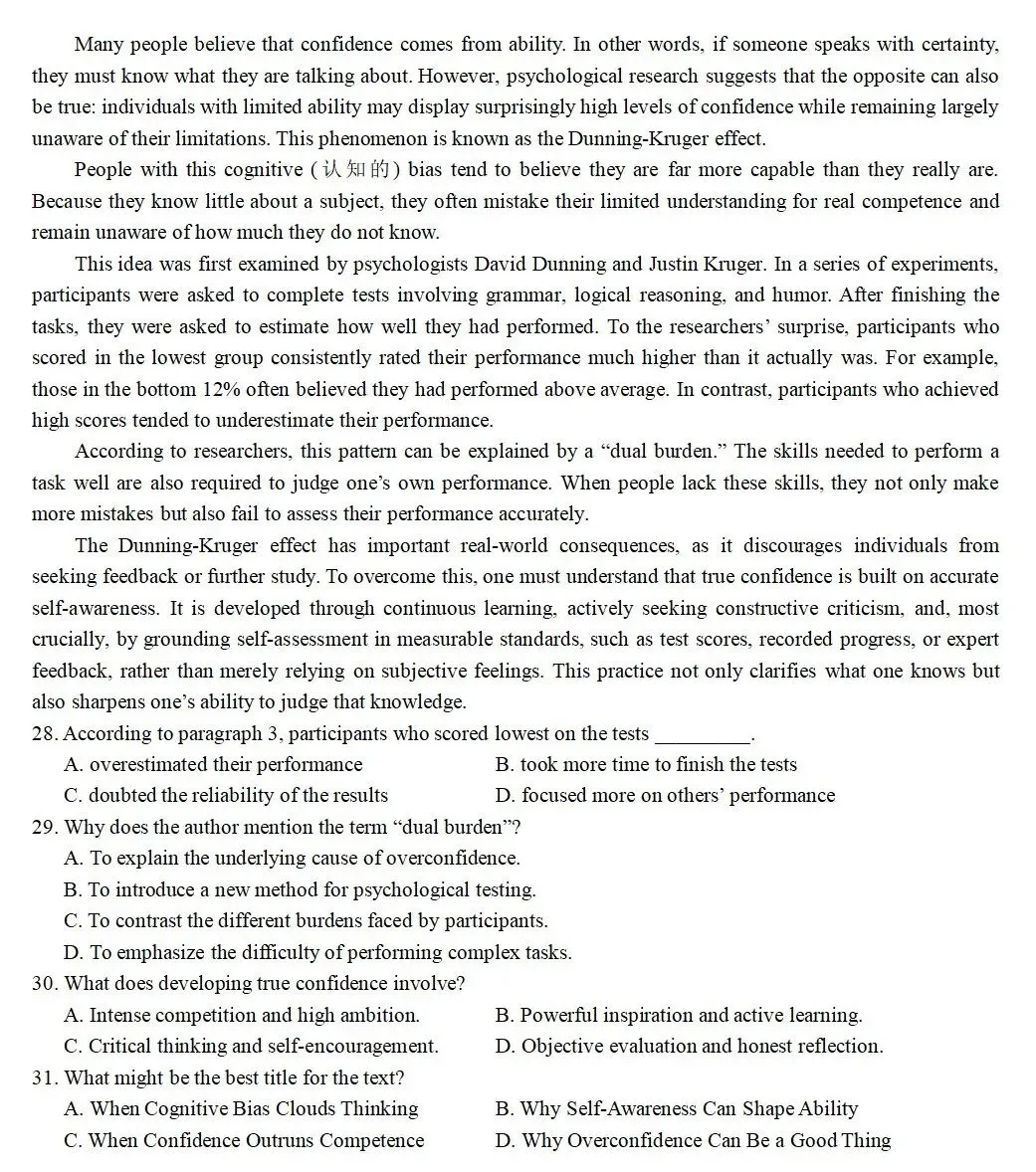
最近发现一篇讲邓宁-克鲁格效应(The Dunning-Kruger effect,也称达克效应)的阅读题,题目如下(文本我放到附录):
文章不错,不过我还根据文章设计了一个填表的题目:
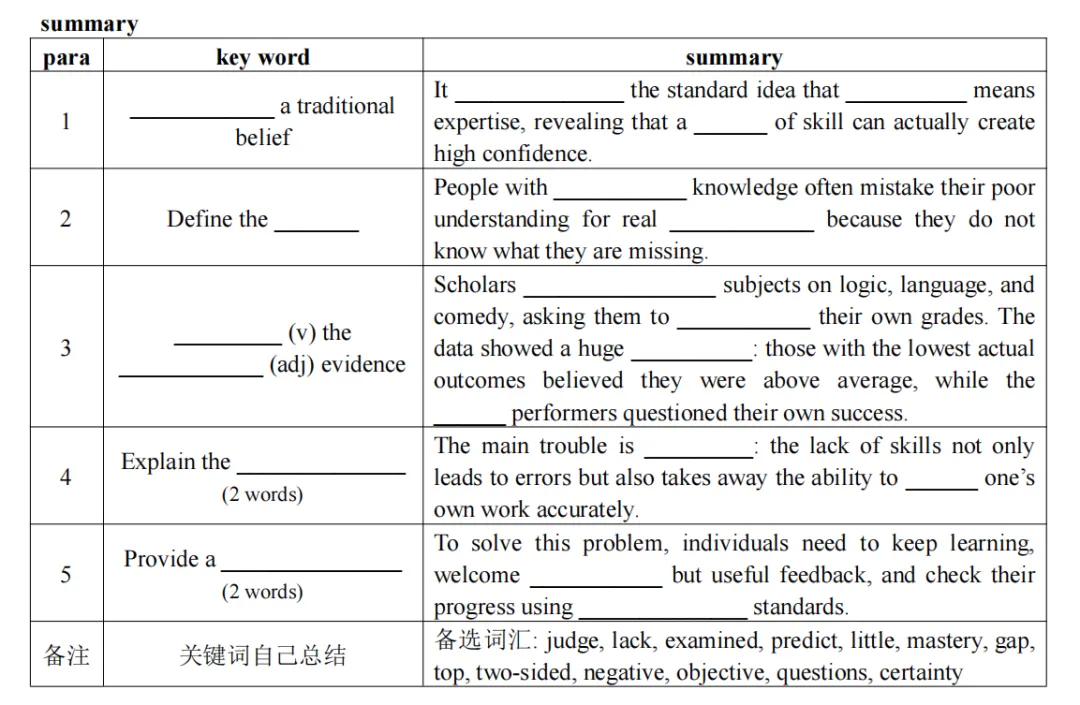
关键词需要学生根据文章自己总结,右边的summary有备选词汇,这些备选词汇可能是原文某些词的同义替换。
然后我利用Gemini帮我生成了一个互动评讲的html文件,该文件分为三部分,第一部分是文章的逐句拆解(包括结构划分和意思),第二部分是填表,点击空白处会出现相应的答案,第三部分就是四个选择题,点击解答按钮,会显示题目解析。
下面是演示视频:
附录:
Many people believe that confidence comes from ability. In other words, if someone speaks with certainty, they must know what they are talking about. However, psychological research suggests that the opposite can also be true: individuals with limited ability may display surprisingly high levels of confidence while remaining largely unaware of their limitations. This phenomenon is known as the Dunning-Kruger effect.
People with this cognitive (认知的) bias tend to believe they are far more capable than they really are. Because they know little about a subject, they often mistake their limited understanding for real competence and remain unaware of how much they do not know.
This idea was first examined by psychologists David Dunning and Justin Kruger. In a series of experiments, participants were asked to complete tests involving grammar, logical reasoning, and humor. After finishing the tasks, they were asked to estimate how well they had performed. To the researchers’ surprise, participants who scored in the lowest group consistently rated their performance much higher than it actually was. For example, those in the bottom 12% often believed they had performed above average. In contrast, participants who achieved high scores tended to underestimate their performance.
According to researchers, this pattern can be explained by a “dual burden.” The skills needed to perform a task well are also required to judge one’s own performance. When people lack these skills, they not only make more mistakes but also fail to assess their performance accurately.
The Dunning-Kruger effect has important real-world consequences, as it discourages individuals from seeking feedback or further study. To overcome this, one must understand that true confidence is built on accurate self-awareness. It is developed through continuous learning, actively seeking constructive criticism, and, most crucially, by grounding self-assessment in measurable standards, such as test scores, recorded progress, or expert feedback, rather than merely relying on subjective feelings. This practice not only clarifies what one knows but also sharpens one’s ability to judge that knowledge.
28. According to paragraph 3, participants who scored lowest on the tests _________.
A. overestimated their performance
B. took more time to finish the tests
C. doubted the reliability of the results
D. focused more on others’ performance
29. Why does the author mention the term “dual burden”?
A. To explain the underlying cause of overconfidence.
B. To introduce a new method for psychological testing.
C. To contrast the different burdens faced by participants.
D. To emphasize the difficulty of performing complex tasks.
30. What does developing true confidence involve?
A. Intense competition and high ambition.
B. Powerful inspiration and active learning.
C. Critical thinking and self-encouragement.
D. Objective evaluation and honest reflection.
31. What might be the best title for the text?
A. When Cognitive Bias Clouds Thinking
B. Why Self-Awareness Can Shape Ability
C. When Confidence Outruns Competence
D. Why Overconfidence Can Be a Good Thing
戳这里,更有料为什么要做这套语法课程

